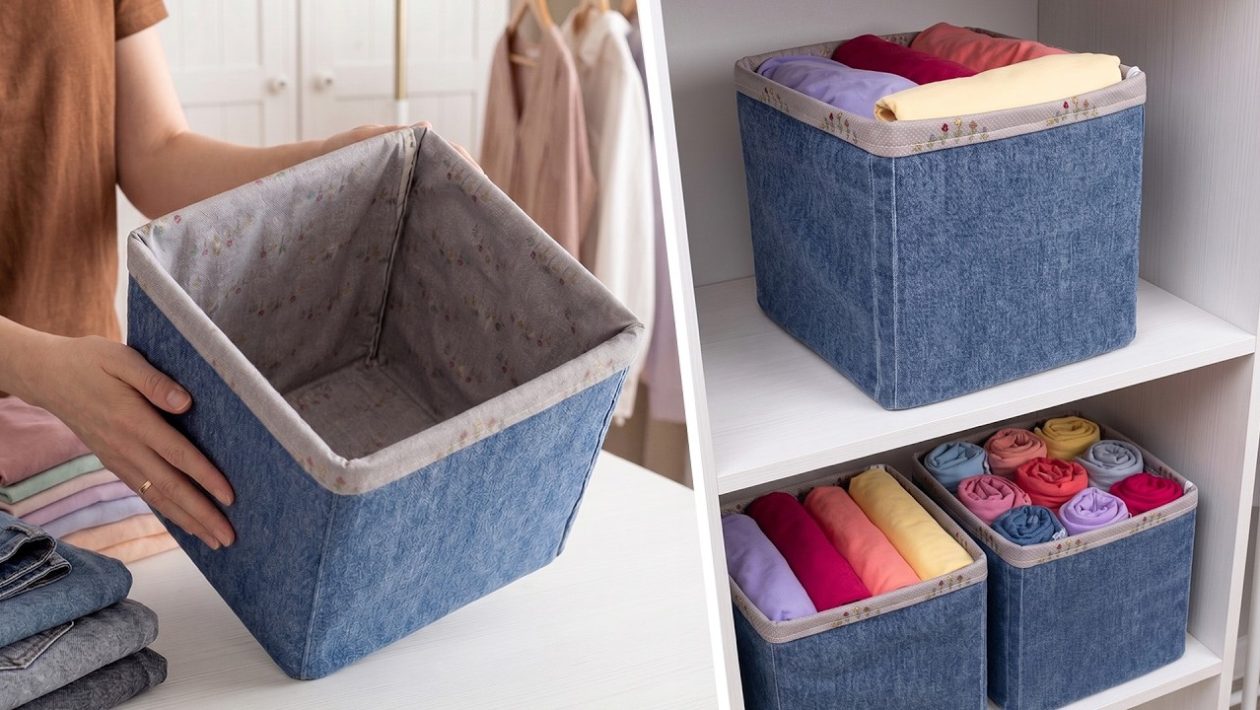
Most home organization experts agree on one thing: plastic storage bins are rarely the best solution. They are brittle, visually cluttered, and often end up in a landfill within a few years. If you have a pile of worn-out denim taking up space in your closet, you already have the raw material for a more durable, aesthetic, and sustainable storage solution.
Why Denim Beats Plastic
Denim is a heavy-duty, twill-woven cotton fabric designed to withstand friction and wear. When you repurpose an old pair of jeans into a storage box, you are creating a container that is inherently stronger than thin, mass-produced polypropylene. Furthermore, denim adds texture to a room, shifting the focus from “clutter storage” to “home decor.”
What You Need to Get Started
You don’t need professional tailoring skills to pull this off. The project relies on the structural integrity of the denim itself. Gather the following basic supplies:
- Two or three pairs of old jeans: The thicker the denim, the sturdier your box will be.
- A rigid base material: Recycled cardboard, plastic sheets, or thin plywood cut to your desired dimensions.
- Sewing essentials: A sturdy needle, heavy-duty thread, and fabric scissors.
- Measuring tape and fabric chalk: Essential for consistent cuts.

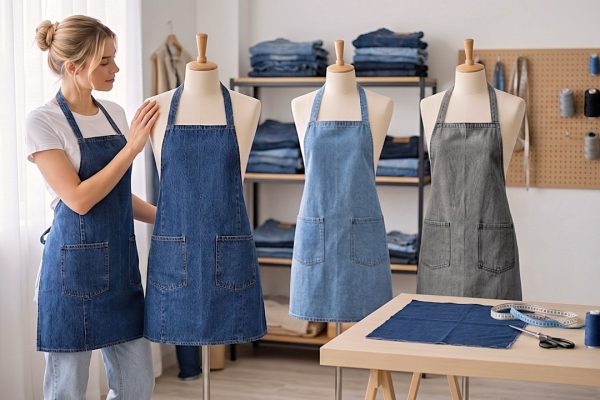
Essential materials for transforming denim scraps into functional storage containers.
Executing the Build
Start by deconstructing your jeans. Cut off the legs and open them up into flat panels. This gives you the largest surface area to work with. If you want to lean into the “upcycled” aesthetic, keep the pockets and waistbands intact—they make excellent exterior details for holding labels or small items.
Measure your internal support structure (the cardboard or plastic frame). Cut your denim panels to be two inches larger on all sides than your frame. This margin allows you to wrap the fabric around the edges and secure it inside the box for a clean, professional finish.
Tips for Structural Integrity
A box is only as good as its structure. If you find your denim is too thin, double up the layers. You can use a simple running stitch or a zigzag stitch along the edges to prevent fraying. For the corners, overlapping the denim slightly creates a reinforced seam that prevents the box from sagging under the weight of its contents.
If you prefer not to sew every single seam, high-quality fabric adhesive or a hot glue gun can work for the internal lining. However, sewing the primary structural points is recommended if you plan on storing heavier items like books or toys.
Customizing for Your Space
One of the primary benefits of this DIY approach is complete control over dimensions. Measure your existing shelves or drawers before you cut your base material. By tailoring the box to the exact depth and width of your furniture, you eliminate wasted space and maximize your storage capacity.
Don’t be afraid to mix colors. Using light-wash denim panels alongside dark-wash pockets creates a high-end, mosaic look. Because the fabric is essentially free, the cost of this project is limited to your time and the basic hardware you likely already have in your junk drawer.
By shifting your mindset from “discarding” to “repurposing,” you save money and keep synthetic plastics out of the waste stream. It is a simple, effective way to refine your living space without spending a dime at a big-box store.