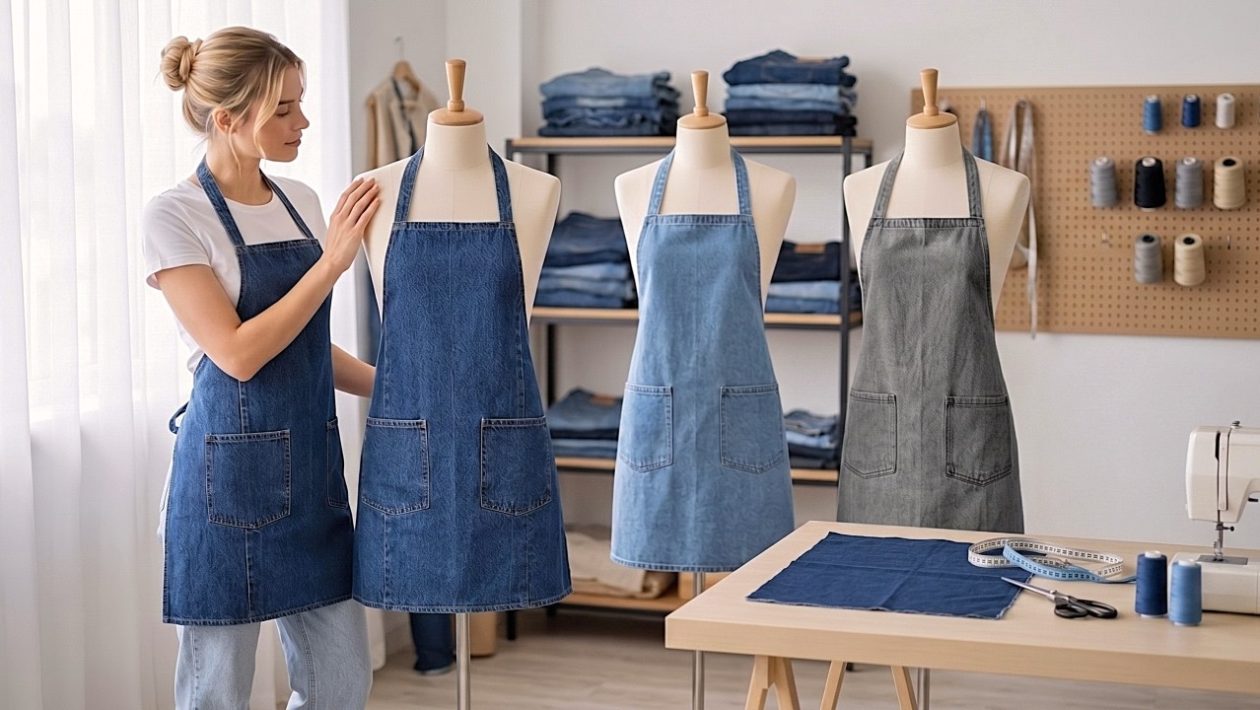
Most households have at least one pair of jeans retired to the back of the closet. They are often relegated to the trash once the knees wear out or the fit changes, but denim is arguably the most resilient fabric for heavy-duty kitchen work. It is naturally heat-resistant, easy to clean, and grows more comfortable with every wash.
Turning a pair of worn jeans into a functional kitchen apron is a classic example of practical upcycling. You aren’t just saving fabric from a landfill; you are crafting a piece of equipment that will likely outlast anything bought at a big-box store.
Choosing Your Materials
Before you start, assess the denim you have on hand. Heavier-weight denim works best for kitchen tasks, as it provides a better barrier against heat and spills. If your jeans have significant stretch (spandex content), you may need to use a fusible interfacing to prevent the apron from losing its shape after repeated exposure to the heat of the oven or stove.
You will need the following baseline supplies:
- Main fabric: Denim from your old jeans.
- Interfacing: Medium-weight iron-on interfacing (such as Pellon SF-101) to provide structure.
- Thread: Use a heavy-duty polyester or denim-weight thread.
- Machine needles: Switch to a size 18 needle to handle the thickness of denim seams.
- Fasteners: Plastic snaps or metal buckles for the straps.
The Construction Process
The most efficient way to layout your pattern is to split the jeans along the inseams. This allows you to lay the fabric flat and utilize the existing seams for the apron’s edges, which saves time and adds a professional, reinforced finish.
If you are looking for extra utility, the existing back pockets of the jeans are ready-made storage. Carefully unpick them and reposition them onto the apron front. They are perfect for holding kitchen thermometers, recipe cards, or your phone while you cook.
When working with denim, always use sewing clips instead of pins. Standard pins can struggle to penetrate multiple layers of tough denim, and they often leave visible holes in the fabric. Clips keep the heavy fabric aligned without slipping.
Essential Tips for Denim Longevity
Denim is a rugged material, but the seams where you join the pieces are the weakest point. When you are stitching your panels together, use a slightly longer stitch length—between 3.0mm and 3.5mm. This prevents the fabric from puckering under the tension of a tighter stitch.
If you find that the apron feels too heavy or stiff, apply a light fabric spray adhesive to hold your interfacing in place before pressing. This ensures a clean, crisp edge without the need for excessive handling, which can cause the fabric to fray before you even finish the project.
For the neck and waist straps, you can use the leftover denim seams or opt for nylon webbing. If you choose to make your own straps from the jeans, iron them with a stiffening interfacing so they don’t roll up over time. Using plastic or metal snaps allows you to adjust the fit quickly, which is critical if you wear your apron over different layers of clothing throughout the changing seasons.
A handmade denim apron is not just a weekend project. It is a utility item. With a bit of practice and attention to the weight of your materials, you can create a piece of gear that stands up to the daily grind of a busy kitchen.