
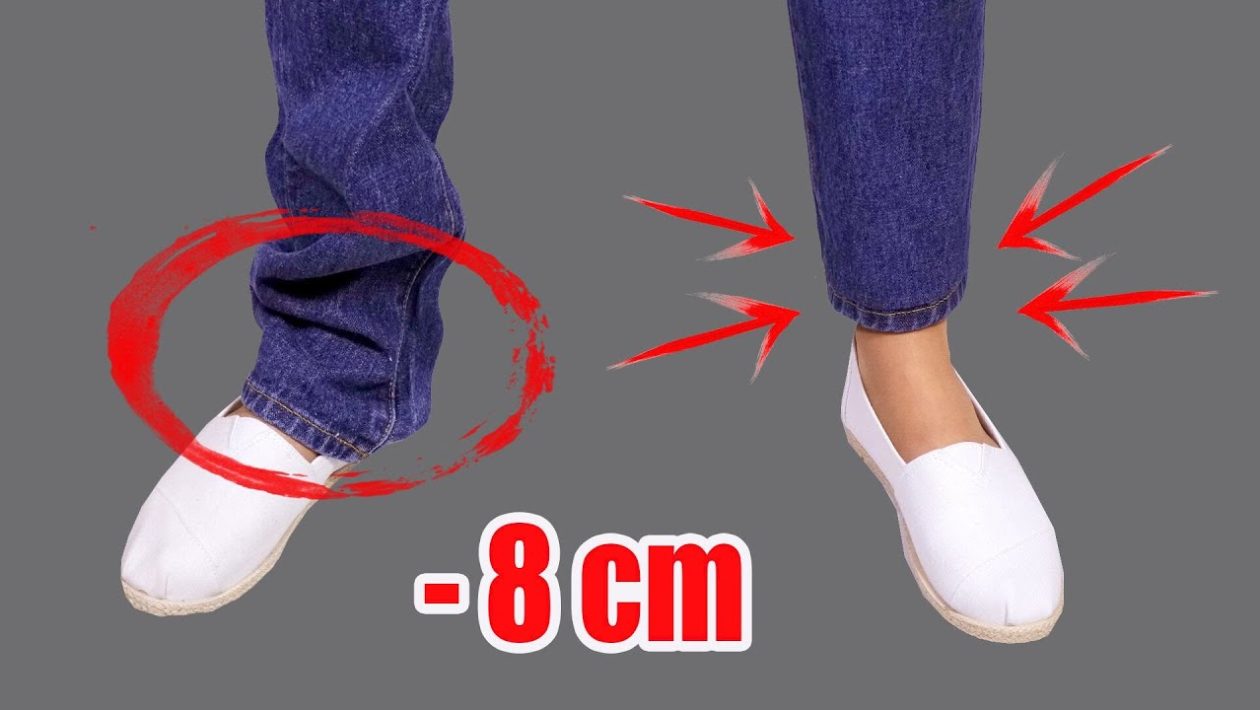
The Denim Dilemma
Finding the perfect pair of jeans is an accomplishment. However, while the fit may be great around the waist and thighs, the legs often drag on the floor.
Taking them to a tailor costs money and requires days of waiting. Standard DIY hemming ruins the look because you lose that distressed, factory-washed edge at the very bottom of the leg.
There is a widely used tailoring trick that solves this exact problem. You can shorten your denim in under five minutes and keep the original factory hem entirely intact.
Tools You Need to Get Started
Before starting, gather a few basic supplies. You do not need to be an expert seamstress to pull off this alteration.
- A sewing machine equipped with a heavy-duty denim needle.
- Standard polyester thread that blends into the color of your denim.
- Straight pins or sturdy sewing clips.
- A measuring tape or sewing ruler.
- An iron and an ironing board.
If you do not own a sewing machine, you can perform this alteration by hand using a tight backstitch. However, using a machine guarantees the five-minute timeframe.
Measure and Fold
Put the jeans on along with the shoes you plan to wear most often with them. This ensures the pant break hits exactly where you want it.
Fold the bottom of the jeans up outward, so the inside of the denim is exposed. Adjust the fold until the very bottom edge of the original hem rests precisely where you want your new length to end.
Use a straight pin to mark this exact spot. Take the jeans off carefully to avoid shifting your folded measurement.
Pin the Fabric Evenly
Lay the jeans flat on a table or work surface. Measure the distance from the bottom fold to the edge of the original hem.
Ensure this measurement is mathematically identical all the way around the leg. If the measurement is uneven, your jeans will hang poorly and look crooked.
Pin the folded fabric securely in place, inserting pins horizontally every couple of inches. Keep the heavy vertical side seams of the jeans perfectly aligned with each other.
Sew the Alteration Seam
Take your pinned jeans to the sewing machine. If you have a free arm on your machine, remove the accessory compartment to slide the pant leg over it easily.
Position the needle so it sews right next to the bulky original hem. You need to stitch entirely through the folded denim, getting as tight against that original factory edge as your presser foot allows.
Sew a straight stitch all the way around the leg. When you reach the thick side seams, turn the machine’s handwheel manually to punch through the fabric without breaking your needle.
Managing the Excess Fabric
Once you finish sewing around both legs, unfold the hem downward. The original factory hem will now sit flush at your new designated length.
The extra fabric you just sewed will naturally fold up inside the pant leg. If you only shortened the jeans by an inch or two, you can leave this excess fabric exactly where it is.
Simply press the new seam heavily from the inside with a hot steam iron. Pushing the excess fabric upward toward the knee keeps it flat, invisible, and out of the way.
Trimming for a Professional Finish
If you shortened the jeans by several inches, that inside folded loop will be far too bulky to leave attached. It will bunch up and snag on your toes when getting dressed.
Use sharp fabric scissors to cut off the excess loop of fabric inside the leg. Leave about half an inch of seam allowance above your newly stitched line.
To prevent this new raw edge from fraying in the washing machine, finish it immediately. Run a zigzag stitch over the cut edge or use pinking shears.
The Final Press
Ironing is the most critical step to make this alteration look like it came straight from the factory. A cold, unpressed seam will puff out and immediately reveal your shortcut.
Set your iron to the hottest cotton setting and use plenty of steam. Press the hem firmly from the outside, flattening the area where your new stitches meet the original edge.
For extra security, stitch “in the ditch” at the side seams. A quick, subtle tacking stitch directly over the existing vertical side seams will lock the hem flat against the leg permanently.

