Extreme temperature spikes are no longer a mid-summer fluke; they are our new springtime reality. As unyielding heat domes crush regions from the U.K. right into Southern Ontario and the GTA, relying on a dusty oscillating fan is a recipe for disaster. You need a bulletproof strategy to defend your home, protect your family, and stop your energy bill from going nuclear.
If your central air is struggling—or you don’t have it at all—I am going to show you exactly how to fight back. We are going to seal your home against thermal intrusion, hack your body’s natural cooling system, and turn your living space into an absolute icebox.
Heat wave survival
Living through a modern heat dome requires an offensive strategy, not a defensive one. You cannot wait until the thermometer hits 35 degrees Celsius before you start taping cardboard to your windows.
Here is a brutal, hard fact: up to 76% of sunlight that hits standard double-pane glass enters your home and immediately converts into trapped heat. You are essentially sitting inside a massive solar oven.
To survive these relentless May 2026 temperature spikes, you need to gain control of your home’s thermal envelope. Upgrading to a Canadian-made Ecobee smart thermostat is a fantastic start to pre-cool your house overnight, but technology alone won’t save you when the daytime sun starts baking your asphalt shingles.
How to beat record temperatures
When the electrical grid strains and rolling blackouts threaten your AC, you must know how to drop your core body temperature rapidly. Cooling the human body is all about exploiting basic thermodynamics.
“You don’t need to freeze the entire house to survive a heat dome; you just need to pull heat away from your skin. Utilizing convective cooling and thermal extraction is how professionals stay safe on sweltering job sites,” says master HVAC technician and building scientist Dave Reynolds.
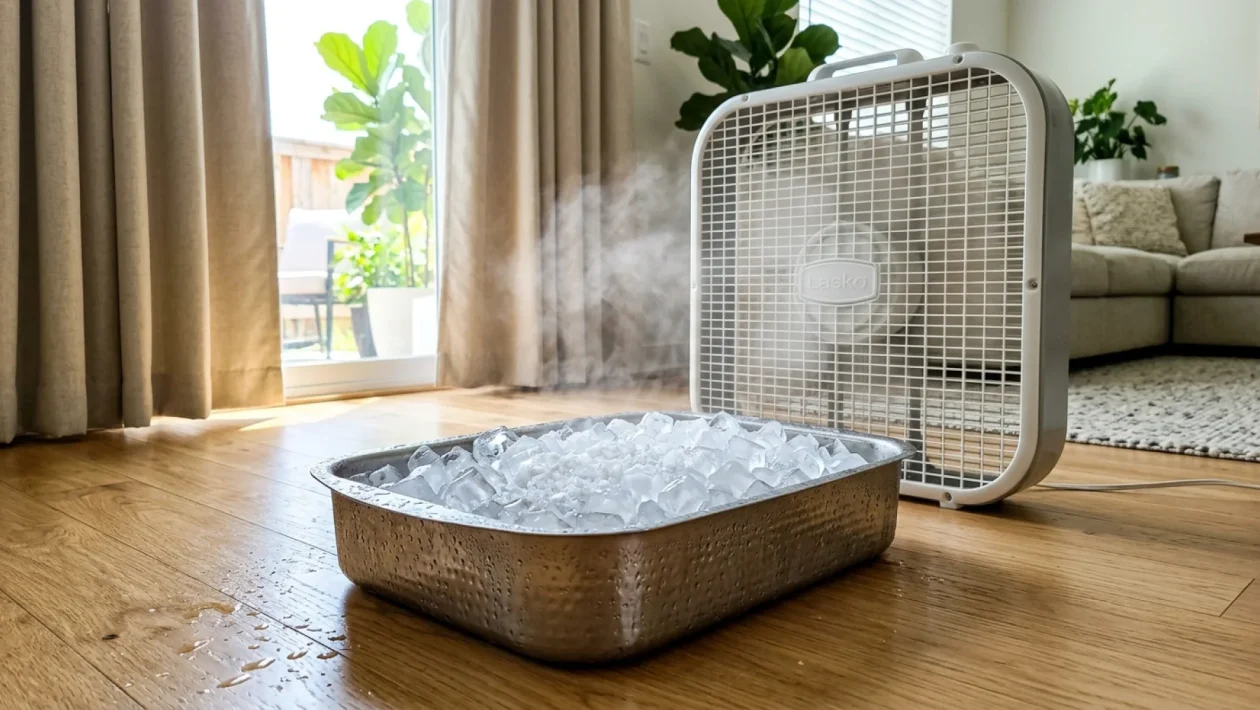
If you need immediate relief, you can build a highly effective directional cooler using items you already have in your garage. Here is the exact method I use in my own workshop:
- Fill a large, shallow roasting pan or heavy-duty bucket with a mixture of ice cubes and coarse rock salt (the salt lowers the freezing point, making the ice significantly colder).
- Position a high-velocity box fan directly behind the pan, angling the airflow to blow over the surface of the ice.
- Point the airflow directly at your seating area, targeting your chest and face.
- As the ice melts, the fan will blast a continuous stream of chilled, evaporative air across your skin, artificially dropping the ambient temperature by up to five degrees in your immediate vicinity.
Keep your home ice cold
Your house actively wants to absorb heat. To keep it ice cold, you have to cut off the heat sources at the pass. This means tackling your windows, your insulation, and your indoor appliances.
Running down to Home Depot to grab high-density thermal blackout curtains is the best weekend investment you can make. But you also need to know what upgrades actually give you the most bang for your buck.
Here is a quick breakdown of the most effective home cooling upgrades to implement right now:
| Cooling Upgrade | Impact & Cost |
|---|---|
| Reflective Window Film | High Impact / Low Cost (DIY) |
| Heavy Blackout Curtains | High Impact / Medium Cost |
| Attic Insulation Top-Up | Massive Impact / High Cost |
| Box Fan Cross-Ventilation | Medium Impact / Very Low Cost |
Remember, cooking indoors during a heat wave is a rookie mistake. Take your meals out to the barbecue or stick to cold prep to avoid adding unnecessary combustion heat into your kitchen.
Frequently Asked Questions
Should I keep my windows open during a heat wave?
Absolutely not during the day. As soon as the outdoor temperature exceeds the indoor temperature, shut everything down. Close the windows, lock the sashes to ensure a tight seal, and draw the thermal curtains. Only open them late at night when the outside air is cooler than the inside.
Does running ceiling fans actually lower room temperature?
No. Fans cool people, not rooms. A ceiling fan creates a wind-chill effect on your skin by evaporating sweat, but the friction of the motor actually adds a tiny amount of heat to the space. If you are not in the room, turn the fan off to save energy and reduce ambient heat.
🤝 Listen guys, battling these intense temperature spikes doesn’t have to mean suffering in a sweaty, miserable house. By taking control of your windows and utilizing smart airflow, you can easily outsmart the heat.
💡 Remember the golden rule: block the heat before it gets inside, and focus on cooling your body when the grid gets shaky. A little prep work this weekend will save you a ton of grief down the road.
📱 If you found this helpful, send it to a buddy who is currently melting in their living room. We all need to look out for each other when the thermometer spikes.
👇 Share your thoughts in the comments below. What is your go-to trick for keeping the house cool when the AC just can’t keep up? Stay cool and stay safe out there!