House keys touch our hands, pockets, bags, and countless surfaces every day. Over time, they silently accumulate layers of grease, dirt, and everyday grime.
Home cleaning experts suggest tackling this overlooked problem by adding keys to your weekly chore list. The solution requires just one basic pantry staple: white vinegar.
While vinegar is highly effective at improving the appearance of metal, it is not a true disinfectant. If your primary goal is to eradicate microorganisms, you will need a dedicated sanitizing product. Vinegar should be used moderately and only on conventional metal keys.
Why White Vinegar Works on Keys
White vinegar contains acetic acid, a natural compound that excels at breaking down stubborn grease and daily buildup. It also makes it much easier to clean the tiny, hard-to-reach grooves in the metal.
White vinegar should be used moderately and only on standard metal keys.
If you use your keys constantly, making this quick wash part of your weekly routine will keep them in top condition. The main benefits of this cleaning method include:
- Stripping away the grease and dirt caused by daily handling.
- Lifting superficial stains from the metal.
- Penetrating deep into the complex cuts and grooves of the key.
- Restoring original shine to metal that has grown dull over time.
How to Clean Keys Without Damaging Them
The process is fast and requires no expensive specialty cleaners. The golden rule is to apply the vinegar sparingly.
Do not soak the keys. Submerging them completely can leave behind unwanted residue on the metal. Before you start, always check your keychain for sensitive materials. Skip this method if your keys feature paint, decorative coatings, or non-metal parts, as the acid could ruin those finishes.
The Five-Step Cleaning Process
- Pour a small amount of white vinegar into a spray bottle.
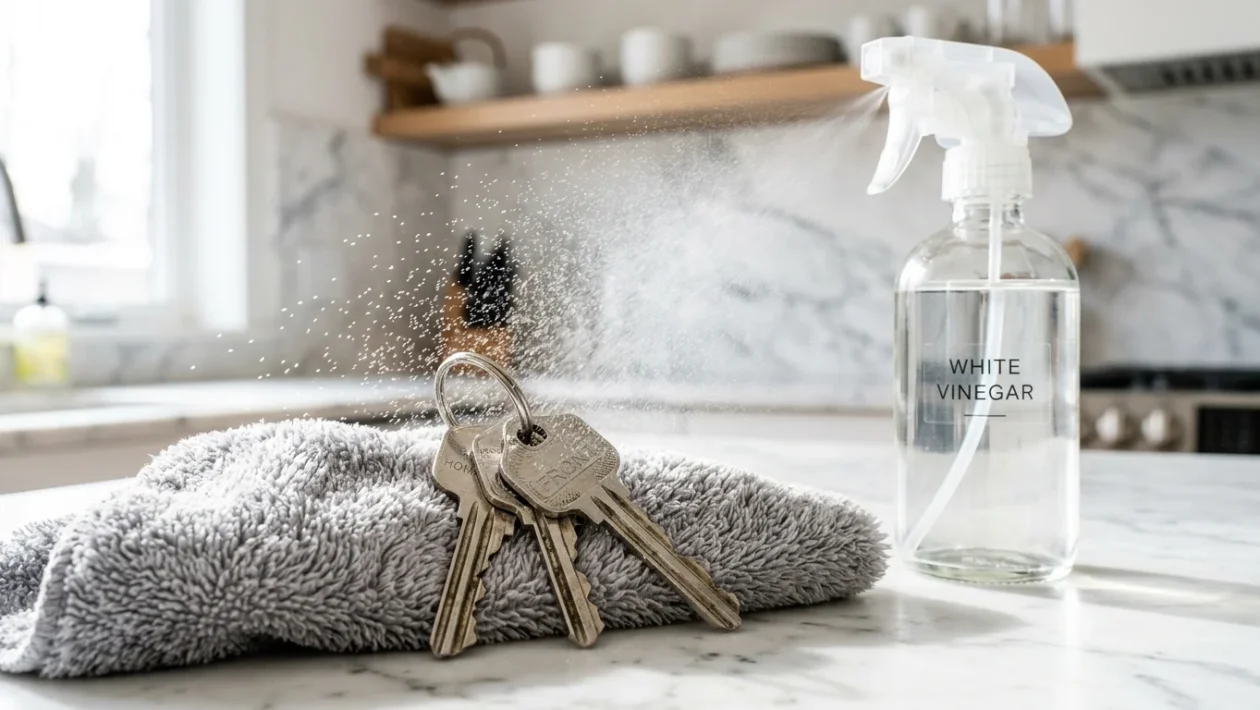
- Lightly mist the metal keys, being careful not to over-saturate them.
- Let the vinegar sit for one to two minutes.
- Scrub the keys gently using a microfiber cloth or a soft-bristled brush.
- Wipe away all remaining liquid and dry the keys completely before storing them.
How often you do this depends entirely on your daily routine and how much dirt the keys accumulate. For keys handled multiple times a day, a quick weekly cleaning keeps the grime away without relying on harsh industrial chemicals.