We are currently watching a nightmare scenario unfold in real-time across central Africa, and the window to slam the door shut is closing fast. As of May 2026, a highly contagious and relatively rare strain of the virus has ripped through the Democratic Republic of Congo, racking up over 1,000 suspected cases and hundreds of deaths.
The brutal reality? There is no approved vaccine for this specific variant.
Global health officials are playing a deadly game of catch-up. Today, we’re breaking down exactly what we are dealing with, why our modern medical arsenal is suddenly shooting blanks, and the hardcore tactics frontline workers are using to keep this localized crisis from becoming a global catastrophe.
Ebola Bundibugyo Outbreak
If you remember the massive 2014 West African epidemic, you’re likely thinking we already solved this problem. We did, but only for the specific Zaire strain.
Viruses are notoriously tricky shape-shifters. The current enemy driving the Ebola Bundibugyo Outbreak is a completely different beast. Because it’s historically rare, pharmaceutical pipelines haven’t fast-tracked a targeted, approved shield for it.
That leaves local health workers and international specialists completely exposed. With the outbreak quietly gaining momentum for weeks before alarms were sounded, containment is no longer about early prevention. It’s about aggressive damage control.
It’s a situation that demands flawless execution in an environment where simply traveling from point A to point B can take days.
Why The 2026 Crisis Is Outpacing Global Science
So, how does a modern global health network fall behind? It comes down to a toxic mix of missing technology and extreme geographical instability.
Dr. Rob Fowler, a heavyweight critical care physician out of Toronto’s Sunnybrook Hospital, knows these hot zones intimately. He points out that the basic public health infrastructure we rely on simply doesn’t exist in remote regions of the DRC.
Add the staggering hard reality that nearly five million people in the Ituri province live amid active, armed conflict, and you have an absolute logistical nightmare.
“The faster we can identify suspected cases, the faster that we can try to get things contained. I think the unfortunate reality is that we’re not looking at a few weeks of this.”
When clinics are attacked by armed groups and patients flee out of terror, contact tracing completely collapses. You can’t isolate a virus when the host population is constantly on the run.
| The 2014 Zaire Crisis | The 2026 Bundibugyo Crisis |
|---|---|
| Approved vaccines widely available today. | Zero approved vaccines; relying on experimental tech. |
| Massive international aid influx. | Dwindling global support and major funding gaps. |
| Focus on scaling up treatment centers. | Focus on protecting remote clinics from armed militias. |
And How First Responders Survive It
Without a magic bullet vaccine, the men and women hitting the ground in Uganda and the DRC have to rely on old-school, grueling outbreak management. It is exhausting, dangerous work.
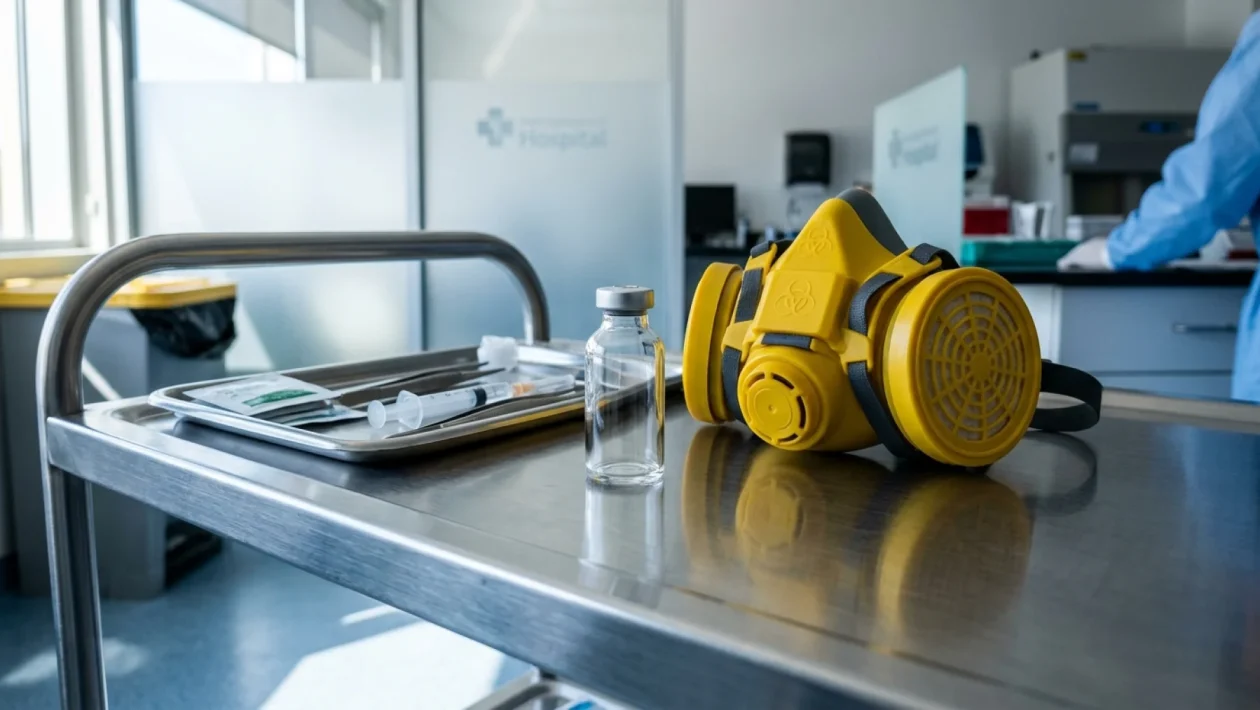
When you’re dealing with a pathogen that spreads rapidly through bodily fluids, protective gear is your only lifeline. But wearing thick, non-breathable suits in the sweltering African heat is a fast track to heatstroke.
To survive and do their jobs, modern medical responders use a highly disciplined playbook.
- Deploy Cooling Tech: Responders use heavy-duty, reusable PPE equipped with internal, battery-operated fans just to survive the grueling shifts without collapsing.
- Establish the Red Zone: Fast-track the construction of isolated wards, ensuring a hard barrier between infected patients and the general public.
- Aggressive Contact Tracing: Track down every single human being an infected patient has interacted with over the past 21 days—even if it means hiking miles down unpaved, hostile roads.
- Community Buy-In: Overcome deep-rooted public distrust by partnering directly with local leaders to explain the science and stop terrified patients from fleeing isolation.
Frequently Asked Questions
Is the 2026 Ebola outbreak a direct threat to North America?
Right now, the risk to everyday Canadians and Americans is incredibly low. The focus is entirely on stopping the spread at the source in central Africa before it has a chance to hop borders via international travel.
Why can’t we just use the old vaccine?
The widely available Ebola vaccine is genetically tailored to the Zaire strain. Using it against the Bundibugyo strain is like trying to use a Ford key to start a Chevy. It simply doesn’t fit the lock.
🤝 Look, we’re dealing with a serious marathon here, not a sprint. The sheer bravery of the healthcare workers standing on the front lines right now, armed with little more than battery-powered fans and sheer willpower, is nothing short of incredible.
💡 Science will catch up eventually, with major universities already scaling up experimental shots, but until then, it’s going to take relentless, gritty groundwork.
📱 Share your thoughts on how global health organizations should handle these massive logistical hurdles in conflict zones.
👇 Good luck to the incredible crews on the ground—we are all rooting for you to get this under control.