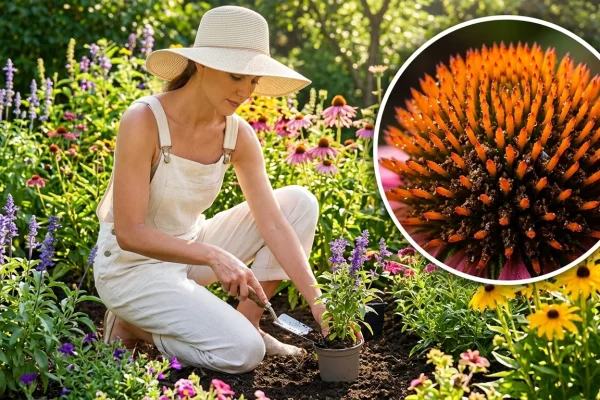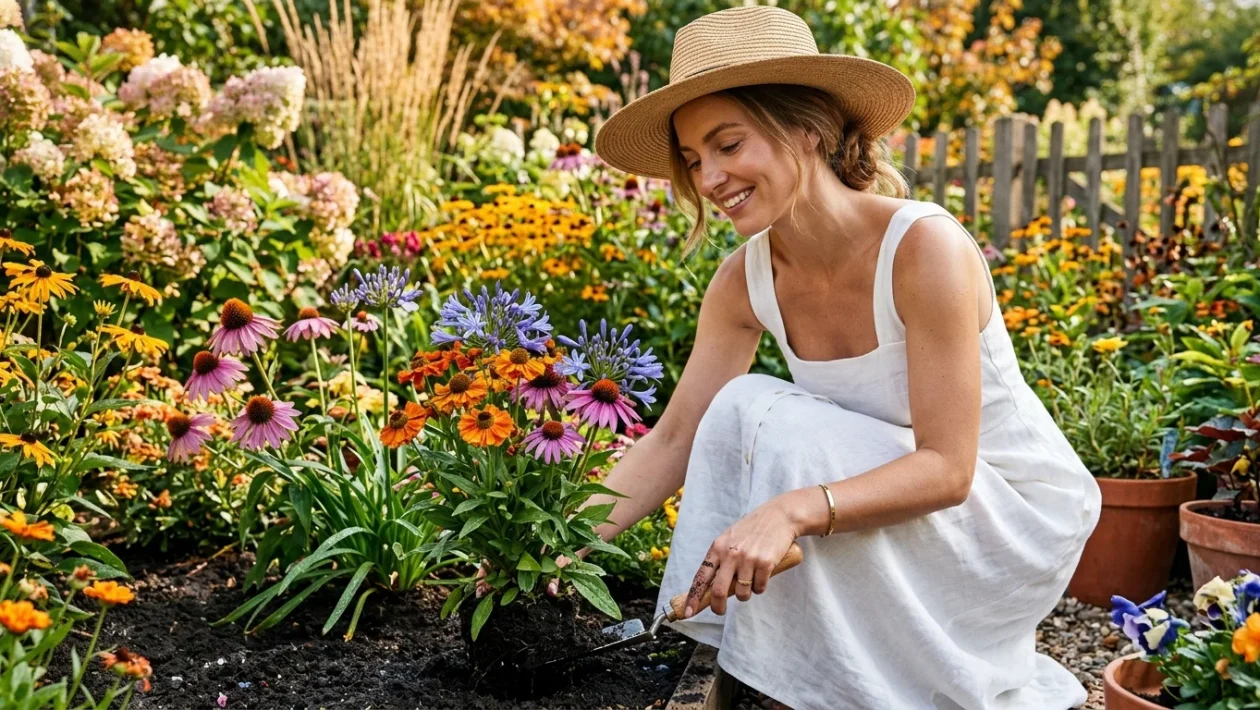
August offers a prime window to refresh your garden beds before temperatures drop. Warm soil helps perennial roots establish rapidly, setting the stage for vibrant blooms that last well into fall.
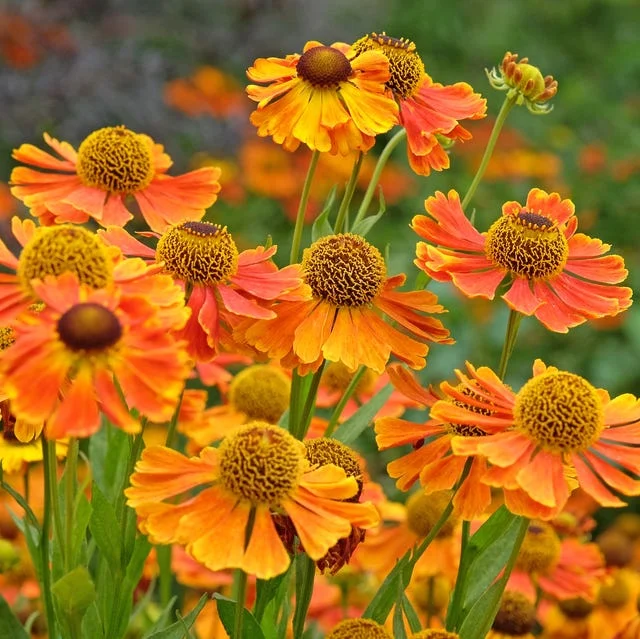
Orange and yellow helenium sneezeweed blooming in a garden.
While new additions require consistent watering to settle in, you can still plant successfully during dry spells or local water restrictions. Applying a thick layer of mulch will help lock vital moisture into the soil.
From tough, drought-resistant picks to classic cottage-garden favorites, here are 10 late-blooming perennials you can plant this month.
Agapanthus
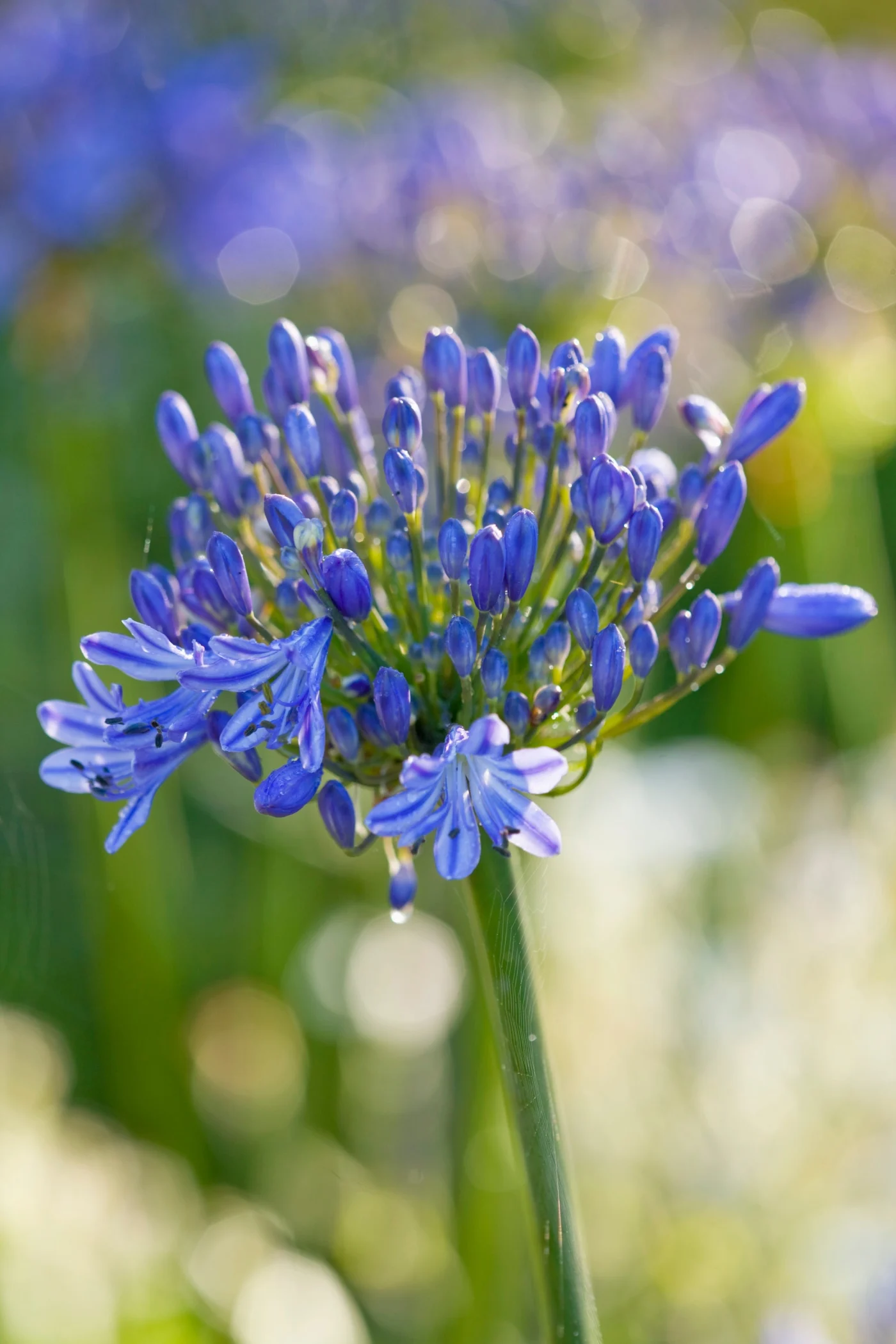
Close up view of blue agapanthus flowers.
Agapanthus brings striking clusters of blue or white flowers perched on tall, bare stems. It is a highly durable perennial that thrives in sunny borders.
“This is a striking plant very popular in the Mediterranean for its durability and beautiful blue or white flower spikes,” says Antony Henn, garden designer and founder of Garden on a Roll. “Perfect for our hotter, drier summers.”
Aster
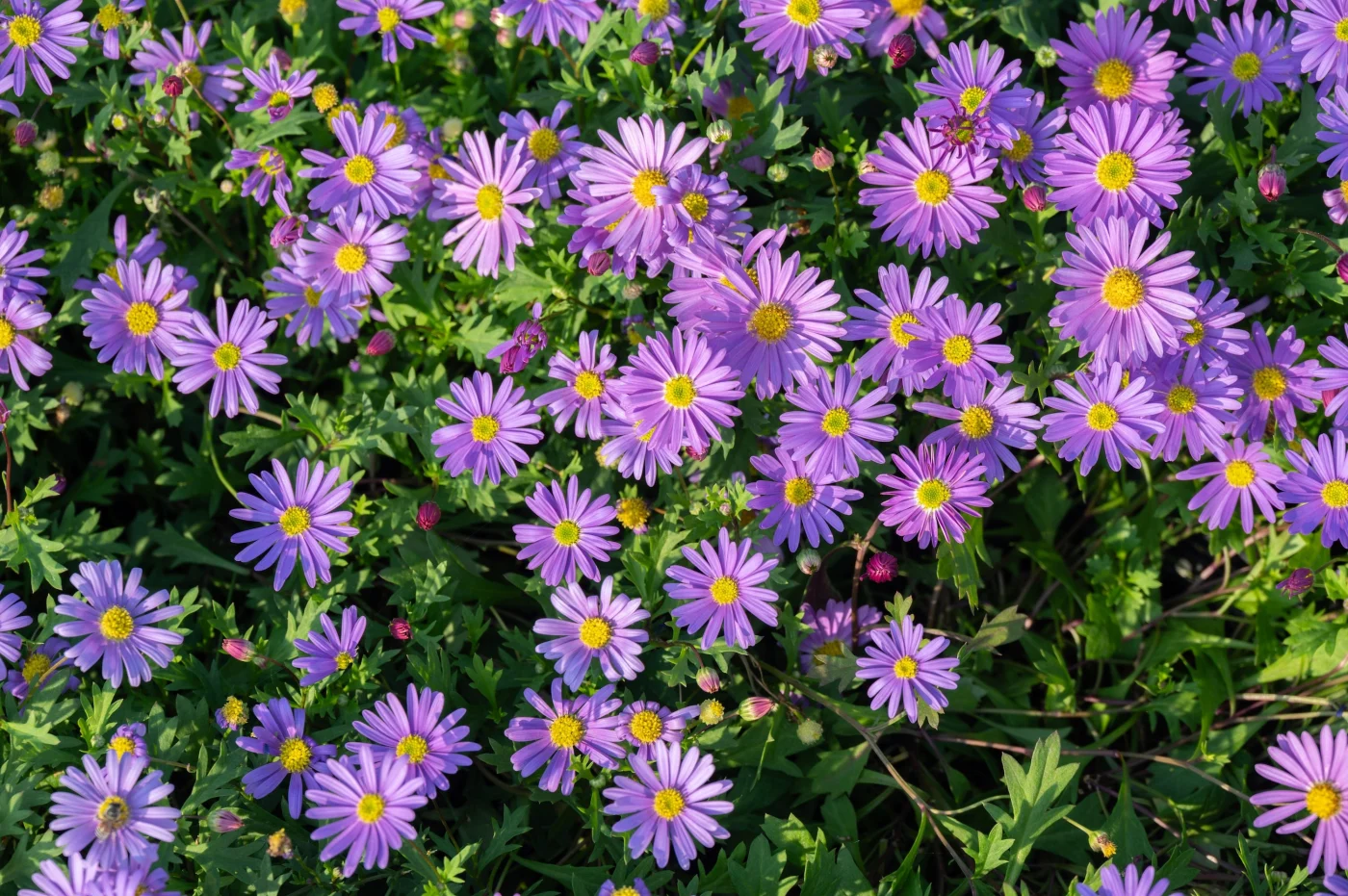
Aster flowers blooming in a late summer garden.
Asters are the quintessential late-summer flower, offering a massive pop of color just as other plants begin to fade.
Lucie Bradley, garden expert at Easy Garden Irrigation, recommends adding potted asters in August for an instant visual boost. “It also allows you to see the height and habit of the asters so you can find the perfect place for them in your garden beds or borders,” she notes.
Echinacea (Coneflower)
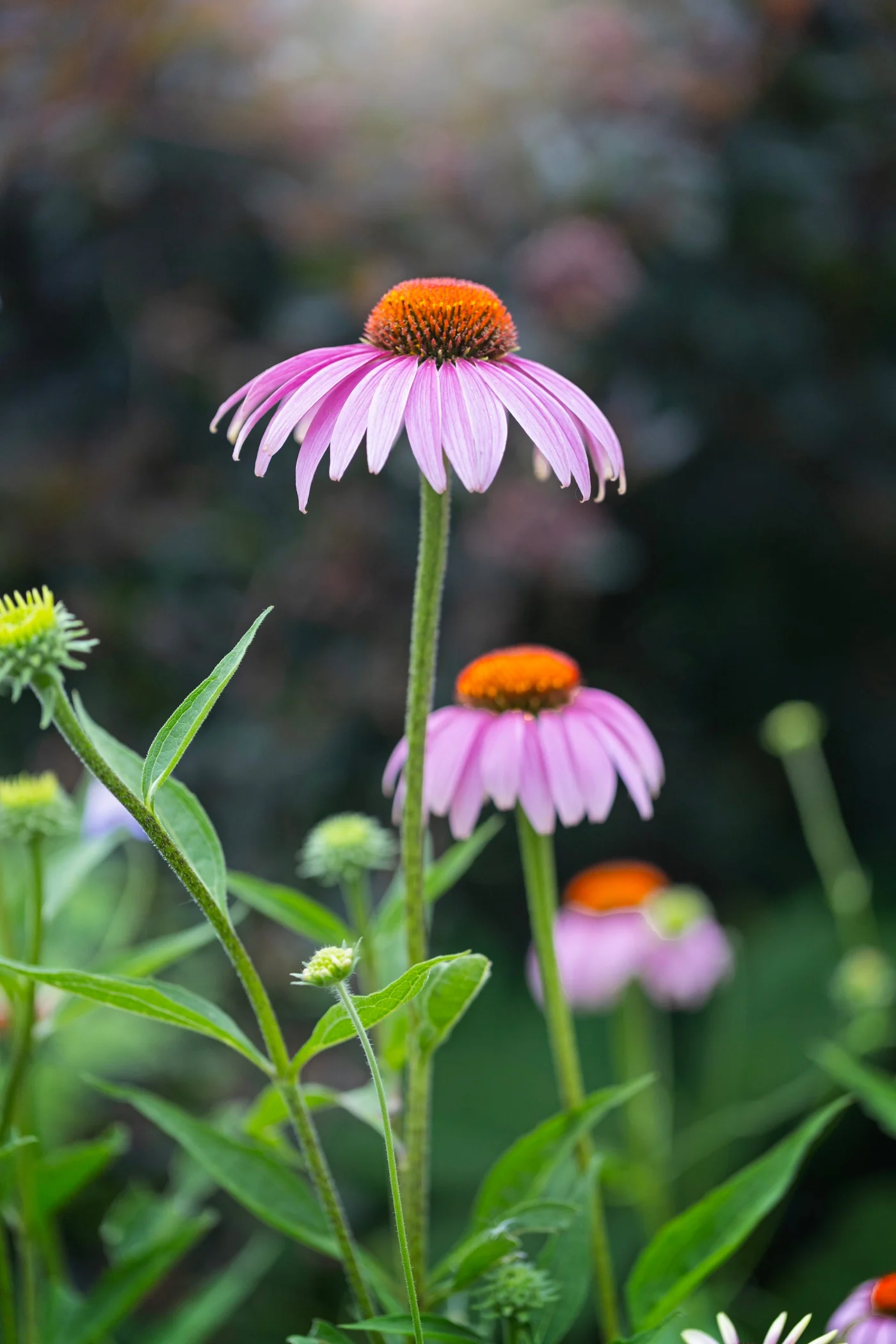
Close up view of a purple coneflower.
A staple for pollinators, the classic coneflower thrives in full sun and well-draining soil. Andrew Jackson, founder of The New Build Manifesto, points out that coneflowers are increasingly valuable as summers get warmer.
“Their bold daisy-like flowers provide months of color,” Jackson says. Once mature, they handle drought effortlessly, though they do need regular watering during their first season.
Geranium ‘Rozanne’
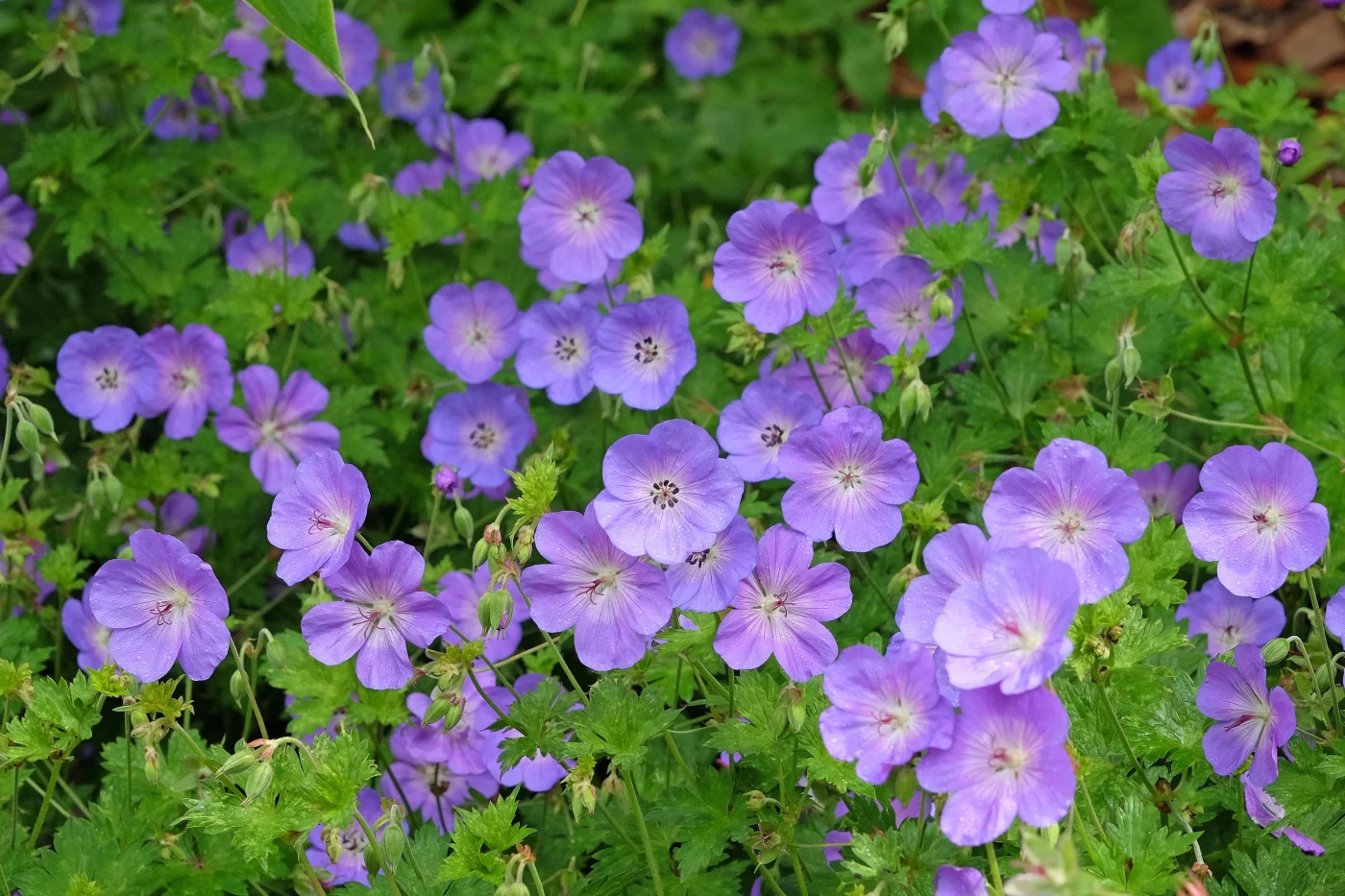
Purple hardy Geranium ‘Rozanne’ in full flower.
This hardy geranium is a workhorse in the garden, performing beautifully in both sunny spots and light shade. Once established, it requires almost zero maintenance beyond an occasional trim.
“If I could recommend just one perennial to a new gardener, it would be Geranium ‘Rozanne’,” Jackson says. It blooms tirelessly from early summer until the first frost, offering masses of violet-blue flowers that draw in bees all season.
Helenium
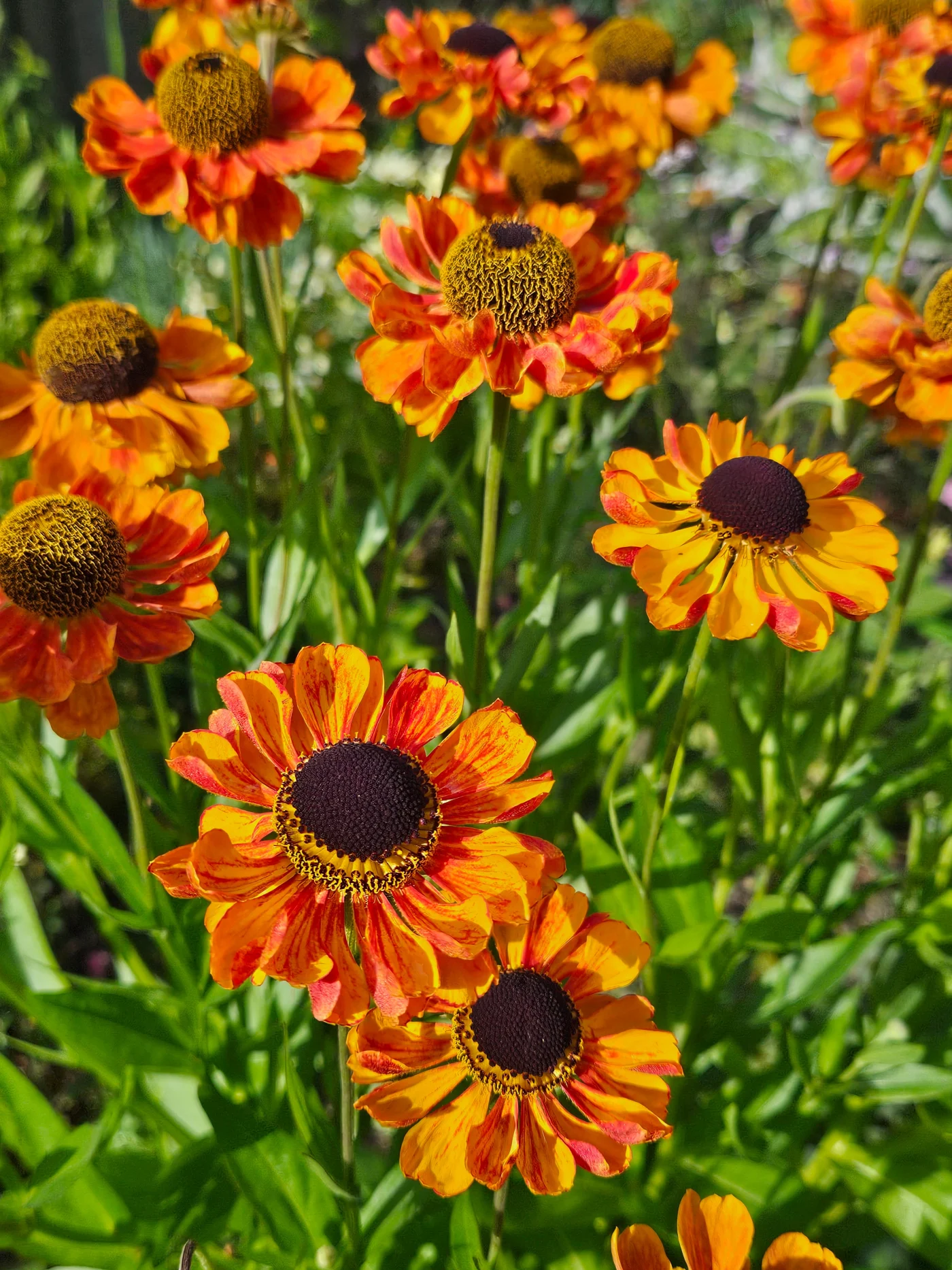
Close up of bright orange helenium flowers.
Often called sneezeweed, helenium looks like a theatrical daisy sporting fiery, fall-appropriate hues. These low-maintenance perennials bloom from July through October.
Bradley suggests adding pot-grown heleniums in August for instant color and to feed late-season pollinators. She highlights the compact ‘Rubinzwerg’ for tight spaces, and ‘Chipperfield Orange’, which can tower up to 5 feet tall.
Japanese Anemone
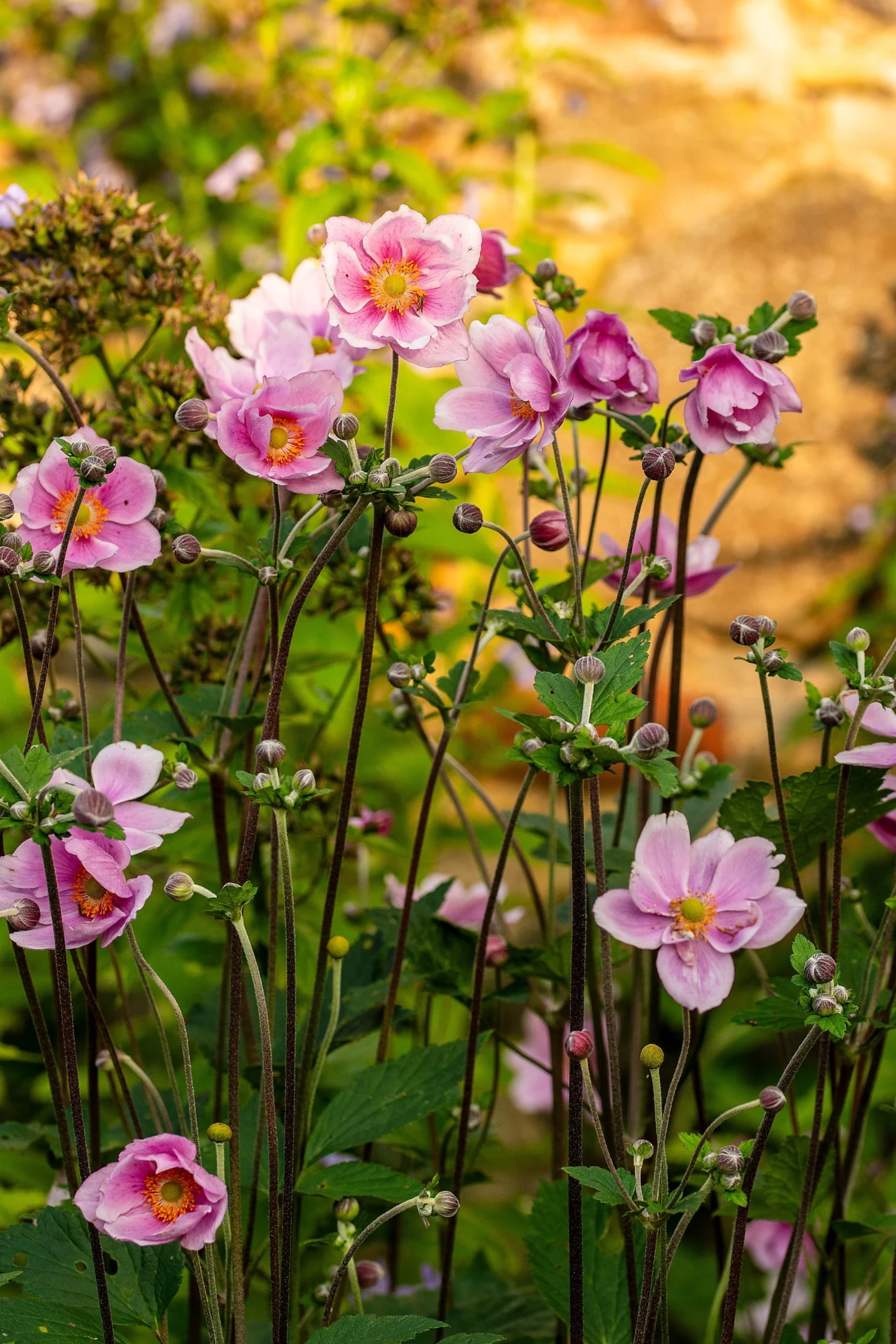
Japanese anemone flowers with pink petals.
Japanese anemones offer sculpted, elegant blooms ranging from pure white to rich magenta. They thrive in partial shade with well-draining soil.
“Japanese Anemones are popular, long-lasting perennials ideal for planting in August when there is sufficient warmth for their roots to quickly establish before the colder months arrive,” says Bradley. Since they spread vigorously, ensure you give them plenty of room in your borders.
Rudbeckia
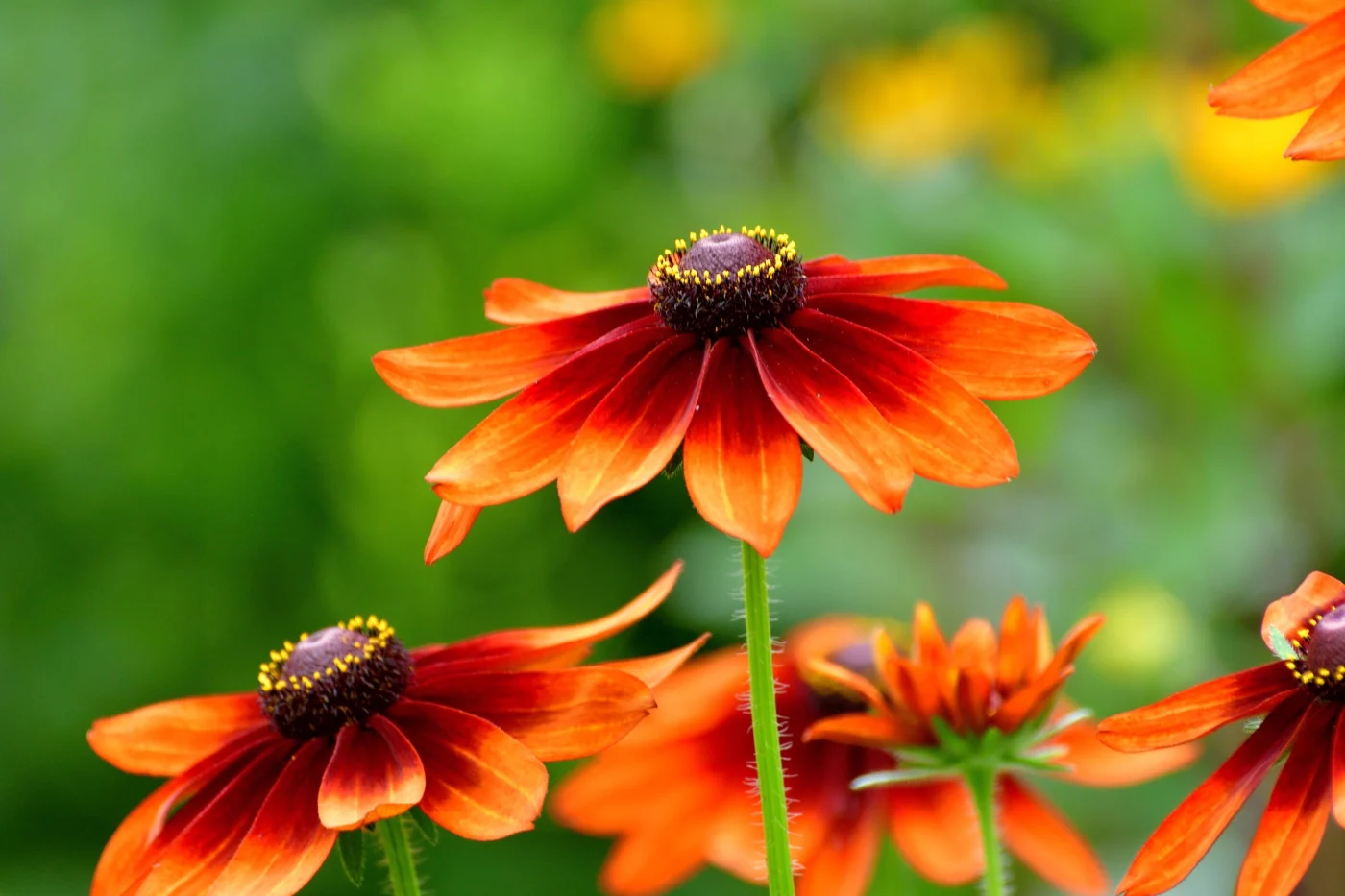
A vibrant yellow rudbeckia, or black-eyed Susan, flower.
Widely known as black-eyed Susan, rudbeckia is a resilient, late-season bloomer that anchors any garden border. Henn specifically favors the ‘Little Suzie’ variety.
“It’s a tough little perennial that has wonderful, bright-yellow flowers in late summer and autumn just when everything is looking tired,” he says. He notes the flower is also a major draw for local pollinators.
Salvia ‘Caradonna’
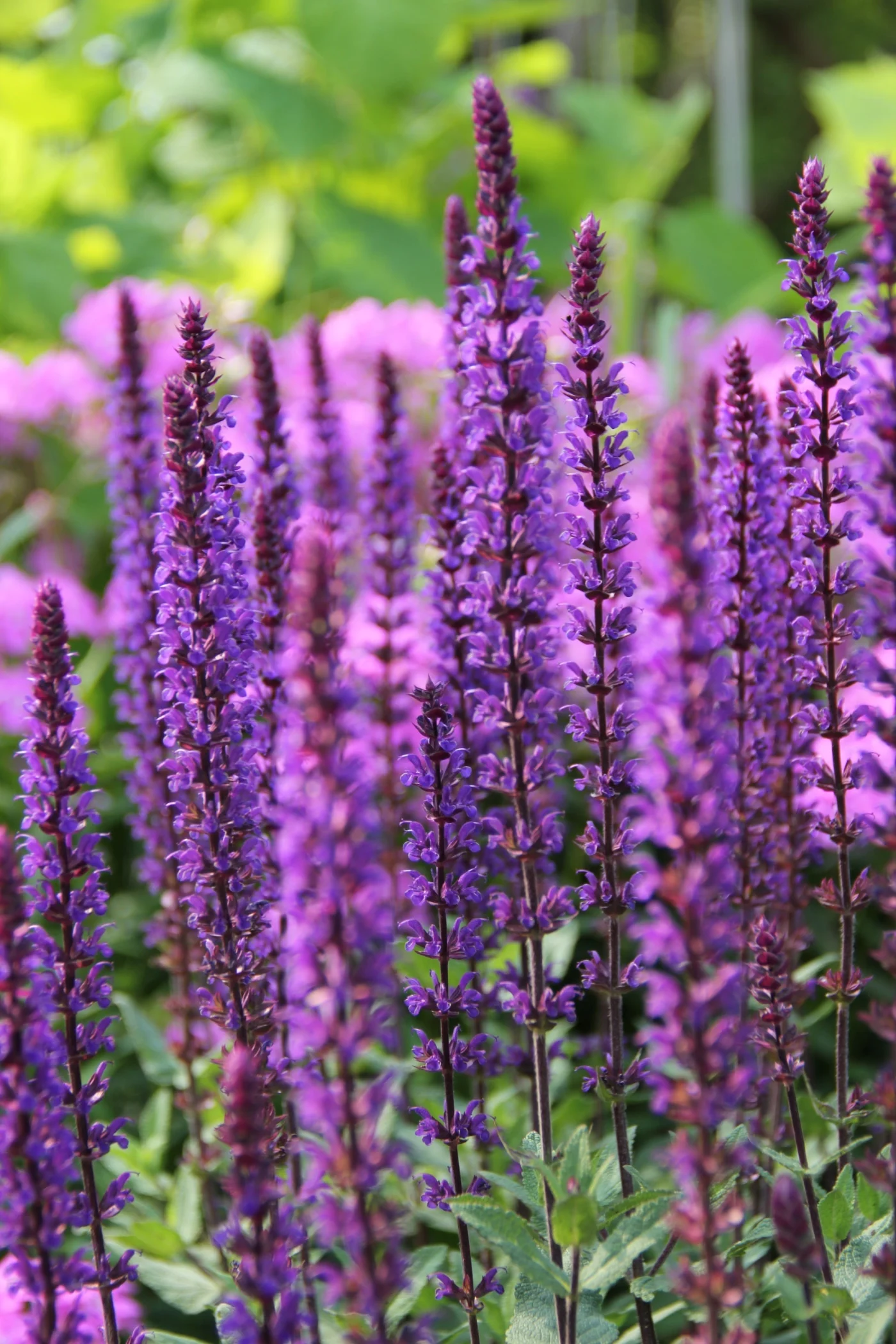
Purple flower spikes of Salvia ‘Caradonna’.
If you want structural contrast and deep color, Salvia ‘Caradonna’ delivers with its striking dark stems and purple flower spikes.
“For reliable color and exceptional pollinator appeal, few perennials outperform Salvia ‘Caradonna’,” says Jackson. Plant this perennial in a sunny, well-drained spot, water it thoroughly while it establishes, and deadhead the spent blooms to push flowering into the fall.
Sedum
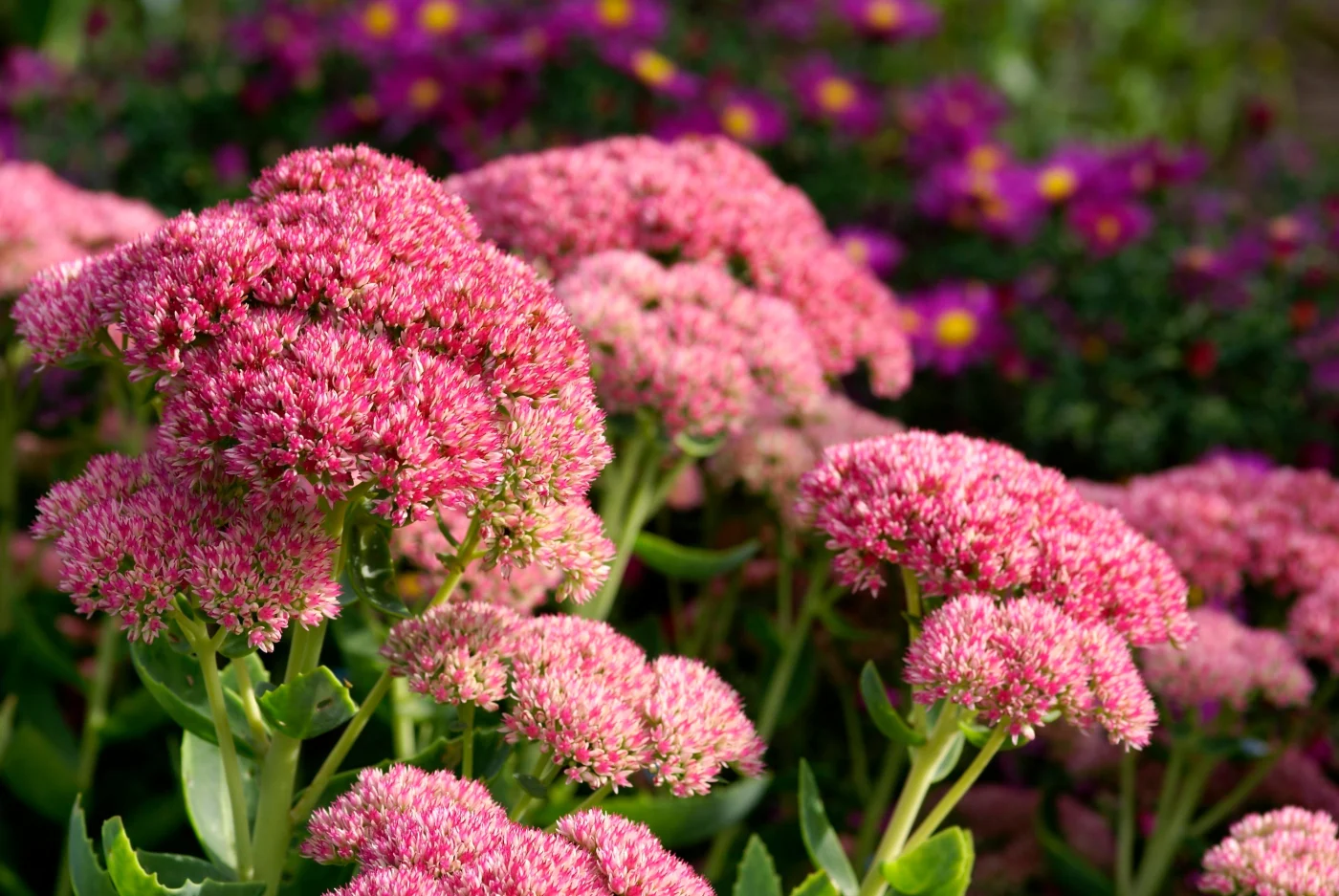
Sedum stonecrop planted near purple asters.
For gardeners seeking a low-maintenance splash of color, sedum is a top-tier choice. Henn recommends the Sedum spectabilis variety for its extreme resilience.
“This plant is perfectly adapted for dry conditions,” Henn explains. Its fleshy, gray-green leaves store water, while its late-summer flowers attract butterflies and beneficial insects.
Verbena bonariensis
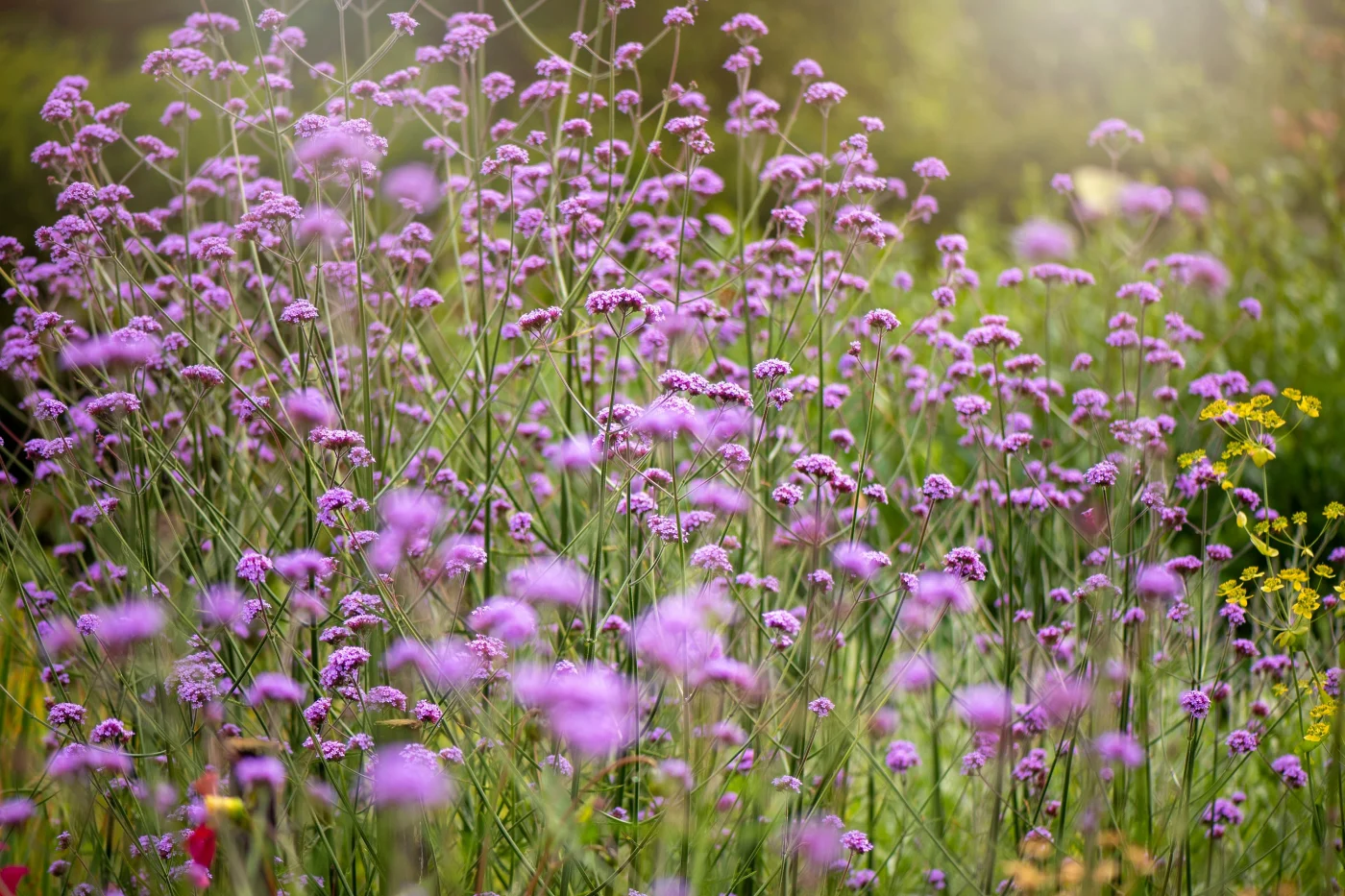
Tall purple blooms of Verbena bonariensis.
Verbena is a tall, slender perennial that adds architectural height without blocking the plants behind it.
“Verbena bonariensis brings height without heaviness,” Jackson says. Its delicate lilac clusters seem to float above the garden bed, providing dynamic movement and acting as a premier nectar source for late-season pollinators