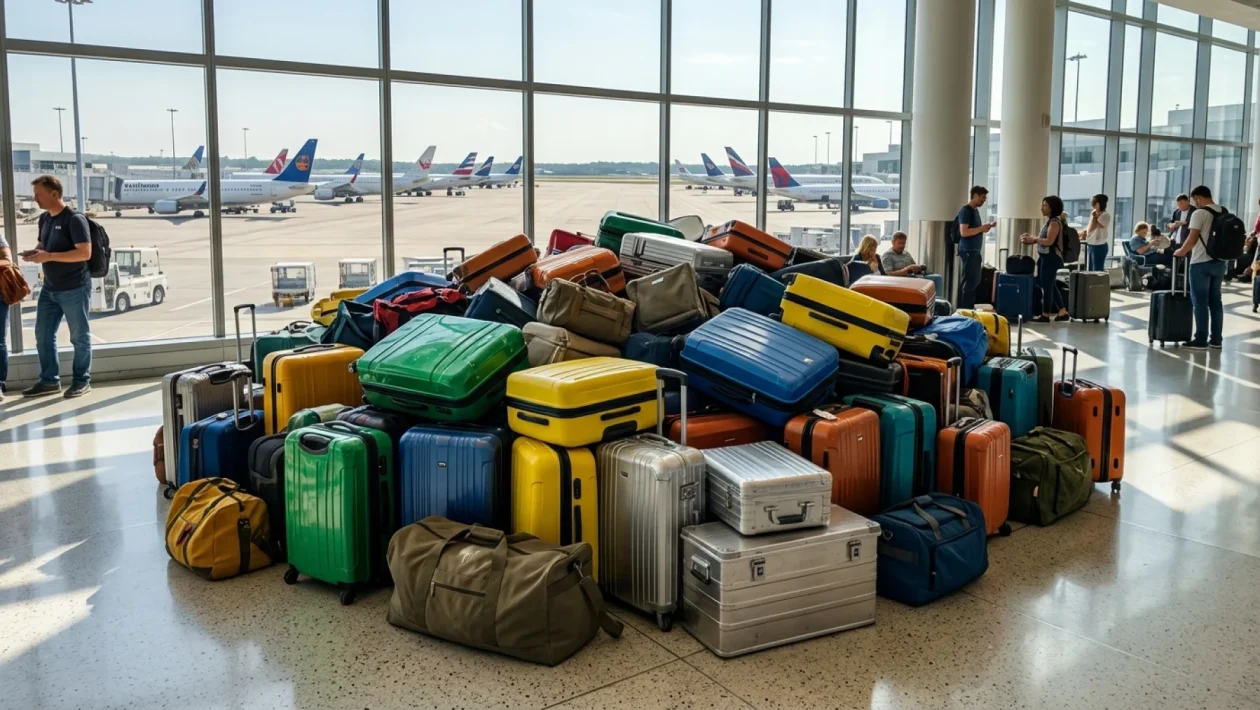
If you are booked on a flight south of the border this week, brace yourself for a logistical nightmare. US airport delays have reached a critical tipping point, completely shattering operational schedules across the continent. Airlines are quietly sending out alerts, urging passengers to rethink their travel plans entirely. The good news is that if you know exactly where the bottlenecks are, you can bypass the absolute worst of the gridlock.
I have spent the last two decades practically living out of a suitcase, and the operational strain we are seeing this July is unprecedented. It is not just a minor inconvenience of waiting an extra hour at the gate anymore. We are talking about severe, structural backups that are stranding passengers overnight and forcing massive luggage mountains to pile up in baggage claims.
US Airport Delays: Why The Tarmacs Are Gridlocked Right Now
The aviation system is currently choking on its own volume. Air traffic control staffing shortages have collided with record-breaking post-pandemic summer vacation numbers. It is a recipe for absolute disaster.
Here is a sobering hard fact to put this in perspective. According to the Federal Aviation Administration (FAA), a staggering 41% of all afternoon flights out of the Northeast corridor are hitting delays exceeding three hours this month. Once one major airport halts departures, the domino effect ripples all the way up into Canadian airspace.
This means your simple Toronto to Miami connection could easily turn into a 14-hour ordeal. WestJet and Air Canada are already scrambling to adjust their turn-around times, but they are at the mercy of American ground control.
Massive Travel Warnings: What Officials Are Actually Telling You
When airlines issue a “travel warning” or a “travel advisory,” they are doing more than just giving you a heads-up. They are legally offering you a free out. These massive travel warnings are essentially the carriers admitting that their networks are failing.
Right now, nearly every major North American carrier has enacted flexible rebooking waivers for the hardest-hit regions. They actively want you to change your flight to a later date so they can ease the pressure on their overburdened crews.
“We haven’t seen a systemic strain like this since the great meltdown of 2022. If your airline offers a free rebooking waiver this July, take it without hesitation,” warns senior aviation operations analyst, Mark Jenkins.
Major Hubs This Summer: The Exact Airports You Need To Dodge
Not all airports are burning down right now. The chaos is highly concentrated in a few specific, legacy hubs that simply lack the infrastructure to handle the July 2026 passenger surge. If you are flying through any of the following choke points, you need a backup plan.
To keep things moving smoothly, I always look for secondary airports. They might require a slightly longer Uber ride to your hotel, but they will save you hours of terminal misery.
| Major Hub (Avoid If Possible) | Better Alternative (The Fix) |
|---|---|
| JFK or LaGuardia (New York) | EWR (Newark) or HPN (Westchester) |
| ORD (Chicago O’Hare) | MDW (Chicago Midway) |
| ATL (Atlanta Hartsfield-Jackson) | Direct flights only (Zero connections!) |
How To Bypass The Chaos Like A Pro
You cannot control the air traffic control towers, but you absolutely can control how you navigate the airport. Surviving these US airport delays requires a tactical approach.
Stop relying on the customer service desk. By the time you get in that line, a hundred other people have already taken the last seats on the next flight out. Here is exactly how to handle the chaos like a seasoned road warrior.
- Download the airline app before you leave home. The app will update with delays and gate changes a solid 10 minutes before the airport departure screens do.
- Travel strictly with a carry-on. If your flight is canceled, you can instantly sprint to another terminal and jump on a competitor’s flight without worrying about your checked bag ending up in Ohio.
- Leverage your NEXUS card. Canadian travelers with NEXUS get TSA PreCheck privileges in the US, allowing you to breeze past the massive security lines when you are rushing to make a tight, delayed connection.
- Rebook yourself digitally. When a cancellation hits, use the airline’s app to rebook yourself immediately while you stand in line for the physical agent as a backup.
Frequently Asked Questions
Will travel insurance cover these massive delays?
Yes, provided you purchased a comprehensive policy before the specific airline warnings were officially issued. Most premium Canadian credit cards also include trip interruption insurance that kicks in after a four-to-six-hour delay, covering your meals and a hotel room.
Can I get a full cash refund if I just cancel my trip?
If the airline officially cancels your flight or alters your schedule significantly (usually by more than three hours), US Department of Transportation rules dictate you are entitled to a full cash refund to your original payment method. Do not let them force a flight voucher on you if you prefer the cash.
Is it better to fly early in the morning or late at night?
Always book the absolute earliest flight of the day, ideally before 8:00 AM. Aircraft for these morning flights usually arrive the night before, meaning you bypass the cascading afternoon delays entirely.
🤝 Good luck out there on the road this summer, folks.
💡 Navigating these massive delays is all about staying one step ahead of the crowd and keeping your cool when the departure boards light up in red.
📱 Share your thoughts and your own airport survival stories with me in the comments below.
👇 Safe travels, and remember to always pack an extra dose of patience in your carry-on!