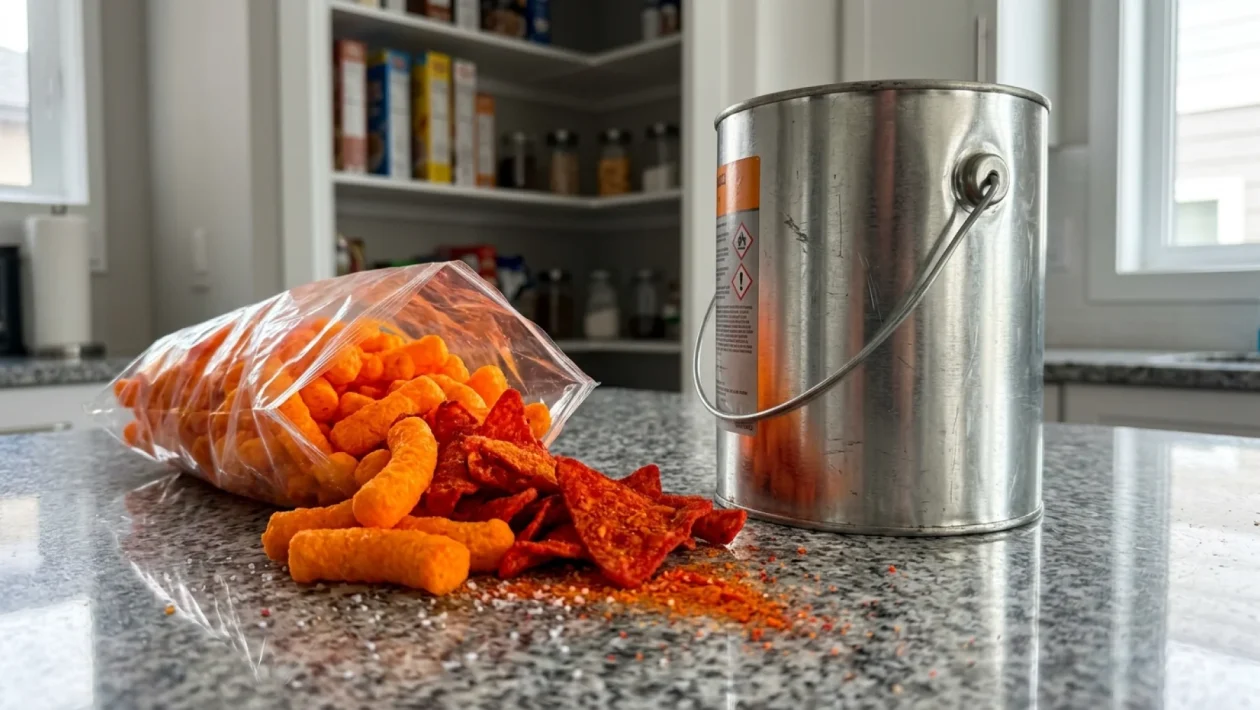
You think you are just grabbing a harmless bag of chips or a neon-coloured soda for the weekend, but you might actually be swallowing industrial-grade chemicals. The truth behind the recent wave of banned popular snacks is enough to make you toss your entire junk food drawer straight into the trash. We are going to break down exactly which toxic ingredients forced government regulators to finally pull the plug, and how you can safely purge your pantry today.
I am used to reading hazardous material warnings on cans of paint and heavy-duty caulking on the job site. When I started seeing those exact same chemical compounds listed on the back of my favourite weekend treats, massive warning bells went off.
Banned Popular Snacks You Grew Up Eating
If you grew up in North America, your childhood was probably fuelled by brightly coloured candies and impossibly orange cheese puffs. But as we navigate the grocery aisles in July 2026, the regulatory landscape has completely shifted.
Major heavyweights like Frito-Lay and Kraft have had to aggressively reformulate their iconic products over the last few years. The original neon-orange Kraft Dinner and certain blazing-red tortilla chips were packed with artificial dyes that simply do not meet modern safety thresholds.
Even staples like Mountain Dew and certain variations of Skittles found themselves in the crosshairs. Regulators finally realized that making a snack look cool was not worth the biological toll it was taking on our bodies.
The Disturbing Chemical Reason
So, what exactly tipped the scales? It all comes down to petroleum-based dyes and literal flame retardants. Yes, you read that correctly.
Here is a staggering fact to chew on: over 3,000 food additives are legally approved in North America, but nearly 400 of those are strictly outlawed in Europe. Chemicals like Brominated Vegetable Oil (BVO) were originally patented to keep plastics from catching fire before they were repurposed to keep citrus flavouring from separating in your soda.
Another major offender is Titanium Dioxide, a whitening agent used in everything from road paint to hard-shelled candies. It builds up in your cells over time, and regulators finally had enough.
“We are finally seeing a massive legislative correction. The human liver was never designed to process synthetic industrial dyes, and the long-term cellular damage is undeniable,” says Dr. Aris Thomas, a leading Canadian toxicologist.
Why Your Pantry Is A Hazard
The real danger is not eating one rogue candy bar on a road trip. The hazard lies in the compounding effect of consuming these banned popular snacks day after day.
When your pantry is stocked with ultra-processed foods, you are essentially running a slow-drip science experiment on your family. These synthetic additives disrupt gut biomes, trigger hyperactivity in kids, and have been linked to severe metabolic issues.
You do not need to panic, but you do need to take immediate action. Here is exactly how to audit your kitchen shelves right now:
- Pull everything out: Empty your snack cupboards completely so you can inspect every single label under good lighting.
- Scan for the offenders: Look specifically for Red 40, Yellow 5, Titanium Dioxide, and BVO.
- Check the source: If a snack is imported from a country with notoriously lax food safety laws, throw it out immediately.
- Restock with whole alternatives: Replace the toxic stuff with naturally dyed snacks coloured by beet juice, turmeric, or spirulina.
The Hit List: What To Look For
To make your pantry clean-out incredibly easy, I put together a quick cheat sheet. Cross-reference this with your snack drawer to see what needs to go straight into the bin.
| Toxic Ingredient | Commonly Found In |
|---|---|
| Brominated Vegetable Oil (BVO) | Citrus sodas, sports drinks |
| Titanium Dioxide | Hard candies, powdered donuts |
| Red Dye 40 | Fruit snacks, spicy chips |
| Potassium Bromate | Packaged bread, pizza crusts |
Keep this table handy on your smartphone the next time you hit the local grocery store.
Frequently Asked Questions
Are all versions of these snacks completely illegal now?
Not entirely. Many brands chose to reformulate their recipes rather than lose their massive market share. The snacks are still on the shelves, but the current versions use natural colouring and stabilizers instead of the illegal chemical compounds.
Can I still buy the old versions online?
Technically, you might find old stock floating around third-party websites, but importing banned food substances can get your package seized at the border. Plus, it is simply not worth the health risk just for a fleeting hit of nostalgia.
Why did it take North America so long to ban these?
It boils down to lobbying and outdated regulatory frameworks. Health Canada and the FDA historically required absolute proof of harm, whereas European agencies operate on the “precautionary principle,” banning anything suspicious until it is definitively proven safe.
Time to Clean House
💡 Take control of your kitchen today by grabbing a garbage bag and getting ruthless with those ingredient labels. You work way too hard to let cheap industrial chemicals sneak their way into your downtime.
📱 Share your thoughts and let me know what shocked you the most during your pantry audit. Send this guide to your buddies before their next summer BBQ so they aren’t serving up a side of synthetic toxins.
👇 Leave a comment below if you have found an awesome, naturally flavoured replacement for your favourite childhood junk food.
🤝 Good luck with the clean-out, and remember that eating well does not mean giving up snacks—it just means demanding better ones!