May 2026 marks the absolute end of the line for CBS News Radio. After nearly 100 years of delivering top-of-the-hour bulletins, the network has permanently pulled the plug on its terrestrial radio operations. If you rely on that familiar chime during your morning commute, you are now staring at dead air. The infrastructure that guided millions of North Americans through World War II, the moon landing, and the dawn of the internet has quietly been dismantled.
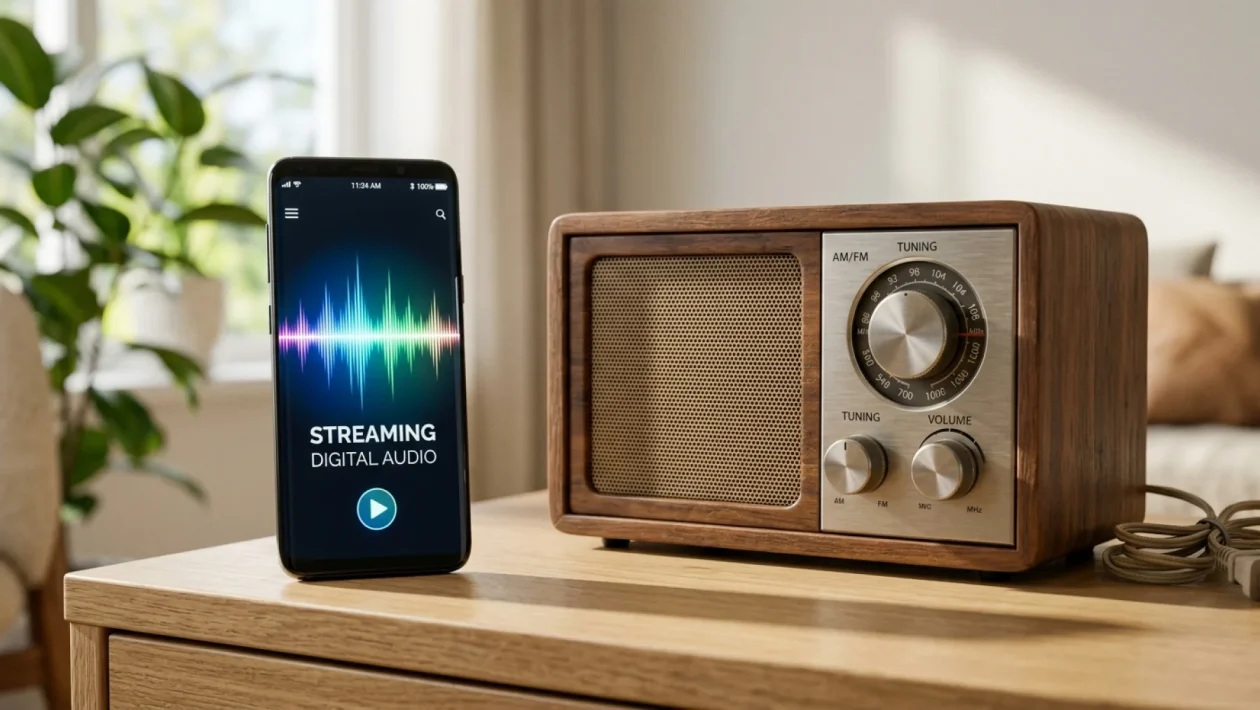
I have spent two decades analyzing the media landscape, and I can tell you this wasn’t an overnight accident. Legacy audio networks have been hemorrhaging affiliate stations for years. We are witnessing the final, brutal transition from massive transmission towers to server racks.
The CBS News Radio Shutdown
The definitive end of this broadcasting service, as recently reported by CBC News, is a massive wake-up call for audio consumers. For generations, local stations across the continent relied on network feeds to provide international credibility to their local broadcasts. When a major crisis broke, local DJs flipped a switch, and a hardened network anchor took over the airwaves.
That safety net is now officially gone. Local stations are scrambling to fill the void, often resorting to automated text-to-speech news readers or simply abandoning top-of-the-hour news altogether. The shutdown effectively creates news deserts for drivers and rural listeners who haven’t upgraded their dashboard technology.
“The migration from terrestrial towers to digital server racks isn’t just inevitable; it is already finished. Broadcasters can no longer justify the millions spent on transmitter maintenance when an app delivers crystal-clear audio to billions instantly.” — Marcus Thorne, Senior Audio Technologist.
Why a Century-Old Titan Went Silent
The math simply stopped making sense for traditional terrestrial broadcasting. CBS News Radio didn’t fail because people stopped caring about the news; it failed because the delivery mechanism became obsolete. Advertisers have relentlessly shifted their budgets toward highly targeted digital podcasting metrics, leaving broad-stroke radio campaigns starving for revenue.
The hardware transition in our vehicles delivered the final blow. By 2025, major automakers like Ford and Volvo aggressively began phasing out AM radio receivers in their electric vehicles. They cited electromagnetic interference from the battery systems, but the reality is backed by hard data: terrestrial AM/FM listenership in cars plummeted by 42% between 2020 and 2025.
| Traditional Radio (AM/FM) | Digital Streaming (Apps/Smart Dash) |
|---|---|
| Subject to weather static and tower range limits. | Crystal-clear, uninterrupted audio worldwide. |
| Declining ad revenue limits quality reporting. | Targeted ads fund premium, on-demand journalism. |
| Phased out of modern EV dashboards. | Natively integrated into Apple CarPlay and Android Auto. |
How to Pivot Using TuneIn
You do not have to lose your morning news ritual just because the radio towers are powering down. If you want a seamless replacement for top-of-the-hour journalism, the TuneIn app is currently the most robust aggregator for live audio news. It bypasses terrestrial limitations and streams direct to your phone or smart speaker.
Transitioning your daily commute from analog radio to digital streaming takes less than three minutes. Here is the exact process to bulletproof your morning news feed:
- Download the TuneIn app on your smartphone and create a free account to save your preferences.
- Search for “Live News Networks” in the discovery tab to find direct digital streams from trusted national outlets.
- Tap the “Heart” icon next to your preferred station to lock it into your favorites library.
- Connect your phone to your vehicle via Bluetooth or Apple CarPlay, and select the TuneIn app from your dashboard display.
Frequently Asked Questions
Will my local AM/FM station stop broadcasting entirely?
Not necessarily. While the national CBS News Radio feed is dead, many local stations will continue broadcasting local talk, sports, and music. However, their international and national news segments will likely be drastically reduced or replaced by automated feeds.
Do I need to pay for a subscription to use streaming audio apps?
Most major news streams are entirely free and ad-supported on platforms like TuneIn or Apple Podcasts. Premium tiers exist primarily to remove interstitial advertisements or unlock exclusive live sports play-by-play.
🤝 Share this guide with the radio loyalists in your life who are wondering why their favorite morning broadcast just went dark.
💡 The shift to digital audio can feel frustrating, but the clarity, control, and sheer volume of on-demand information available right now is unprecedented.
📱 Send this to a friend or family member who needs help setting up their digital dashboard before their morning commute.
👇 Drop your preferred digital news app in the comments and let me know how you’re surviving the end of the terrestrial radio era.