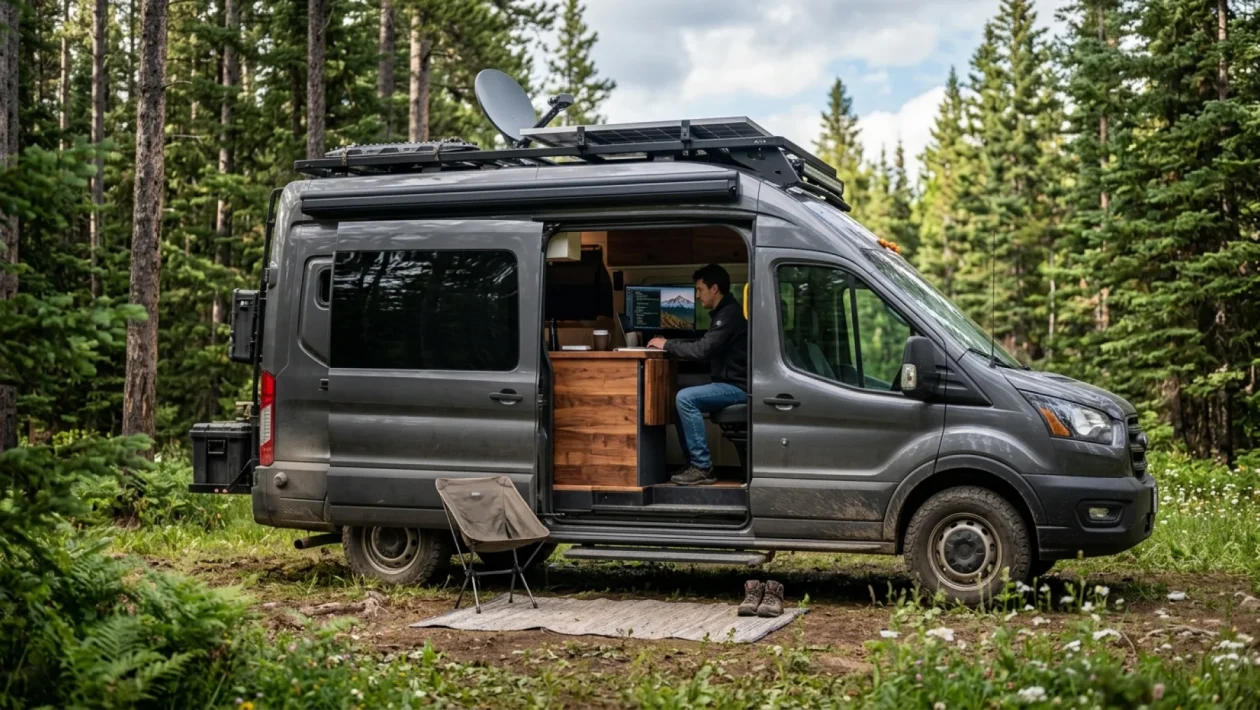
You are probably staring at another massive rent or mortgage payment right now, wondering where all your hard-earned cash is evaporating. The housing market is absolutely ruthless, leaving plenty of hardworking people grinding just to afford a basic roof. But what if you could completely eliminate property taxes, slash utility bills, and bank hundreds of extra dollars every single month by taking your life completely off-grid?
I am talking about swapping a concrete foundation for four wheels and a whole lot of freedom. The solution is full-time motorhome living, and a growing wave of remote workers are using it to hack their cost of living and take their offices on the road.
RV Living Guide: The Reality Check
Before you hand over your house keys, you need to understand that living in a vehicle requires serious logistical prep. Take Ronan, a web developer who successfully walked away from the traditional housing trap to work completely mobile. He actually keeps his nomadic lifestyle a secret from his clients, worried they might think he’s gone completely off the deep end.
But the reality is far from the “lone wolf in the woods” stereotype. As we hit the peak of July 2026, technology has made working from a campsite easier than ever. It is no longer about roughing it; it is about smart, efficient downsizing.
“The modern digital nomad isn’t just a backpacker anymore; they are dedicated professionals carrying their high-tech offices in a customized chassis, leveraging solar power to permanently escape the traditional cost of living,” says Sarah Johnston, a senior mobility and remote-work analyst.
Ditching Your Mortgage: The Ultimate Financial Reset
Getting out from under a heavy mortgage is the catalyst for most people making this jump. Ronan pulled off a brilliant move: he flipped a fixer-upper house, cashed out the equity, and used those profits to buy a solid used RV outright. By trading bricks for a motorhome, he completely wiped out his annual property taxes.
It is a stark contrast to the standard North American grind. Did you know that according to recent economic data, the average North American currently sinks nearly 40% of their gross income directly into housing and baseline utilities? Escaping that statistic is exactly what makes the nomadic leap so incredibly appealing.
Building A Custom Rig: DIY Upgrades On A Dime
You absolutely do not need a half-million-dollar luxury coach to live comfortably. In fact, doing the interior build-out yourself is where the real savings hide. Ronan ripped into his used rig and customized his entire living space for just a few hundred bucks using sheer sweat equity.
To run his mobile tech business, he wired up a bank of five heavy-duty solar batteries. Whether you are sourcing deep-cycle marine batteries from a trusted spot like Canadian Tire or mounting a rugged Starlink dish to your fiberglass roof, building a self-sufficient rig is surprisingly affordable if you are willing to turn a wrench.
Saving Big As A Digital Nomad: The Monthly Breakdown
Let’s talk pure numbers, because this is where the rubber meets the road. The financial relief of RV life is immediate and highly measurable. On a modest net income, Ronan manages to bank an extra $300 to $400 every single month—cash that used to be burned on basic survival in a stationary house.
| Expense Category | RV Living Costs (Monthly Avg) |
|---|---|
| Property Tax / Rent | $0 (excluding optional campsite fees) |
| Vehicle Fuel | $200 |
| Heating / Cooking (Propane) | $25 – $30 |
Even when you factor in winter campsite fees to stay plugged in during the coldest months, the overall operational cost is a fraction of a traditional home. Gas cylinders for cooking and heating barely make a dent in the annual budget.
Making The Leap: Your Step-By-Step Escape Plan
You cannot just throw a mattress into a rusty van and expect to run a successful remote business. If you want to survive and thrive on the road, you need a bulletproof transition strategy.
- Lock Down Your Paperwork: Sort out your domicile status immediately. You will need a legal mailing address, updated insurance that covers full-time RV living, and valid health coverage for out-of-province or cross-border travel.
- Winterize Your Setup: Do not wait for the frost. Insulate your plumbing lines, upgrade your propane heating system, and ensure your battery bank can handle freezing temperatures without dropping voltage.
- Establish Redundant Connectivity: A single cellular plan will fail you in remote areas. Combine a satellite internet dish with dual-SIM mobile routers to ensure you never drop a client video call.
Frequently Asked Questions
Is it legal to live in an RV full-time?
Yes, but there are strict rules. You cannot just park on any city street permanently. You must manage your legal residency status (often by maintaining a mail-forwarding address) and stick to legal overnight spots like designated campsites, Crown land, or private property with the owner’s permission.
How do I handle the freezing winter months?
Most full-timers chase the sun and head south before the snow flies. If you must stay in a cold climate, you will likely need to rely on paid RV parks with shore power. Running high-draw electric heaters off a solar setup in the dead of winter is incredibly difficult without draining your batteries.
What happens to my insurance and taxes?
You need specialized full-timer RV insurance, as standard auto policies will not cover you if the rig is your primary residence. For taxes, you must maintain a legal domicile in a specific province or state, which dictates your income tax rates and healthcare eligibility.
🤝 Taking your life on the road is a massive decision, but the freedom to control your own backyard is entirely worth the initial growing pains.
💡 The housing market isn’t going to fix itself anytime soon, so taking matters—and a steering wheel—into your own hands might just be the smartest financial move you can make this year.
📱 If you have ever considered ditching the traditional grind for an off-grid rig, share your thoughts or your own RV build plans in the comments below.
👇 Good luck out there, keep those solar panels clean, and I will see you down the road!