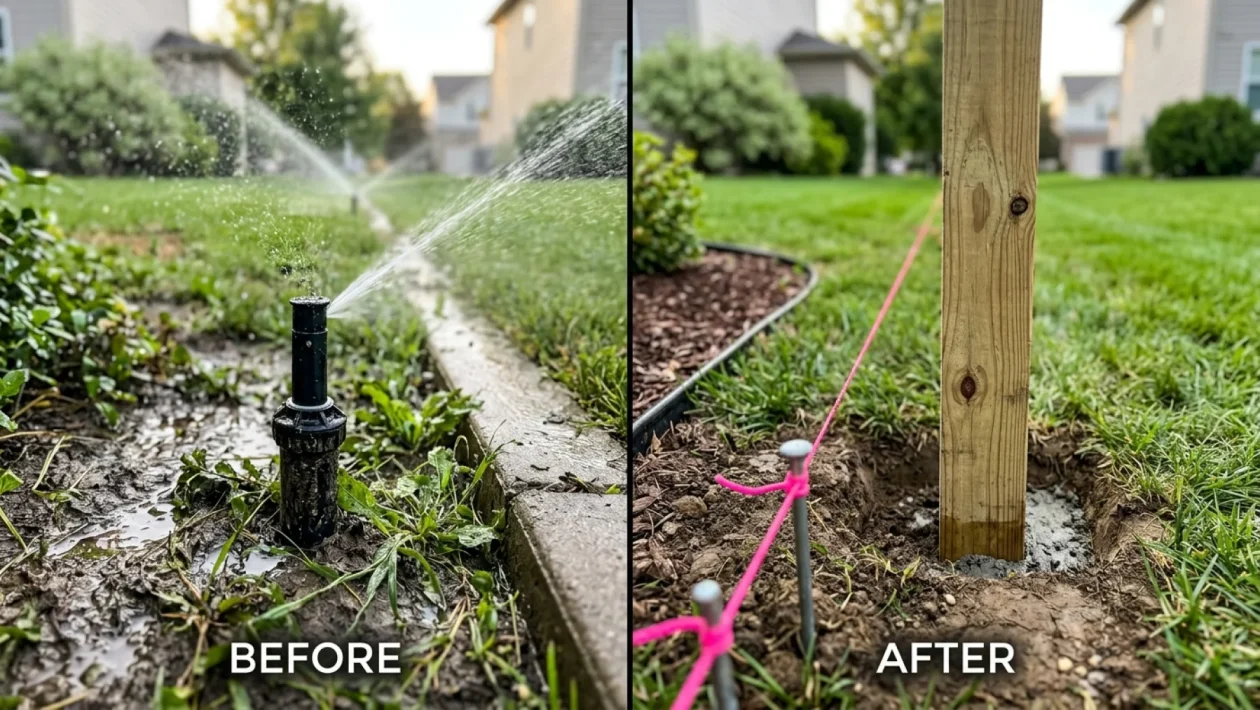
You’ve saved your cash, ordered a massive stack of pressure-treated lumber from RONA, and you’re fully ready to secure your backyard this July. But just as you’re firing up the post-hole auger, your neighbor struts over and demands you halt construction immediately. Their excuse? They just realized part of their underground sprinkler system is on your property, and they feel “left out” of your fence-design process. It’s infuriating, but don’t let a sudden property line dispute derail your hard-earned summer plans. I’m going to show you exactly how to shut down the entitlement, handle their rogue plumbing, and get your fence posts in the ground by Sunday.
Property Line Disputes: The Hard Truth About Your Boundaries
When it comes to real estate and boundary lines, feelings simply do not matter. The only thing that dictates where your lumber goes is cold, hard geography.
A staggering 78% of residential boundary conflicts in North America stem from outdated, “handshake” agreements between previous property owners. If your neighbor is shocked to find their irrigation heads watering your side of the dirt, that’s a massive failure on their part to verify boundaries before landscaping.
You do not need an abutting property owner’s permission to build a fence on your side of the property line. As long as you comply with local municipal bylaws regarding height and setback limits, you are the undisputed boss of your backyard.
How To Silence Entitled Neighbors (Legally And Politely)
An entitled neighbor usually relies on guilt trips, raised voices, and loud demands to stall your project. The best way to silence them quickly is with undeniable, documented proof.
“The quickest way to defuse an angry neighbor is to hand them a freshly stamped boundary survey. You can’t argue with GPS and a licensed surveyor’s iron bar.” — Dave Henderson, Ontario Land Surveyor
When they complain about not being involved in your fence choice, remind them firmly but politely that this is a private project on private land. You aren’t building a community center; you are securing your own equity and privacy.
Keep your emotions completely in check during these interactions. Hand them a copy of your official land survey, smile, and tell them your build schedule is moving forward as planned.
Remove Encroaching Sprinklers Without Causing A Flood
Now for the fun part: dealing with that rogue sprinkler line hiding in your dirt. You can’t just smash it blindly with a shovel without risking a muddy swamp inside your freshly dug post holes.
Since the utility is buried on your land, you absolutely have the right to remove the encroachment, but you want to do it cleanly. Here is the safest way to sever an encroaching irrigation line:
- Locate the exact property line: String a high-visibility masonry line tightly between your survey pins so there is zero confusion about what belongs to who.
- Notify the neighbor in writing: Give them a formal 48-hour written notice to cap and remove their lines from your property before you begin heavy excavation.
- Cap the line at the border: If they stubbornly refuse to act, carefully dig down to the PVC pipe precisely on your side of the boundary line.
- Cut and seal: Cut the pipe cleanly with a standard hacksaw, install a watertight PVC cap using proper primer and cement, and bury it.
Build Your Fence Fast (And Keep The Peace)
Once the underground obstacles are legally cleared, speed is your absolute best friend. A drawn-out construction zone just gives an irritated neighbor more time to stew and complain.
Have all your materials staged on your lawn and ready to go. Rent heavy-duty equipment like a gas-powered auger from your local hardware store to make incredibly quick work of the digging.
| Encroachment Removal Approach | Cost & Impact |
|---|---|
| Neighbor hires a pro to move it | Costs you $0, entirely legal, completely maintains neighborhood peace. |
| You cap it yourself (DIY) | Under $15 for PVC cement and a cap, highly effective, but risks neighborly tension. |
Get the posts leveled and set in concrete on day one. Once the structural framework of the fence is locked in, the psychological boundary is already established, and the petty complaints usually vanish.
Frequently Asked Questions
Can my neighbor legally stop my fence construction?
No, not if you are building entirely within your surveyed property lines and adhering to local height bylaws. They can complain to the city, but without a legitimate zoning violation, they have no legal power to stop you.
Am I liable if I damage their sprinkler system on my property?
Generally, no. If an item is trespassing on your legal land, you have the full right to remove it. However, deliberately causing water damage to their adjacent yard could trigger a civil dispute, so capping the line cleanly is always your safest bet.
What if they refuse to acknowledge the land survey?
If a neighbor blatantly ignores a legal land survey and physically obstructs your build, you are officially dealing with trespassing. At that point, it’s time to call the non-emergency police line to have an officer mediate the situation.
🤝 Good luck navigating this backyard battlefield this summer.
💡 Handling encroaching utilities requires a steady hand, a bit of patience, and a rock-solid legal land survey.
📱 If this guide helped you save your summer project, share your thoughts with a fellow DIYer who might be dealing with their own neighborhood drama.
👇 Now get out there, fire up that auger, and claim what’s rightfully yours!