Your air conditioner is working overtime right now, but the real threat this weekend isn’t just the sweltering July 2026 heat.
The immediate danger is the massive, undeniable strain on our electrical grid.
Millions of homes are sitting directly in the crosshairs of sudden, prolonged rolling blackouts starting this Friday evening.
I’m going to show you exactly which regions are in the danger zone and, more importantly, the rapid-fire steps you must take to keep your family safe, cool, and connected when the grid goes dark.
Power outages this weekend: The trigger behind the crisis
We are officially deep into a brutal summer, and our energy infrastructure is groaning under the weight.
It isn’t just about bad luck or a random downed tree. It is a fundamental math problem.
Here is a staggering reality check: The North American Electric Reliability Corporation (NERC) recently reported that peak summer energy demand has surged by a massive 14% since last year.
Our aging transformers and regional substations simply can’t push that much juice without tripping.
When everyone from Toronto down to Austin cranks their AC units to survive this historic heat dome, the entire system reaches a breaking point.
The 5 states at highest risk of grid failure
If you live in one of these target zones, you need to be on high alert immediately.
Grid operators are already issuing warnings for mandatory load shedding if temperatures spike as forecasted.
Because of interconnected cross-border grids, what happens in states like New York or Michigan directly impacts millions of Canadians in Ontario, too.
| High-Risk State | Primary Grid Threat This Weekend |
|---|---|
| Texas (ERCOT) | Record-breaking AC demand pushing reserves to zero. |
| California (CAISO) | Wildfire risks forcing proactive utility shutoffs. |
| Michigan | Severe summer storm cells damaging aging power lines. |
| New York | Urban heat islands overloading local city transformers. |
| Florida | Early tropical storm activity disrupting coastal substations. |
How to protect your home when the lights go out
Panic isn’t a strategy. Hard preparation is.
As a guy who has wired more backup panels than I can count, I’m telling you to stop relying on hope.
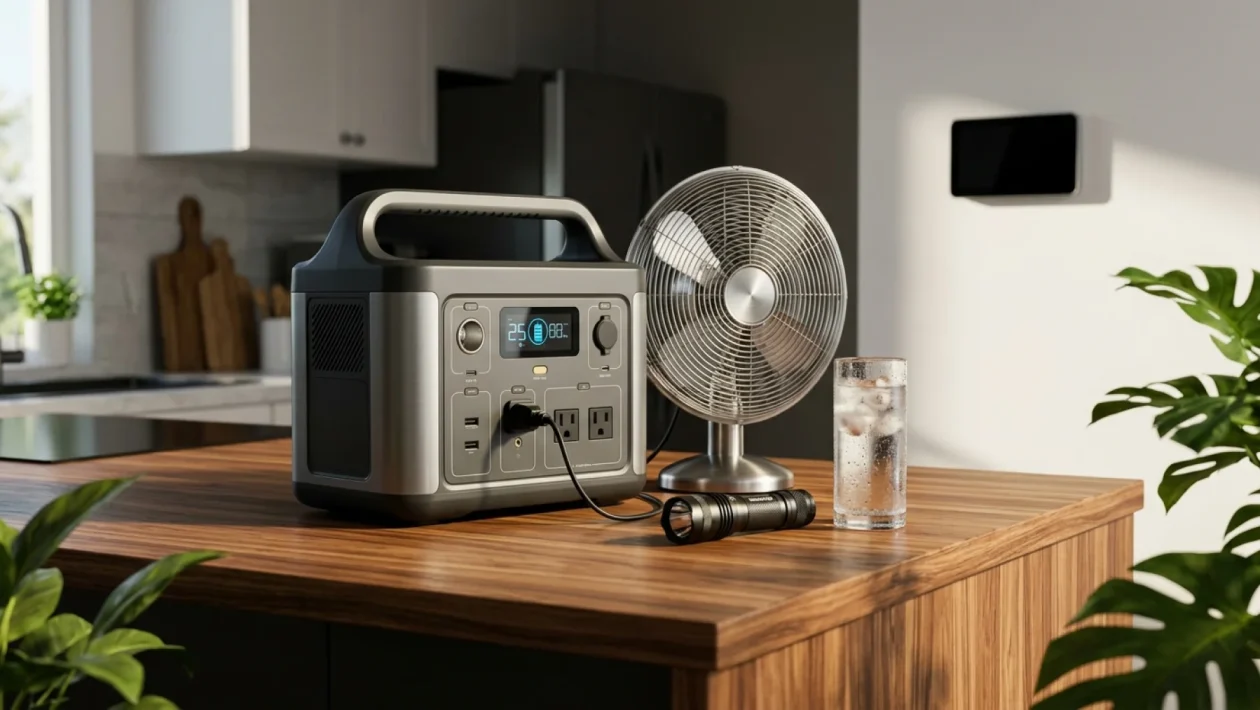
Whether you’re firing up a heavy-duty Generac standby unit or just doing a frantic last-minute run to Canadian Tire for lithium battery banks, you need an actionable plan.
“Your best defense against a summer grid collapse is a decentralized power plan. Don’t wait for the utility company to save you; secure your own cooling and medical device power needs 48 hours in advance,” says Dr. Aris Vlahos, lead grid resilience researcher.
If you want to ride out the darkness in comfort, follow my foolproof emergency prep protocol for this weekend:
- Pre-cool your house: Drop your thermostat by three degrees right now to build a thermal buffer in your home before the outages hit.
- Lock down your food: Freeze jugs of water and place them in your fridge and freezer to keep your perishables safe for up to 48 hours.
- Fuel up the backups: Test your portable generators, rotate your stored gas, and ensure they run strictly outdoors away from windows.
- Isolate critical circuits: Unplug sensitive electronics like TVs and computers to protect them from the massive power surge when the grid turns back on.
Frequently Asked Questions
Will my water stop working during a blackout?
If you are on municipal water, you will likely still have pressure for a few days.
However, if you rely on a private well, your electric pump will die instantly.
Always fill your bathtub with water before a storm to use for manual toilet flushing.
Is it safe to sleep with the windows open?
In many regions, yes, but be mindful of the outdoor heat index and security.
Instead of just opening windows, use battery-operated camping fans to create a cross-breeze in your bedroom.
How long do rolling blackouts usually last?
Planned load-shedding outages usually last between 60 to 90 minutes per neighborhood.
Unplanned equipment failures due to blown transformers, however, can easily stretch into a multi-day nightmare.
🤝 Good luck out there this weekend, and remember that a single hour of preparation today saves you days of misery tomorrow.
💡 Take total control of your home’s energy security, double-check those battery levels, and definitely look out for your elderly neighbors.
📱 If you found this breakdown helpful, share your thoughts below or send this article directly to a friend who lives in one of the high-risk zones.
👇 Stay safe, stay cool, and I will see you in the next grid update.