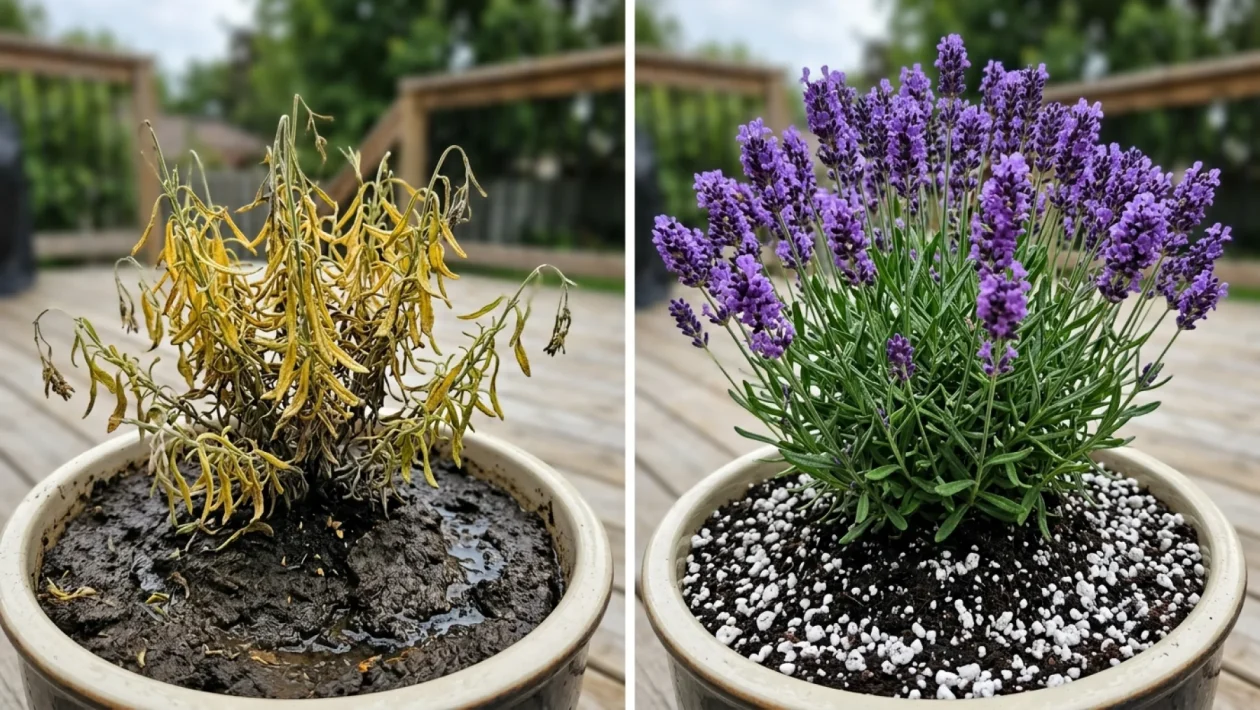
You bought a gorgeous lavender plant, watered it like a responsible plant parent, and within weeks, it turned into a crispy, yellowing disaster. You aren’t underwatering it—you are suffocating it. Mediterranean plants utterly despise heavy North American clay, and the fastest way to stop root rot dead in its tracks is by cutting your dirt with lavender soil perlite.
Most folks instinctively reach for a liquid fertilizer or the garden hose when their plants look sad. Put the watering can down. Your lavender is screaming for oxygen, not food.
Lavender Soil Perlite: Why Your Current Dirt Is Drowning Your Plants
Lavender natively thrives in the rocky, chalky, poorly nourished soils of the Mediterranean basin. When you drop that same plant into a standard bag of moisture-retaining potting mix or dense backyard clay, you are signing its death warrant.
In heavy soils, water gets trapped around the root system. The tissues soften, oxygen gets cut off, and the plant literally drowns from the bottom up. By the time you see yellowing leaves up top, the damage below ground is already severe.
“Your lavender’s root system must be established in highly aerated, fast-draining soil to survive our cold, wet North American winters without rotting away.”
That is where perlite steps up to the plate. It looks like crushed styrofoam, but it is actually raw volcanic glass. When heated to around 1,650°F (900°C), the rock pops exactly like popcorn, expanding up to 16 times its original size to create incredibly lightweight, porous granules.
The 25% Rule: Mixing The Perfect Free-Draining Substrate
You do not need an expensive, specialized nursery mix to make this work. You just need to dilute whatever dirt you already have with a heavy dose of lavender soil perlite.
Whether you are filling a patio container or amending a garden bed, you want to aim for a 25% ratio of perlite to soil. This magical quarter-volume creates permanent micro-pockets of air.
| Soil Additive | Impact on Lavender Roots |
|---|---|
| Horticultural Perlite | Maximum aeration, rapid drainage, prevents soil compaction. |
| Standard Compost | Holds excessive moisture, suffocates roots, leads to winter rot. |
Next time you are at Canadian Tire picking up a standard bag of PRO-MIX, grab a large bag of coarse perlite to go with it. Your wallet will thank you when you aren’t replacing dead lavender every single spring.
Stop Root Rot: How Puffed Volcanic Glass Saves Suffocating Roots
Water needs to hit the roots, deliver a quick drink, and immediately drain away. Perlite facilitates exactly that. Because the granules are highly porous, they catch just enough moisture to sustain the plant while letting the excess water aggressively filter down into the earth.
This rapid drainage prevents the soil from compacting into a dense brick. When roots can breathe freely, they grow deeper, thicker, and far more resilient to root-destroying fungi.
Ignite Explosive Summer Blooms: The Easy Mounding Technique
If you are planting directly into heavy ground soil, digging a deep hole and filling it with a perlite mix isn’t enough. You will just create a “bathtub” effect where surrounding groundwater rushes in and drowns your plant anyway.
Instead, you need to elevate the root zone. Building a raised mound ensures gravity works in your favor.
- Select a high spot: Find a location in your yard that gets at least eight hours of blasting sun.
- Build the mound: Mix your native soil with a hefty 25% dose of lavender soil perlite to create a small hill about 8 to 12 inches (20 to 30 cm) tall.
- Plant shallow: Set your lavender into the top of the mound, ensuring the crown rests slightly above the soil line.
- Mulch smart: Never use wood chips! Top dress the area with crushed gravel or white stone to reflect heat back up into the plant.
Frequently Asked Questions
Can I use vermiculite instead of perlite?
Absolutely not. While they look similar on the garden center shelf, vermiculite acts like a sponge to retain maximum water. That is great for thirsty ferns, but it is a guaranteed death sentence for drought-loving lavender.
Do I need to add fertilizer to this perlite mix?
Skip the fertilizer entirely. Lavender genuinely prefers terrible, nutrient-poor soil. Feeding it rich nitrogen will just force floppy, weak green growth at the expense of those iconic purple summer blooms.
Will the perlite float to the top of my outdoor pots?
Over a few seasons of heavy rain, lightweight perlite can slowly work its way to the surface. Just scratch it back into the top few inches of dirt with a hand trowel, or cover the soil surface with a thin layer of decorative gravel.
🤝 Share your thoughts in the comments below if you have ever struggled with keeping these beautiful purple plants alive.
💡 Good luck mixing up your new soil this weekend, and remember to always err on the side of underwatering!
📱 Send this guide to that neighbor who keeps accidentally killing their front porch planters.
👇 Drop a question if you need help troubleshooting a specific heavy clay issue in your own yard!