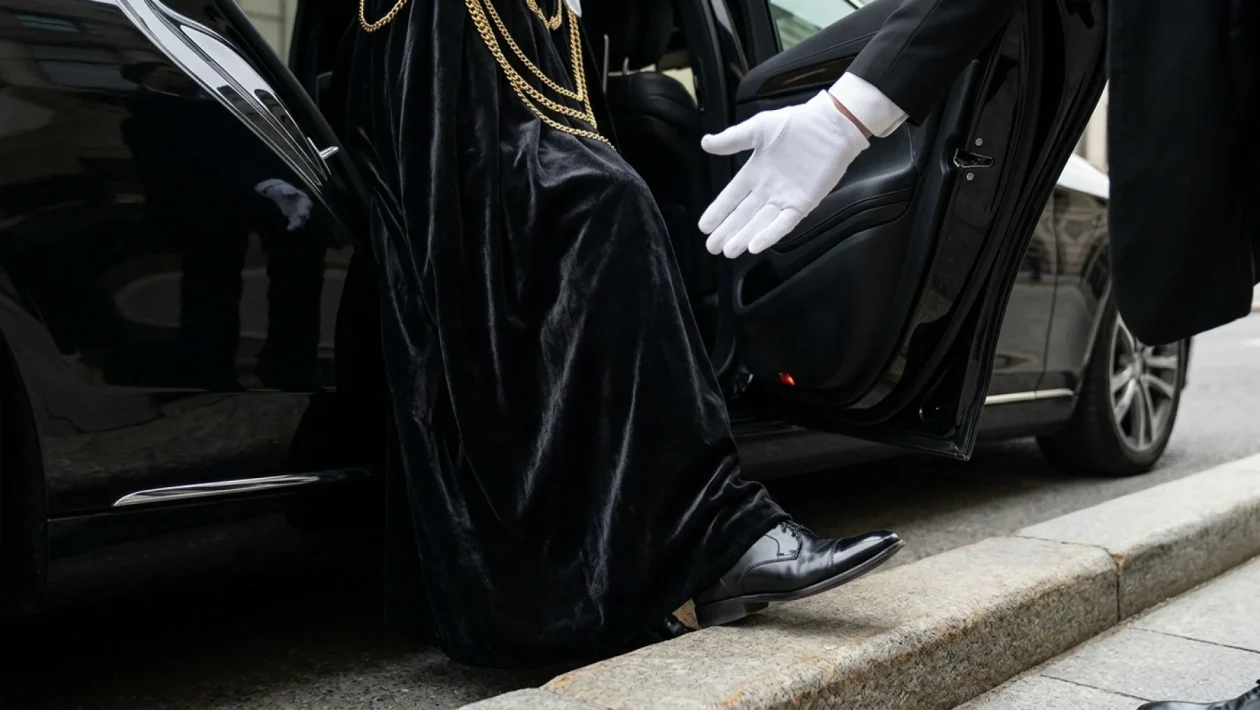
Stepping out of a back seat should be effortless. But when you are 77 years old, wrapped in layers of heavy velvet, and a hundred camera lenses are focused entirely on your feet, a simple car exit turns into a high-stakes tightrope walk.
We recently saw exactly this unfold at the Order of the Thistle service in Edinburgh this July 2026. King Charles mobility issues became unmissable when he clearly required physical support to extract himself from his official vehicle.
It is a stark reminder that even the most powerful figures on earth face the ultimate equalizer: gravity. Today, I am pulling back the curtain on the intense logistical choreography that keeps our aging royals safely on their feet.
King Charles Mobility
Let us be brutally honest for a second. At 77 years old, the King is not as spry as he used to be.
During his recent arrival in Edinburgh, accompanied by Queen Camilla, 78, the cameras caught an unscripted reality. The King needed a firm, guiding hand just to stand up from the deep leather seats of his state car.
This is not a sign of immediate crisis, but rather a universal truth of aging under an absolute microscope. When you are managing normal joint stiffness alongside an exhausting public schedule, every curb and car frame is a potential hazard.
Why The Monarch Needs Vehicle Assistance
If you have ever tried to haul yourself out of a low-slung sedan after a three-hour drive, you know the struggle. Now, add heavy ceremonial gear to the mix.
For the Order of the Thistle, Charles is draped in traditional Scottish regalia. We are talking about thick fabrics, heavy chains of office, and restrictive layers that drastically alter a person’s natural center of gravity.
It is a pure engineering nightmare. In fact, Canadian auto-parts titan Magna International invests millions into designing luxury car door hinges specifically to widen the exit angle for older executives.
But no amount of brilliant Canadian engineering can fully compensate for a monarch wearing the equivalent of weighted training gear.
| Mobility Obstacle | Physical Impact on the King |
|---|---|
| Ceremonial Robes | Adds 10-15 lbs of awkward, shifting weight, restricting arm movement. |
| Luxury Car Seats | Deeply angled backward, requiring immense core strength to lean forward. |
| Polished Footwear | Zero traction on smooth cobblestone or slick red carpets. |
How Handlers Prevent Public Disasters
Behind every royal wave is an army of highly stressed logistics experts. Their primary job is to ensure the King does not stumble in front of the global press.
Here is a shocking reality check: industry data shows that over 60% of physical injuries involving high-profile VIPs happen during transitional moments, like entering or exiting a vehicle.
To combat this danger, the royal protection team relies on a rigidly rehearsed physical routine.
- The Perimeter Sweep: Before the car even stops, advance guards check the exact landing zone for loose gravel or slick pavement.
- The Door Block: A handler positions themselves to physically block the heavy armored door from swinging back while offering an anchored forearm.
- The Weight Transfer: The VIP places their hand on the handler’s arm, shifting their upper body weight forward before planting their feet.
- The Blind Spot Shield: A secondary guard steps in to subtly obscure the most awkward, straining angles from the press cameras.
“A royal vehicle exit is treated with the exact same tactical precision as a threat extraction. We aren’t just opening doors; we are managing physics, gravity, and the world’s most unforgiving audience.” – Former VIP Protection Officer
Frequently Asked Questions
Does Queen Camilla require the same vehicle assistance?
At 78, Queen Camilla also faces mobility challenges, but her ceremonial dresses are often less heavily weighted than the King’s full military or chivalric regalia. Still, handlers provide her with the exact same discreet arm-anchor protocol to ensure a flawless exit.
Why don’t the royals just use taller SUVs?
It all comes down to visual prestige and centuries of tradition. While an SUV offers a vastly superior exit height, arriving at a historic cathedral in a modern utility vehicle shatters the carefully curated majesty of a televised royal event.
Will Prince William change these mobility protocols?
Prince William is currently 44 and highly athletic, meaning he hops out of low cars effortlessly. However, as the monarchy modernizes under his eventual reign, we will likely see a permanent shift toward more practical, less restrictive ceremonial wear to avoid these exact logistical headaches entirely.
🤝 Managing the physical realities of aging in the public eye is no small feat. King Charles is proving that even with unlimited resources, a little reliable human support goes a very long way.
💡 The next time you watch a royal event, do not just look at the shiny medals. Watch the security handlers, the heavy car doors, and the incredibly tense three seconds it takes to get the monarch safely onto the pavement.
📱 Want to see more behind-the-scenes breakdowns of how high-stakes events are really run?
👇 Share your thoughts with me in the comments below, and let me know if you have ever had an embarrassing car-exit moment of your own. Good luck out there, and always watch your step!