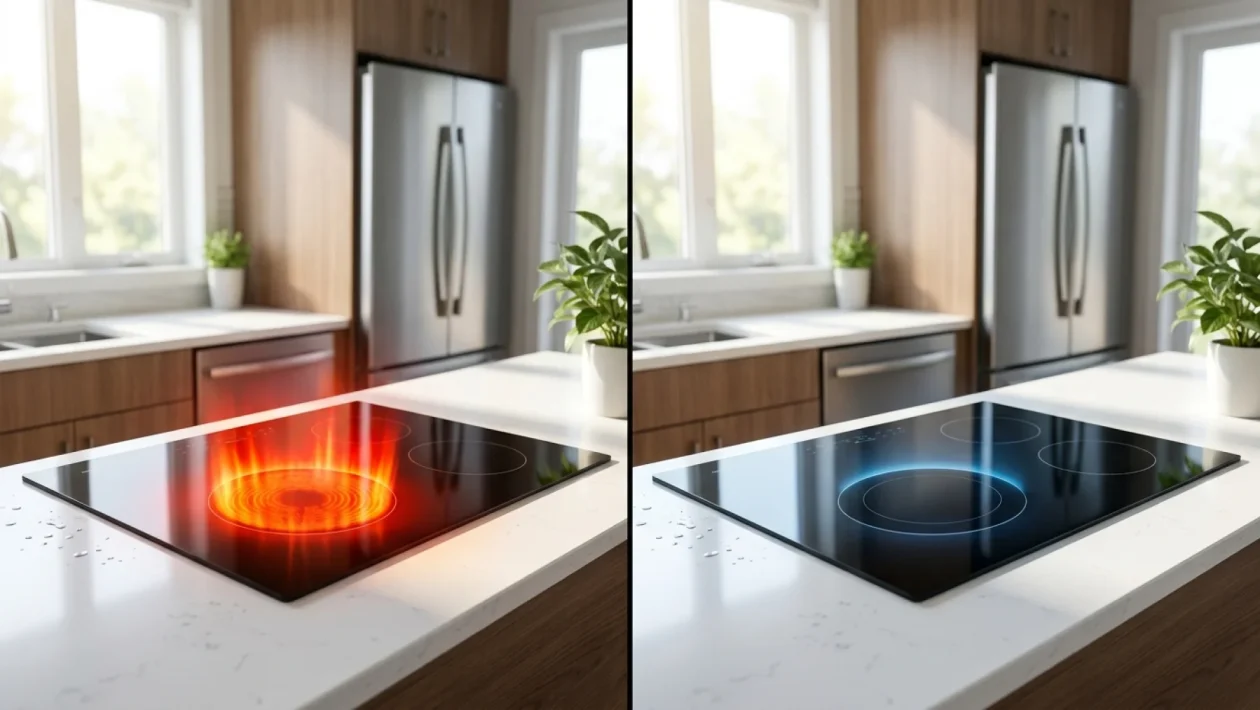
You open your hydro bill this July 2026, and your jaw hits the floor. You’ve already upgraded your windows, swapped to LED bulbs, and dialed back the AC during this sweltering summer heat. So, what exactly is bleeding your wallet dry? The answer is sitting right on your kitchen counter.
Most of us assume the refrigerator is the ultimate energy hog because it runs 24 hours a day, seven days a week. We couldn’t be more wrong. That sleek, ultra-modern induction cooktop you installed for faster boiling and a minimalist look is secretly acting like a power vacuum.
If you want to stop bleeding cash every time you make pasta, it is time to look at the hard numbers. I am going to show you exactly where that energy is going and, more importantly, how to stop it dead in its tracks.
Induction Stove Power: The Silent Heavyweight in Your Kitchen
We love our induction stoves because they look incredibly sharp and boil water in a flash. But that convenience comes at a massive electrical cost.
When you crank that dial to “Power Boost,” you are demanding an insane amount of instant voltage. According to recent energy consumption studies, an average induction cooktop burns through a whopping 748.25 kWh per year.
To put that into perspective for Canadian households dealing with peak-time Hydro One rates, that single appliance is running up your bill faster than almost anything else plugged into your walls.
“Most homeowners have no idea that firing up two induction burners on high draws more raw wattage in 15 minutes than leaving a modern flat-screen TV on for an entire weekend.” — Dave Miller, Senior Master Technician at GE Appliances
It is the ultimate paradox of modern kitchen design. We buy these units to be efficient and modern, yet we operate them in ways that completely sabotage our energy goals.
Why It Drains 3x More Energy Than Your Fridge
Let’s bust a massive appliance myth right now. Your fridge is massive, it hums constantly, and it keeps your perishables cold all day. But a modern refrigerator is highly insulated and only runs its compressor in short, efficient bursts.
Your induction stove relies on generating intense electromagnetic fields. When you cook a family dinner, that sustained, high-wattage draw eclipses the slow-and-steady power usage of your fridge by a massive margin.
Take a look at how the heavy hitters in your kitchen actually stack up against each other:
| Kitchen Appliance | Average Annual Energy Use (kWh) |
|---|---|
| Induction Cooktop | 748.3 kWh |
| Electric Oven | 496.4 kWh |
| Modern Refrigerator | 270.0 kWh |
| Washing Machine | ~150.0 kWh |
The math does not lie. You are burning nearly three times the electricity cooking your meals than you are storing them.
And How To Fix It: Cut Your Cooking Costs Today
You don’t need to rip out your beautiful stove and go back to a hot plate to save money. You just need to cook smarter.
Treating your cooktop like a light switch—just flipping it on to max power every time—is a rookie mistake. Here is exactly how to slash those energy costs without sacrificing your dinner quality.
- Match the pan to the element: Using a 6-inch pot on an 8-inch induction ring forces the stove to work harder to maintain the magnetic field. Always match the diameter perfectly.
- Ditch the “Max Power” habit: Water boils fast on induction. Once it hits a rolling boil, drop the heat setting to a 3 or 4. Maintaining a boil requires a fraction of the power used to reach it.
- Use high-quality magnetic cookware: Cheap pots with poor magnetic bases resist the induction field, forcing the stove to draw more power to heat the metal. Invest in heavy, flat-bottomed cast iron or high-grade stainless steel.
- Leverage residual heat: Turn the burner off two minutes before your food is done. The heavy metal of your pot will finish the cooking process using zero electricity.
By simply adjusting your habits, you can shave a solid 20% to 30% off that stove’s annual power consumption.
Frequently Asked Questions About Kitchen Power Hogs
Do high-end induction stoves use less electricity?
Yes, but it depends on the energy rating. Premium models with higher energy-efficiency classes cost more upfront but have superior internal coils and sensors. They manage the electromagnetic field better, leading to slightly lower operating costs over the lifespan of the appliance.
Should I switch back to a traditional electric coil stove?
Absolutely not. While induction uses a high amount of overall energy, traditional electric coils are terribly inefficient at transferring that heat to the pot. Induction heats the pot directly, meaning less heat escapes into your kitchen—which is a lifesaver for your AC bill during these hot July afternoons.
💡 Managing your household energy doesn’t have to be a guessing game. By understanding exactly what appliances are draining your wallet, you take the power back into your own hands.
🤝 Small daily habits add up to massive yearly savings. Next time you go to boil some potatoes, keep that dial in check, match your pots, and watch your hydro bills slowly shrink.
📱 I want to hear from you! Have you noticed a spike in your bills since upgrading your kitchen? Share your thoughts and your own energy-saving tricks in the comments below.
👇 Good luck, keep those pans flat, and happy cooking!