Look at your thermostat. If you are blindly relying on that central AC to keep your family safe today, you need a backup plan right now. Today’s extreme heat warning isn’t just a reason to sweat through your shirt; it is actively pushing our aging electrical infrastructure past its physical breaking point. I’ve covered North American power systems for fifteen years, and when demand spikes like this in July 2026, widespread blackouts aren’t a remote possibility—they are a mathematical certainty. Stick with me, because I am going to show you exactly how to protect your appliances, keep your food from rotting, and keep your home cool when the grid inevitably goes dark.
Extreme Heat Warning: What Is Actually Happening Today
When weather agencies issue these severe alerts, it means the ambient temperature is hot enough to literally cook utility equipment. Substation transformers are essentially giant metal boxes filled with oil.
When the mercury rises rapidly, these transformers rely on cooling fans to dissipate the internal heat. But when an entire city cranks their AC at 4:00 PM, those transformers overheat quickly.
To prevent catastrophic and expensive electrical fires, built-in safety relays will trip, automatically shutting off your neighborhood’s power.
Why The Power Grid Will Fail Under This Pressure
We are asking 1970s infrastructure to handle modern 2026 energy demands. It is a massive recipe for disaster.
Here is a sobering fact: during a severe summer heat dome, peak air conditioning demand increases the electrical load on local grids by over 45%, leaving utility companies operating with less than a 2% safety margin.
When power lines heat up, the metal physically expands and sags heavily. If a sagging transmission line touches a dry tree branch, entire regions can go dark in milliseconds.
Companies like Hydro One are doing their absolute best to manage this massive load. Unfortunately, initiating controlled rolling blackouts is often the only tool they have left to prevent a total, days-long system collapse.
“When we see sustained temperatures above 95 degrees, the grid doesn’t usually fail because of the weather itself. It fails because millions of compressor motors in air conditioners all draw peak current simultaneously, completely overwhelming local circuits.” — John Moura, Director of Reliability Assessment at NERC.
Your Survival Blueprint: How To Prepare Right Now
Don’t wait for the lights to flicker before you take action. You need to get ahead of the curve while you still have electricity.
Here is your immediate, foolproof action plan to handle today’s grid failure risks:
- Supercool your home early: Drop your thermostat down to 68°F (20°C) right now while the grid is still stable. Close all your blinds and curtains tight to trap that cold air inside the house.
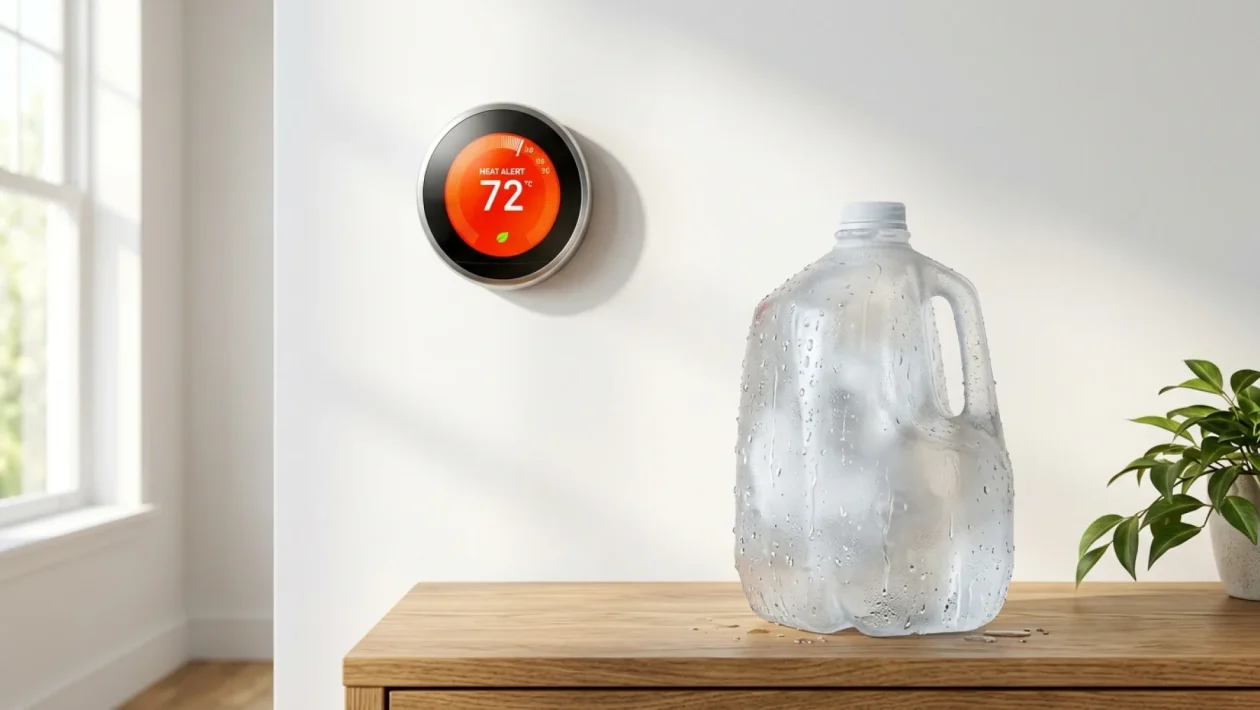
- Freeze your water jugs: Fill empty milk jugs with tap water and stuff them into the empty spaces of your freezer. This creates massive blocks of ice that will keep your perishables safe for 48 hours without power.
- Secure your surge protection: When the power finally snaps back on, the massive voltage surge can fry your expensive electronics. Unplug your televisions and computers right now, or ensure they are plugged into heavy-duty surge protectors.
Choosing Backup Power For The Blackout
If you want to keep the fridge running and a fan blowing, you need independent power. Relying on flashlights and warm water just doesn’t cut it anymore.
You generally have two reliable choices for residential use: a traditional gas-powered inverter or a modern portable solar power station.
Here is a quick breakdown to help you decide what fits your budget and your family’s needs:
| Gas Generator (e.g., Generac) | Lithium Battery Power Station |
|---|---|
| High output, easily runs refrigerators | Silent, safe for indoor apartment use |
| Requires gas storage & outdoor operation | Limited capacity, needs solar to recharge |
| Cost: $800 – $3,000+ | Cost: $300 – $1,500 |
Frequently Asked Questions
How long do extreme heat rolling blackouts usually last?
Most utility-managed rolling blackouts are strategically designed to last between 60 and 90 minutes. However, if a local transformer physically blows due to the extreme heat, you could be looking at 12 to 24 hours without service.
Should I open my windows if the AC goes out?
Absolutely not. Keep your windows, doors, and blinds tightly sealed during the peak heat of the day to retain your pre-cooled air. Only open them late at night if the outside temperature actually drops below your indoor temperature.
🤝 Good luck out there today, because beating the brutal summer heat is all about smart, early preparation.
💡 Remember to check on your elderly neighbors and keep those freezer doors shut tight when the grid inevitably drops.
📱 Share your thoughts and let me know in the comments below how your local utility provider is holding up this afternoon.
👇 If you found these practical tips helpful, send this guide to a friend who needs to prep their home before the lights go out!