Right now, tens of thousands of residents in Orange County, California, are staring down a massive, overheated chemical tank that is threatening to blow sky-high. When authorities slammed the panic button and issued widespread emergency evacuation orders for the Garden Grove area this May 2026, it proved a terrifying point. Most folks have zero clue what to do when an industrial disaster lands on their doorstep. We are going to strip away the panic and give you the exact, no-nonsense blueprint for securing your home and getting your family out alive when toxic threats escalate.
The Reality Of Emergency Evacuation Orders
When Gov. Gavin Newsom declares a state of emergency, it is not a suggestion to sit by the window and watch the show. These emergency evacuation orders mean an invisible, highly volatile threat is actively expanding in your direction. The biggest mistake homeowners make is treating a chemical threat like a standard house fire.
You cannot out-breathe toxic vapor, and you definitely cannot outrun a pressure-cooker explosion once the metal casing fails. When the sirens wail, your window to act shrinks to minutes.
“An overheating chemical tank is like a ticking bomb with a broken timer. We issue emergency evacuation orders the second we lose temperature control, because once the chain reaction starts, even the best fire crews are just playing catch-up.” – Chief Marcus Reynolds, Industrial Hazmat Specialist.
Surviving A Chemical Tank Explosion Threat
Understanding the beast is half the battle. In the California incident, firefighters are desperately trying to cool down a chemical mixture that is essentially cooking itself alive. This thermal runaway generates massive internal pressure.
If that tank ruptures, you are dealing with two devastating shockwaves. First comes the concussive blast that shatters windows for miles. Then comes the toxic plume that hugs the ground and sweeps through the streets.
It might shock you to know that the EPA tracks over 150 catastrophic chemical incidents across North America every single year. This is not a rare, once-in-a-lifetime Hollywood scenario. It is a very real, infrastructural hazard that demands respect and a solid response plan.
Securing Things In Your Neighborhood
Before you hit the gas pedal and flee, you need to lock down your personal fortress. If toxic fumes settle over your street, your house needs to act like a sealed vault.
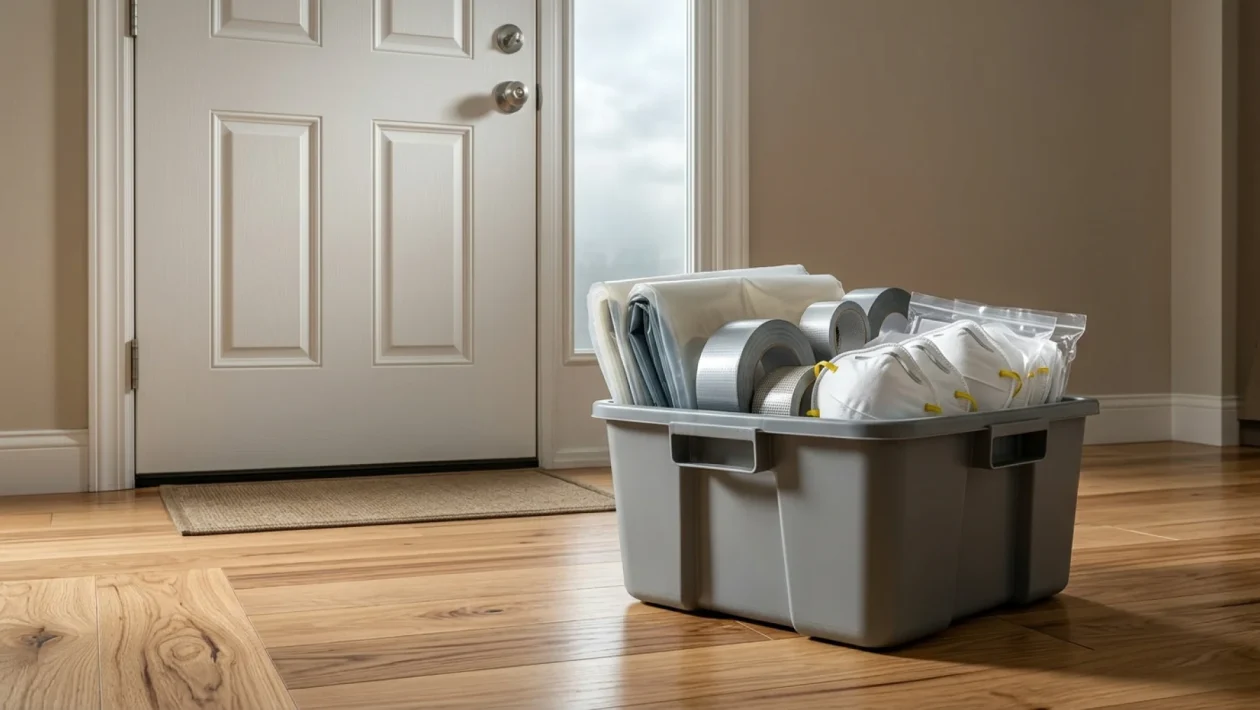
You do not need military-grade bunker gear. A quick trip to Canadian Tire or your local hardware store is all it takes to build a proper emergency kit. Rolls of thick duct tape, heavy-duty plastic sheeting, and N95 masks should always live in a dedicated plastic tote by your back door.
If you are ordered to leave immediately, follow this rapid-fire lockdown process:
- Shut down your home’s HVAC system instantly. You do not want your furnace or AC sucking toxic outdoor air into your living room.
- Close and lock all windows, then seal the fireplace damper tightly.
- Grab your pre-packed bug-out bag, load the family into the vehicle, and drive perpendicular to the wind direction.
To make your escape seamless, you need to know exactly what to bring. Here is a quick breakdown of how to pack your vehicle:
| Must-Have Survival Gear | Leave It Behind |
|---|---|
| Important physical documents & passports | Heavy photo albums |
| N95 respirators & safety goggles | Bulky camping equipment |
| 3 days of prescription medications | Perishable fridge food |
| Battery-powered emergency radio | Desktop computers or TVs |
Frequently Asked Questions
What is the difference between an evacuation and sheltering in place?
An evacuation means the zone is completely compromised and you must physically leave the area immediately. Sheltering in place means the hazard is temporary or outside, and you are safer taping up your windows and staying indoors until the toxic cloud passes.
How do I know if the air is safe to return?
Never rely on your nose. Many lethal industrial chemicals are entirely odorless. You must wait for official clearance from local hazmat authorities before crossing back through police barricades.
Will my homeowner’s insurance cover chemical explosion damage?
Usually, yes. Most standard policies cover fire and concussive blast damage. However, you should call your broker today to double-check if chemical contamination cleanup is explicitly covered in your region.
🤝 Good luck out there, and remember that a little proactive planning today saves a whole lot of panic tomorrow. Keep your gear packed, your gas tank at least half full, and your family on the same page.
💡 Share your thoughts and your own emergency prep strategies in the comments below. Have you ever had to evacuate your neighborhood during an industrial scare?
📱 Send this article to your neighbors right now. A community that prepares together, survives together.
👇 Stay safe, keep those smoke alarms tested, and I will catch you in the next breakdown.