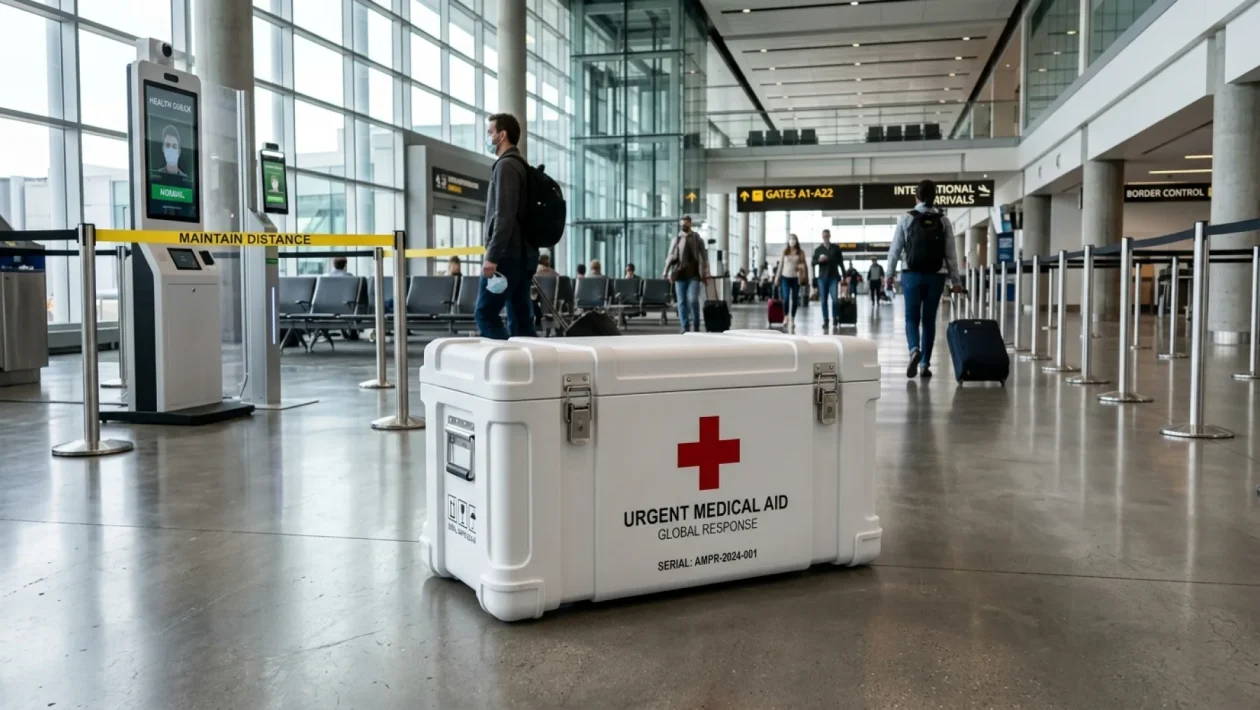
The clock is officially ticking on one of the most volatile public health emergencies we’ve seen this decade. Right now, top-tier international health teams are hitting the ground in the Democratic Republic of Congo to wrestle a rare but deadly virus flare-up before it spirals out of control. We aren’t just talking about shipping crates of medical gear; we are looking at a high-stakes chess match against a pathogen that thrives in chaos. The ultimate solution requires a surgical blend of rapid medical intervention, unshakeable border security, and—most importantly—earning the trust of the local communities on the ground.
The Realities Of The Ebola Outbreak Congo
When the Director-General of the World Health Organization touched down in Kinshasa late this May 2026, it wasn’t for a routine check-in. The Ebola Outbreak Congo is currently setting off alarm bells across global health networks. Fighting this virus is tough under perfect conditions, but attempting to contain it in regions heavily burdened by complex socio-political issues takes things to a whole new level.
Here is a harsh reality check: the Zaire ebolavirus strain can carry a fatality rate of up to 90% if left unchecked. This isn’t a bug you wait out with chicken soup and bed rest. It demands aggressive, immediate isolation and specialized treatment protocols.
The ripple effect is already hitting North American shores. The Public Health Agency of Canada (PHAC) has actively stepped in, defending highly restrictive travel measures from affected regions to ensure our borders remain secure. Meanwhile, branches like Doctors Without Borders (MSF) Canada are hyper-aware of the logistical nightmares involved in setting up sterile treatment centers in volatile zones.
Navigating The 2026 Crisis Amid Rising Distrust
You might be wondering why stamping out a virus in 2026 feels so incredibly difficult despite all our modern medical tech. The biggest barrier isn’t a lack of medicine; it’s a profound lack of trust. Decades of political instability have left local populations deeply skeptical of outside intervention.
When foreign doctors in hazmat suits arrive in tight-knit villages, the resulting fear can drive symptomatic patients into hiding. This is exactly how contact tracing falls apart.
| Containment Challenge | The 2026 Reality on the Ground |
|---|---|
| Community Trust | High skepticism requires local liaisons to communicate safety protocols. |
| Regional Security | Armed conflicts make safely transporting medical supplies nearly impossible. |
| Infrastructure | Power outages and poor roads severely limit vaccine cold-chain storage. |
To overcome this, health officials are forced to act as diplomats first and doctors second. You have to win the hearts of community leaders before you can ever hope to treat their families.
Breaking Down The Urgent Global Response
Containing a highly infectious pathogen in a difficult environment requires a military-grade logistical playbook. It is a precise, high-pressure operation where every minute counts. To stop the spread, frontline teams execute a grueling, specialized process.
- Deploy Rapid Diagnostic Hubs: Mobile testing labs are airlifted into surrounding hot zones to confirm cases within hours rather than days.
- Establish Green/Red Zones: Treatment centers are aggressively divided into strictly sterile (green) and highly infectious (red) zones to protect healthcare workers.
- Initiate Ring Vaccination: Teams identify all direct contacts of a confirmed patient, and then the contacts of those contacts, creating a vaccinated “ring” around the virus.
- Engage Local Leadership: Epidemiologists step back and allow trusted local figures to explain quarantine measures in local dialects.
“You can drop all the state-of-the-art medical supplies in the world onto a tarmac, but if the local community doesn’t fundamentally trust your healthcare workers, the virus wins every single time.”
The focus right now is stopping the momentum. By throwing everything from travel restrictions to advanced ring vaccinations at the problem, the global health community is trying to put a lid on the crisis before it jumps borders.
Frequently Asked Questions
Is travel to and from the Congo restricted?
Yes. International health agencies, including Canadian authorities, have heavily restricted and monitored travel from affected zones to prevent the virus from spreading internationally.
Why is community trust such a big deal in fighting Ebola?
If people fear healthcare workers, they will hide their sick relatives. This breaks the contact tracing chain, allowing the virus to spread silently through neighborhoods until it’s too late.
Are there vaccines available for this outbreak?
Yes, vaccines have been developed and successfully deployed in previous outbreaks. The current challenge isn’t creating the vaccine, but safely delivering it and storing it at freezing temperatures in regions with limited power.
🤝 Stay informed and stay safe. Outbreaks like this remind us how interconnected our world truly is, and why international health security matters to all of us.
💡 Good luck to the brave frontline workers and medical professionals who are risking everything to keep this crisis contained at the source.
📱 Share your thoughts on how international borders should be managed during global health emergencies, and keep an eye on trusted news sources as this situation develops.
👇 Drop a comment below or forward this breakdown to a friend who wants to understand the real logistics behind fighting a modern-day outbreak.