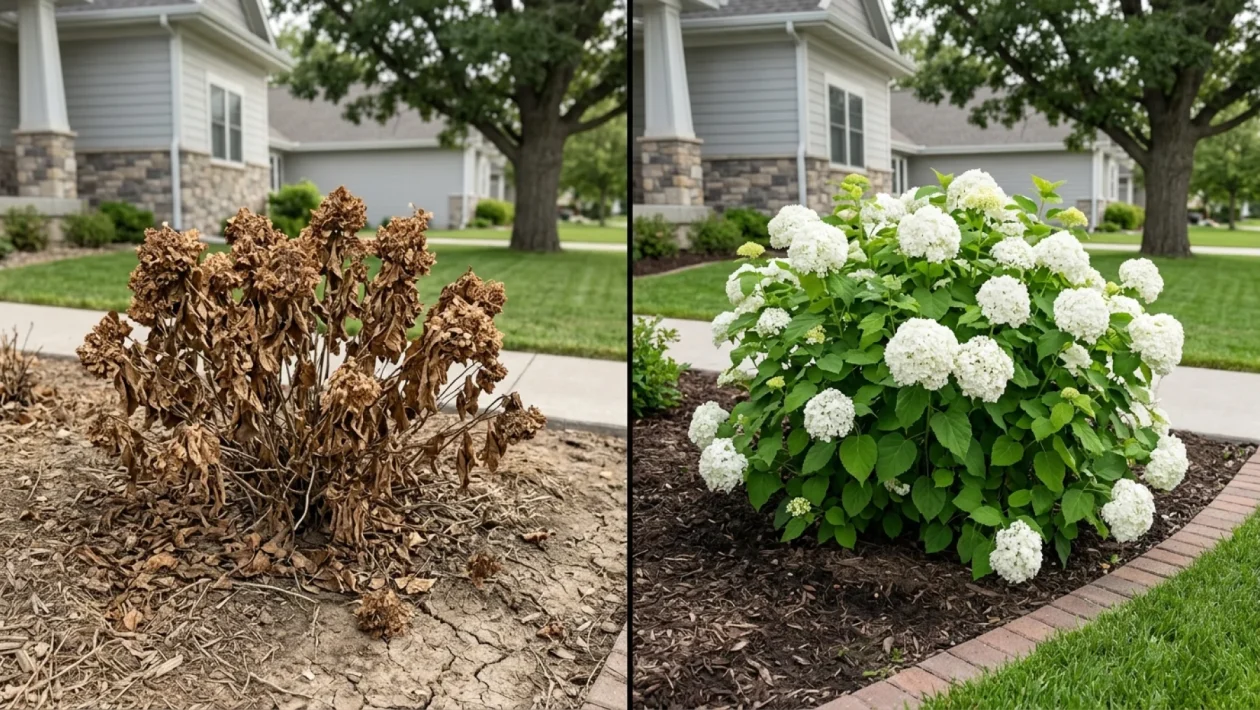
You’re staring at a drooping, crispy mess in your front yard right now, aren’t you? As we push through the intense heat of July 2026, those classic mophead hydrangeas are officially acting like high-maintenance water vampires. If you’re tired of dragging the hose across the lawn every single evening just to keep your landscaping on life support, it’s time to pivot. We’re permanently swapping out the thirsty drama queens for bulletproof, drought-tolerant shrubs that deliver the exact same visual punch—without doubling your monthly utility bill.
Drought-Tolerant Shrubs: Why We’re Breaking Up With Thirsty Plants
Look, I love a good hydrangea as much as the next guy. But let’s look at the hard facts of modern homeownership.
A recent North American horticultural study revealed that a single mature hydrangea bush can guzzle up to 10 gallons of water a week during peak summer heat. That is a staggering amount of wasted resources.
It’s enough to make you drop your premium watering wand from Lee Valley Tools in pure frustration. Even massive institutions like Wimbledon are currently phasing out hydrangeas for plants that can actually survive extended dry spells.
If you have naturally moist, clay-heavy soil, keep your hydrangeas. But for the rest of us trying to build resilient, heat-proof properties, drought-tolerant shrubs are the only logical way forward.
5 Show-Stopping Hydrangea Alternatives
You don’t have to sacrifice massive blooms just because you’re cutting back on the hose. Here is the heavy-hitting roster replacing hydrangeas this year.
1. Viburnum
This is the ultimate imposter. Varieties like the Viburnum Opulus boast massive, spherical white flower heads that look nearly identical to mophead hydrangeas. The difference? Once established, they are tough as nails and laugh in the face of dry spells.
2. Agapanthus
Want that dramatic, oversized floral look? Agapanthus (the African lily) produces explosive globe-shaped blooms in rich purples and striking whites. It’s a staple for Mediterranean-style landscaping and completely thrives in dry, baked earth.
3. Sedums
If you want serious pollinator action, plant sedums. They feature thick, fleshy leaves that store water like a cactus, topped with massive, flat clusters of pink star-shaped flowers. Full, direct sunlight scorches hydrangeas, but it makes sedums absolutely sing.
4. Euphorbia
Need height, structure, and zero pest damage? Slugs hate euphorbia. This resilient perennial changes color from green to burgundy, finally erupting into a fiery red in late summer.
5. Escallonia
This fast-growing evergreen shrub thrives on pure neglect. Give it a little water while it establishes, and it will reward your minimal effort with gorgeous clusters of pink and white flowers all summer long.
“Viburnums and sedums are completely changing the landscape game this year. Once established, they practically thrive on neglect while still offering that massive floral payoff homeowners crave.”
Dominating Gardens in 2026: How to Make the Swap
You can’t just rip out a hydrangea, shove a new plant in the dirt, and walk away. Transitioning to a water-wise garden requires a solid game plan.
Here is the foolproof method to get these hardy replacements established in your yard this weekend:
- Assess the Sun: Map out exactly how many hours of brutal afternoon sun the area gets. Match the plant to the heat level.
- Prep the Drainage: Drought-tolerant plants hate wet feet. Dig your hole and mix in a generous amount of coarse sand or gravel to ensure water moves quickly away from the root zone.
- Water Deeply, Then Back Off: Soak the root ball thoroughly on planting day. Water deeply once a week for the first month, then aggressively scale back to force the roots to dig deep.
- Mulch Smartly: Apply a two-inch layer of bark mulch around the base to suppress weeds and retain just enough baseline moisture without causing root rot.
Still on the fence about making the switch? Let’s break down the reality of what you’re dealing with.
| Traditional Hydrangeas | Drought-Tolerant Alternatives |
|---|---|
| Requires daily watering in peak heat | Thrives on natural rainfall once established |
| Prone to wilting and sun scorch | Basks in full, direct afternoon sunlight |
| High maintenance and fertilization needs | Plant-and-forget, ultra-low maintenance |
| High long-term utility (water) cost | Massive reduction in summer water bills |
Frequently Asked Questions
Will I still get big blooms with these alternatives?
Absolutely. Viburnum offers the exact same massive, snowball-style clusters that hydrangea lovers obsess over. You get the premium aesthetic without playing the role of a full-time groundskeeper.
How long does it take for these drought-resistant shrubs to establish?
Expect to spend the first growing season lightly monitoring their water intake. By year two, their root systems will be deep enough to handle serious heatwaves with zero intervention from you.
Where can I reliably find these specific varieties?
Skip the big box stores where plants are often mislabeled. Head to a reputable local grower like Sheridan Nurseries to get hardy, climate-adapted varieties that are proven to survive our specific North American freeze-and-thaw cycles.
🤝 It’s time to take your weekends back. There is absolutely no reason to be a slave to your garden hose in the modern era.
💡 Make the smart swap. By transitioning to these rugged, show-stopping alternatives, you’re future-proofing your property and doing your water bill a massive favor.
📱 I want to hear from you. Are you finally ready to rip out those thirsty hydrangeas, or are you still holding on? Share your thoughts and let me know which of these tough-as-nails shrubs you’re planting this weekend!
👇 Good luck out there in the dirt!