You have walked past that crumbling, overgrown concrete pit at the edge of town a hundred times. It looks like an absolute lost cause to the untrained eye. But what if I told you it only takes a handful of neighbors, a few good cordless drills, and serious elbow grease to turn that eyesore into the ultimate summer oasis?
Forget waiting around on slow-moving municipal budgets or endless city council debates. We are talking about taking matters into your own calloused hands.
This July 2026, the ultimate flex isn’t buying a pristine fiberglass tub for your backyard. It is mastering DIY Pool Restoration on a massive, community-wide scale.
The Core of DIY Pool Restoration
There is a massive difference between hiring a contractor to dig a hole in your lawn and stepping up to resurrect a piece of local history. Real restoration requires vision.
Today, we are looking at a masterclass in grassroots engineering. A squad of renegade architects recently decided they were tired of seeing their local, ice-cold forest pool rotting away.
They did not have a giant grant or corporate backing. They just had the audacity to start swinging hammers.
Transforming a 100-Year-Old Abandoned Swimming Hole
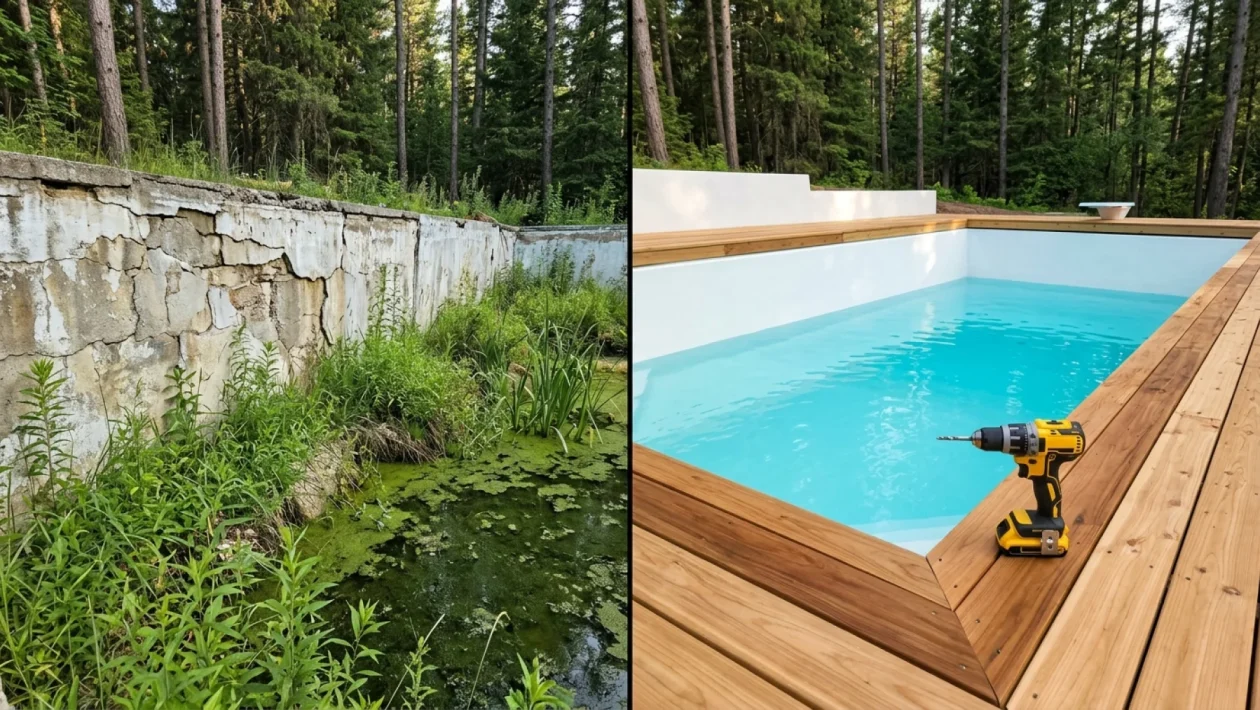
Nature had completely reclaimed this historic site. We are talking chest-high weeds, cracked retaining walls, and decades of accumulated, foul-smelling forest sludge.
According to recent urban development statistics, North America is currently sitting on over 2,000 abandoned public swimming facilities just waiting for a second life. That is a lot of wasted concrete.
Instead of letting this historical gem rot into oblivion, these guys decided to resurrect its glorious, classic aesthetic. They wanted to build a modern public bath with a nod to its century-old roots.
Using Power Tools to Spark a Revolution
When the bank accounts are empty, your garage arsenal becomes your best friend. The crew started with nothing but basic hand tools, pure determination, and a few trusty DeWalt impact drivers.
They scavenged old construction lumber and immediately got to work. By slapping a fresh coat of white paint on scrap wood and building a makeshift refreshment stand, they created a physical rallying point.
If you want to get people on board with a crazy idea, you need to show them tangible progress. Here is the exact battle plan for kicking off your own guerilla revitalization project:
- Secure the Site: Draft a simple lease or borrowing agreement with the city to legally access the land without getting slapped with a trespassing charge.
- Deploy the Saws: Clear out the invasive brush, deadwood, and safety hazards using chainsaws and heavy-duty trimmers.
- Build a Basecamp: Construct a simple, functional structure—like a lemonade stand or tool shed—to serve as the project’s physical headquarters.
Fueling the Build With Community Grit
You can only get so far swinging hammers before you need actual capital. Eventually, you have to pay for expensive things like commercial water filtration and structural concrete repair.
This is where raw community grit transitions into smart grassroots funding. Once locals saw the new refreshment stand and the freshly cleared brush, the donations organically started flowing.
They utilized participatory city budgets and hit up private local donors. It is absolutely amazing how quickly people will open their wallets when they see you sweating in the trenches first.
| Phase of Restoration | Primary Funding Source |
|---|---|
| Initial Cleanup & Demo | Zero-budget sweat equity & volunteer labor |
| Basecamp Construction | Scrap materials & Home Depot weekend runs |
| Water Filtration Systems | Crowdfunding & municipal grants |
“When you start building without waiting for permission or massive funding, you create an undeniable momentum. People are naturally drawn to places built with genuine passion and blistered hands.” – Jan Vondrák, Lead Restoration Architect.
Frequently Asked Questions
Is it legal to renovate an abandoned city pool?
Never just start digging or pouring concrete on municipal property. Always form a local association or non-profit first, then negotiate a formal lease or stewardship agreement with your local city hall.
How do you handle the massive cost of water filtration?
Filtration is always the most expensive hurdle. Successful grassroots projects tackle the aesthetic and structural repairs first to build massive public interest, then launch targeted crowdfunding campaigns specifically to pay for commercial-grade wastewater treatment.
Can this approach work for other abandoned structures?
Absolutely. The universal blueprint of “sweat equity first, funding second” applies perfectly to neglected parks, historical pavilions, and old community centers in your neighborhood.
🤝 Good luck out there, whether you are rallying the neighborhood to patch up a forgotten community wading pool or just tackling that backyard deck you’ve been putting off all summer.
💡 Remember, the hardest part of any monumental community build is simply making the courage to make that very first cut.
📱 If you have ever pitched in on a massive neighborhood restoration project, I want to hear all about the highs and lows.
👇 Drop a comment below and share your thoughts on what forgotten local landmark you would love to bring back to life!