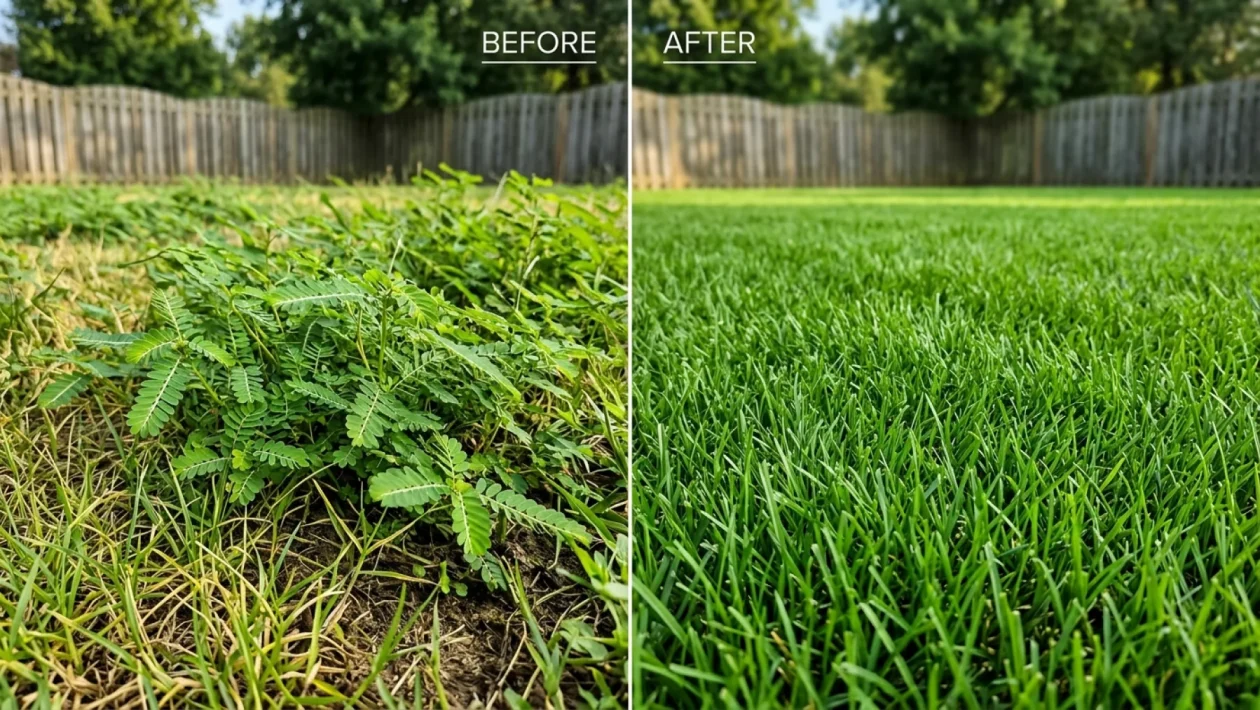
Look at your yard right now. If you are spotting a fern-like plant aggressively muscling out your prized turf, you are dealing with chamberbitter. This relentless broadleaf weed multiplies faster than rabbits, and if you ignore it, your entire property will be a leafy, weed-choked mess before the month is over. Chamberbitter weed control isn’t about pulling and praying; it requires a targeted, root-killing approach that stops the next generation of seeds dead in their tracks. I am going to show you exactly how to wipe it out permanently so you can take your weekends back.
Chamberbitter Weed Control: Understanding What You Are Up Against
Before you load up the sprayer, you need to know thine enemy. Chamberbitter looks remarkably like a tiny mimosa tree sapling creeping through your grass. It thrives in warm soil, which means by the time July 2026 rolls around, these invaders are already working overtime.
Here is the terrifying reality about this plant. A single, mature chamberbitter weed can drop over 10,000 seeds in a single growing season. Even worse, those seeds stay viable in the soil for up to five years.
This is exactly why yanking them out by the handful often makes your weed problem worse. When you pull a mature plant, you inevitably shake those microscopic seeds directly into the disturbed soil, practically planting next year’s crop yourself.
Eradicate Your Lawn’s Worst Enemy: The Step-by-Step Takedown
You cannot negotiate with this weed. You have to break its lifecycle completely. Here is my proven method for getting rid of it once and for all.
- Bag your clippings: If you have an active infestation, stop mulching immediately. Use a bagger on your mower to capture the seed pods before they spread across the yard.
- Apply a pre-emergent: The real battle is fought before you even see the weed. Apply a pre-emergent herbicide containing Isoxaben in the early spring when soil temperatures hit about 15 degrees Celsius.
- Spot-treat the survivors: For the weeds that break through in the summer, hit them with a post-emergent herbicide containing Atrazine (if your grass type allows it) or a specialized broadleaf killer.
- Fix the soil: Chamberbitter loves compacted, poorly draining soil. Aerate your lawn in the fall to improve drainage and let your turf roots breathe.
Follow that sequence, and you will effectively choke out the weed while giving your turf the upper hand.
Without Ruining Your Grass: The Right Tools for Turf Safety
The biggest mistake DIYers make is buying a generic weed killer, soaking their yard, and accidentally scorching their own grass. You need the right chemistry for the right turf.
Always read the label to ensure the herbicide is safe for your specific grass type, whether you are running Kentucky Bluegrass up north or Bermuda grass down south. I usually recommend grabbing a reliable broadcast spreader from Scotts Canada to ensure an even application of your granular pre-emergents. If you are doing liquid spot treatments, a basic pump sprayer from Home Depot will be your best friend.
| Treatment Type | Best Use Case |
|---|---|
| Pre-Emergent Granules | Spring application to form a chemical barrier against seeds. |
| Liquid Post-Emergent | Summer spot-treatments to kill actively growing weeds. |
Remember, more chemical does not mean a faster kill. Stick to the manufacturer’s mix rates to keep your lawn thick and healthy.
“Treating chamberbitter like a standard dandelion is a rookie mistake. You have to disrupt the seed bank in the soil, otherwise you are just paying rent on a weed-infested lawn.”
Frequently Asked Questions About Chamberbitter
Can I just pull chamberbitter by hand?
You can, but only if the plant is very young and hasn’t developed the seed pods on the underside of its leaves. If the pods are present, pulling it will just scatter thousands of seeds into your turf.
Does household vinegar kill chamberbitter?
Horticultural vinegar can burn the leaves off young weeds, but it rarely travels deep enough to kill the robust taproot of a mature chamberbitter plant. It will likely just bounce back in a few weeks.
Will mowing shorter help kill it?
No, mowing short actually helps the weed. Chamberbitter adapts to low mowing heights and will simply grow flat against the ground. Keep your grass tall to shade out the weed seeds and prevent them from germinating.
🤝 Good luck out there in the yard this season. Beating back invasive plants takes a bit of patience, but a dense, barefoot-worthy lawn is always worth the sweat.
💡 If you stay consistent with your pre-emergent routine next spring, you will never have to deal with this headache again.
📱 I want to know how your lawn recovery is going! Drop a comment below or tag me in your before-and-after yard photos.
👇 Please share your thoughts or any local weed-busting strategies that have worked for you in your neck of the woods.