Pickleball courts are jammed, and traditional tennis takes years of frustrating practice to truly master. If you’re itching for a fresh, fast-paced summer activity that doesn’t require the joints of a 20-year-old gymnast, there’s a new heavyweight in town. It’s called padel, and it’s about to become your brand-new weekend obsession.
Padel In Canada: An “Overnight” Success Three Decades In The Making
While it feels like this sport just dropped out of the sky for our May 2026 spring season, Padel in Canada actually has incredibly deep roots. We can thank a guy named Bill Stamile for bringing the first-ever North American court to Calgary way back in 1992.
Fast forward to today, and the local padel scene is seeing unprecedented growth. State-of-the-art venues are actively popping up in Toronto, Vancouver, Montreal, and Edmonton.
Here is a wild, hard fact that most locals don’t know: The Canadian junior boys team actually finished third at the 2009 World Cup in Seville, Spain. Stamile himself accurately likens this underdog victory to the legendary Jamaican bobsled team winning a medal, especially since the sport is traditionally dominated by massive Hispanic powerhouses like Argentina and Spain.
Why Serena Williams Backs This Global Phenomenon
When one of the absolute greatest athletes in human history throws her weight and wallet behind a sport, you pay attention. Serena Williams recently backed a team in the Pro Padel League, and massive investment firms are circling the industry.
But why the sudden celebrity gold rush? Simply put, the sport is a spectator’s dream and wildly marketable.
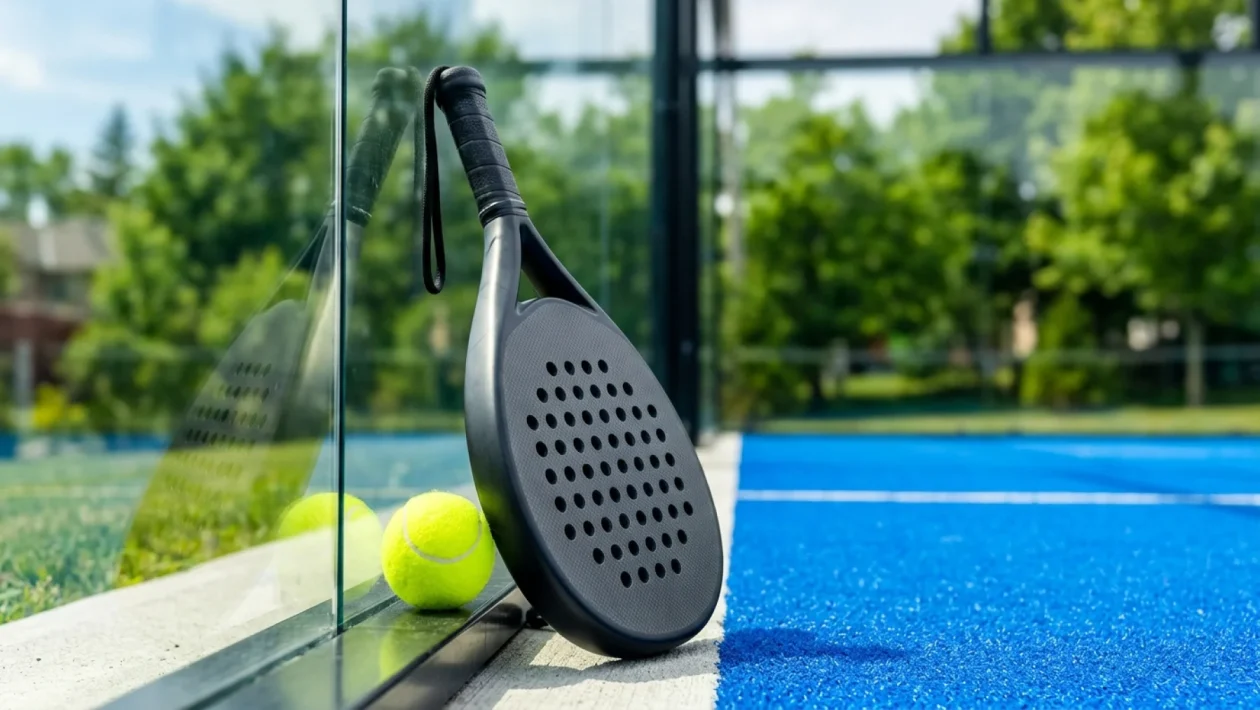
Matches are played inside slick, glass-walled courts, allowing fans to watch the lightning-fast action from every conceivable angle. It’s highly social, deeply strategic, and incredibly TV-friendly, which explains why the sport has absolutely exploded across the Middle East and India over the last few years.
“The resurgence of the game we love has started in Canada, and it’s not going to stop any time soon. We are proud of being part of this big movement, indeed an exciting time for Canadian padel.” — Roberto Alongi, Canadian Padel Federation
The High-Speed Court Sport: Chess With A Racquet
Unlike tennis, which relies heavily on booming overhand serves and raw, aggressive power, padel is more like high-speed chess. You use an underhand serve, short explosive steps, and the actual walls around you to keep the ball alive.
Even if you’re not as agile as you used to be, the enclosed court works in your favor. If a ball blasts past you, just wait for it to bounce off the back glass and return it with ease.
Here is exactly how a typical point goes down:
- The Serve: The server drops the ball and hits it strictly underhand below the waist, aiming diagonally into the opponent’s service box.
- The Return: The receiving team must let the ball bounce exactly once before returning it back over the net.
- The Wall Play: During the rally, players can strategically let the ball bounce off the glass walls before hitting it back, creating wild, unpredictable angles.
- The Point: The fast-paced rally only ends when the ball bounces twice on one side, hits the wire mesh directly, or is accidentally hit out of bounds.
Curious how it stacks up against the old-school favorite? Check out this quick breakdown:
| Feature | Padel vs. Tennis |
|---|---|
| Court Size | Padel is 20×10 meters (significantly smaller than a tennis court). |
| Equipment | Solid, stringless, perforated racquets vs. traditional strung racquets. |
| Learning Curve | Incredibly fast for padel; tennis usually takes years to competently master. |
| Play Style | Strictly doubles-focused, relying heavily on wall rebounds and sharp angles. |
Taking Over Your Neighborhood (Despite The Frost)
Let’s be real for a second: building these courts in Canada isn’t exactly cheap. We can’t just slap a concrete pad down outdoors year-round like they do in the Caribbean or Mexico.
To keep the sport thriving, we have to build dedicated, heated indoor facilities, manage heavy winter utility bills, and deal with premium local real estate taxes. It’s a massive infrastructure hurdle.
But local investors are betting big on the community aspect. Soon enough, grabbing a post-match coffee at Tim Hortons or picking up replacement grips at Canadian Tire will be a standard, everyday weekend routine for padel players coast to coast.
Frequently Asked Questions About Padel
Is padel the exact same thing as pickleball?
Not at all! While both are currently trendy racquet sports, padel uses a heavier, stringless racquet and a pressurized ball very similar to a tennis ball. Plus, padel is played inside a walled court where the glass is actively in play.
Do I need to be in peak physical shape to play?
No way. Because it’s strictly a doubles game played on a much smaller court, the physical demand and joint impact are much lower than singles tennis. The walls do a lot of the defensive work for you, making it a fantastic, low-barrier “lifetime sport.”
Where can I actually play in Canada?
Major hubs like the Rideau Sports Centre in Ottawa, alongside beautiful dedicated clubs in Calgary, Toronto, Montreal, and Vancouver, are currently leading the charge. A quick search on the Canadian Padel Federation website will easily point you to the closest court in your neighborhood.
🤝 Getting started with padel is arguably one of the best moves you can make for your physical health and social life this summer.
💡 Don’t be intimidated by the glass walls or the unfamiliar racquets. The community is incredibly welcoming, and within your first 20 minutes on the court, you’ll understand exactly why the globe is completely hooked.
📱 Share your thoughts in the comments below, or immediately send this article to your future doubles partner to get them on board.
👇 Good luck out there, have fun, and I’ll see you on the courts!