When pop superstar Katy Perry and former Prime Minister Justin Trudeau started stepping out together, it was prime tabloid fodder. But it was a far more serious event on Perry’s recent Air Canada flight from Montreal to Los Angeles this May that really caught my attention as a frequent flier.
A passenger experienced a sudden, terrifying mid-air health crisis. Perry took to X to publicly praise the crew’s lightning-fast, highly professional response. Cruising above the clouds with nowhere to pull over is a daunting scenario for anyone.
Understanding exactly how these situations are managed on modern aircraft is crucial. More importantly, knowing your specific role as a bystander can quite literally mean the difference between life and death.
In-Flight Medical Emergencies
Look, nobody buys a boarding pass expecting to end up in a makeshift emergency room. But the reality of modern air travel is that health events happen much more frequently than the airlines like to advertise.
Here is a sobering hard fact for your next boarding gate: statistically, an onboard health crisis happens roughly once in every 600 commercial flights. With tens of thousands of flights taking to the skies daily, that adds up to a staggering number of airborne medical events.
When you mix altitude, fluctuating cabin pressure, and the sheer stress of travel, preexisting conditions can flare up instantly. The panic among passengers is usually immediate, but in-flight medical emergencies require cold, calculated precision to resolve safely.
How Air Canada Crews React
Katy Perry wasn’t just being polite when she applauded her Air Canada flight crew; she was witnessing an intense, highly choreographed safety protocol in action. Cabin crews are not just there to pour coffee and hand out pretzels.
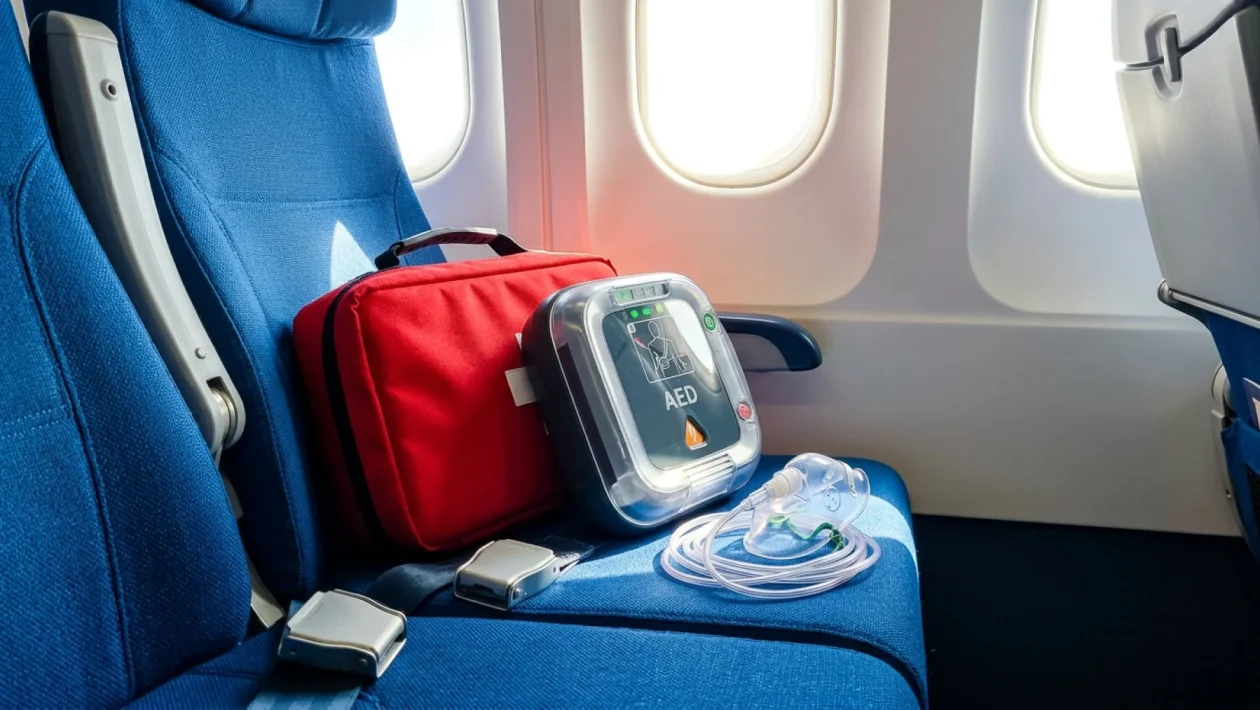
Flight attendants for major North American carriers like Air Canada and WestJet undergo brutal, rigorous first-aid training. They are trained to deploy automated external defibrillators (AEDs), administer oxygen, and manage severe allergic reactions on the fly.
Behind the scenes, they aren’t working alone. Crews use satellite phones to establish a direct link with ground-based aviation medical teams, like MedAire. These ground doctors assess the patient’s vitals remotely and make the ultimate call on whether the pilot needs to perform an emergency diversion.
| Standard Onboard Medical Gear | What They Do Not Have |
|---|---|
| Automated External Defibrillators (AED) | Full surgical instruments |
| EpiPens and supplemental oxygen | Blood transfusion equipment |
| Basic life support drugs & IV fluids | Advanced imaging or X-ray machines |
What Passengers Must Do
If someone collapses in the aisle next to you, your immediate reaction might be to jump up and help. Unless you carry a medical license, that is the absolute wrong move.
To give the crew the space they need to save a life, you need to follow a strict protocol. Here is exactly how you should handle the situation as a bystander:
- Alert the crew immediately: If you are the first to notice someone in distress, hit the call button and verbally flag down the nearest flight attendant. Time is critical.
- Clear the aisle: Tuck your legs in, move your bags, and absolutely stay in your seat. The crew needs a clear runway to sprint with heavy medical bags and oxygen tanks.
- Wait for the PA announcement: Only volunteer your services if you hear the captain or crew specifically ask for a licensed medical professional onboard. Otherwise, stay quiet and observe.
“The cabin crew isn’t just there for hospitality; they are highly trained first responders in a metal tube. When an emergency strikes, their muscle memory kicks in, but they rely heavily on passenger cooperation and ground-based doctors to stabilize the situation.” – Dr. Mark Gendreau, Aviation Medicine Specialist.
Frequently Asked Questions
Does a flight get diverted for every medical issue?
Not at all. A diversion is incredibly expensive and logistically messy. Ground-based doctors consult with the crew to determine if the patient can be stabilized until the original destination. Only life-threatening situations trigger an emergency landing.
Are doctors legally required to help on planes?
While laws vary by airspace, there is generally a strong ethical obligation. In North America, Good Samaritan laws protect medical professionals from liability if they step up to assist during an in-flight emergency in good faith.
Can I use my own medication to help a stranger?
Never. Offering your personal prescription medication to a stranger mid-flight is incredibly dangerous and can cause lethal drug interactions. Always let the crew use the standardized onboard medical kit.
🤝 Stay safe and aware the next time you buckle up for a long haul. Knowing how these complex situations unfold takes a lot of the anxiety out of flying.
💡 Share your thoughts and experiences with us if you’ve ever witnessed a mid-air emergency. It is always fascinating to hear how different crews handle the pressure.
📱 Drop a comment below or forward this to your favorite travel buddy. Good luck out there, and here is hoping your next flight is as smooth and uneventful as possible!