Getting your laundry to smell fresh for days is a universal household goal. Most people instinctively reach for heavily scented fabric softeners or laundry perfumes to do the job.
But laundry experts point to a simpler, highly effective alternative hiding in your pantry: distilled white vinegar.
A stack of perfectly folded, clean laundry resting in a well-lit room.
The Hidden Cause of Laundry Odor
Commercial fabric softeners often leave behind a microscopic coating on your clothes. Over time, this buildup traps detergent residue, sweat, and bacteria.
Instead of masking smells with artificial perfumes, white vinegar breaks this cycle. It acts as a natural stripping agent, washing away the lingering residue that causes fabrics to hold onto persistent musty odors.
By leaving the actual fibers cleaner, clothes maintain a crisp freshness long after they leave the machine. As a bonus, it naturally softens fabrics, providing an economical alternative to traditional laundry routines.
How to Use the Vinegar Rinse Method
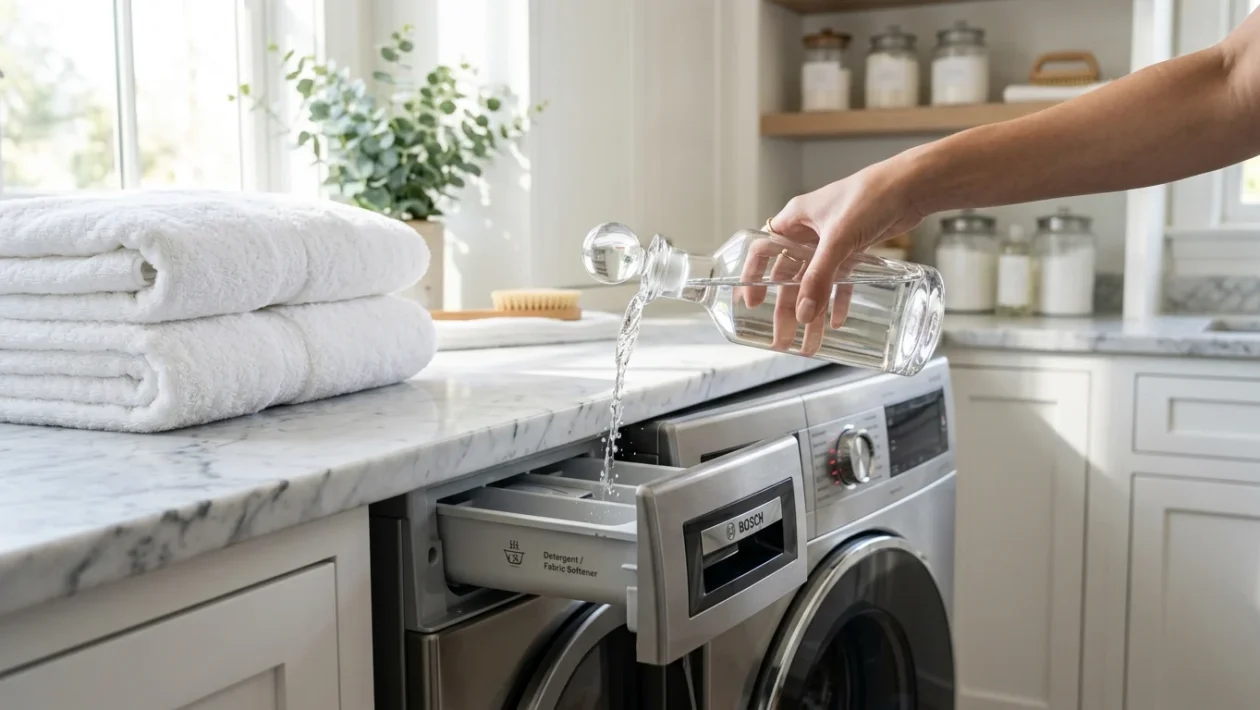
The technique requires zero extra time. Simply pour approximately half a cup of distilled white vinegar directly into the fabric softener compartment of your washing machine.
This ensures the liquid is released during the machine’s rinse cycle. Discharging the vinegar at this exact stage is what allows it to efficiently clear out leftover soap.
A clear bottle filled with distilled white vinegar used for household cleaning.
Crucial Safety and Drying Rules
There are a few strict rules to follow when using this method. You must use only distilled white vinegar and always respect the recommended amounts based on your machine manufacturer’s guidelines.
More importantly, never mix vinegar with bleach or other chemical cleaning products, which can create dangerous chemical reactions.
To maximize the deodorizing effect, remove your garments immediately once the wash finishes and let them dry completely. Letting damp clothes sit in the drum invites mildew, quickly undoing the work the vinegar just completed.
Quiz
Fresh Laundry Secrets
Test your knowledge with 5 questions about the article you just read.
-
What common pantry item is suggested as a replacement for heavily scented laundry products?
Why: The article points to distilled white vinegar as a highly effective and simple alternative to traditional fabric softeners.
-
How can commercial fabric softeners actually cause clothes to smell bad over time?
Why: Commercial softeners create a buildup on clothing that holds onto sweat, bacteria, and leftover soap.
-
Where in the washing machine should the liquid alternative be poured?
Why: You should pour approximately half a cup of the vinegar directly into the fabric softener compartment.
-
Why is it important for this liquid to be discharged specifically during the machine's rinse cycle?
Why: Releasing the vinegar during the rinse cycle is the exact stage needed to wash away lingering detergent residue.
-
According to the safety and drying rules, what is a crucial mistake to avoid?
Why: The article warns that mixing vinegar with bleach or other chemical products can cause dangerous chemical reactions.