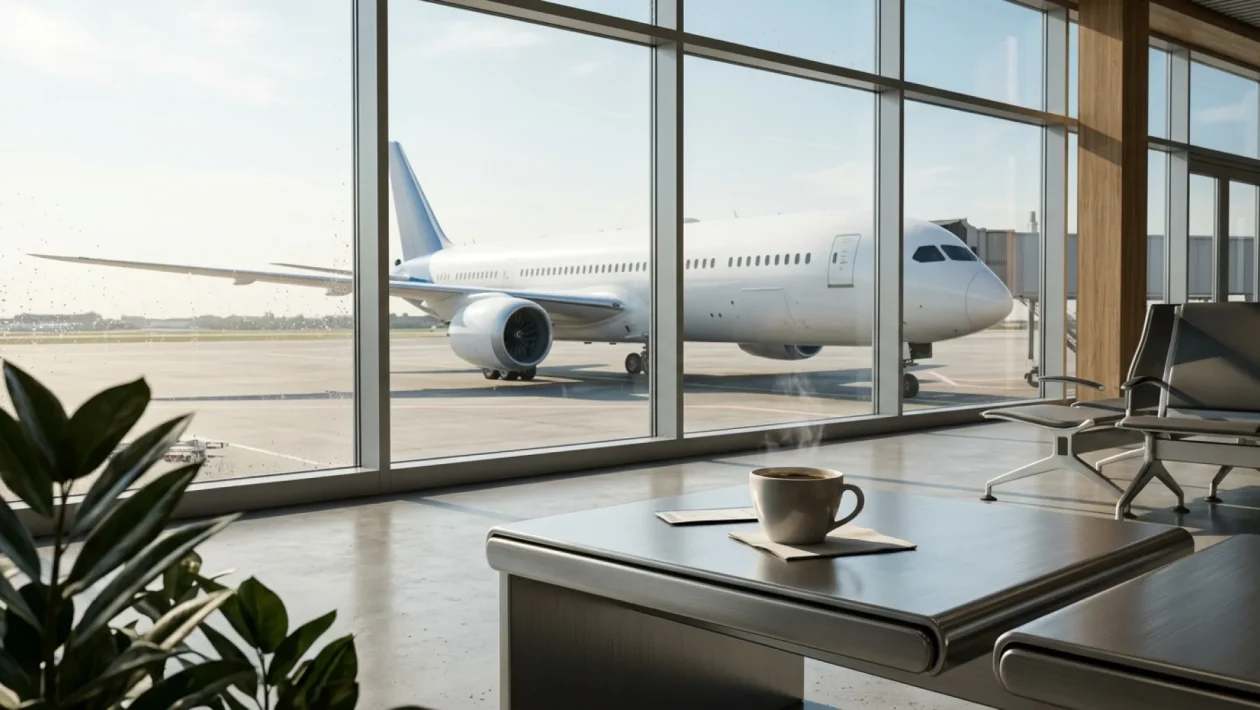
Imagine settling in for the final leg of your transatlantic flight to Michigan, only to feel the plane suddenly pitch down and veer sharply north. That is exactly what happened when an Air France diverted flight turned a routine trip into a nail-biting landing in Montreal today. I have spent years covering aviation anomalies, and the culprit today was not an unruly passenger—it was a critical mechanical warning that forced the pilots’ hands.
At cruising altitude, the aircraft’s internal systems triggered a sudden cabin depressurization alert. Safety protocols mandate an immediate descent when this happens, because pilots absolutely do not mess around with oxygen levels. They dropped to a breathable altitude, squawked the universal emergency code, and targeted the nearest major runway.
Air France Diverted: The Mid-Air Incident Over Eastern Canada
When an Airbus systems computer screams that there is a pressure anomaly, the crew has mere seconds to react. Today, that meant dropping out of the sky over eastern Canada and heading straight for YUL—Montreal-Trudeau International Airport.
A mid-air diversion is incredibly stressful for everyone on board, but it is also a massive financial blow to the carrier. It is a little-known aviation hard fact that a single unscheduled international landing costs an airline upwards of $100,000 to $150,000 once you factor in dumped fuel, emergency airport fees, and passenger logistics.
Thankfully, the heavy widebody jet touched down safely on the Montreal tarmac without a single scratch on the passengers or the fuselage.
Why the Detroit-Bound Flight Never Made It to Michigan
Once the plane safely hit the ground in Quebec, the immediate crisis was over, but a massive logistical nightmare had just begun. You might be wondering why they could not just inspect the sensor, refuel, and hop over the border to Detroit.
Aviation rules are strictly governed by crew duty hours to prevent fatigue. After handling an intense emergency descent, the flight crew simply timed out. They legally could not fly the aircraft any further.
Instead of touching down in Michigan, weary passengers found themselves grabbing a double-double at a terminal Tim Hortons while Air France scrambled to rebook them on partner flights via Air Canada.
The Emergency Landing Protocol in Montreal Today
Ever wonder what actually happens behind that reinforced cockpit door when an emergency hits? It is a masterclass in controlled chaos and strict procedure.
- Aviate: The flying pilot immediately takes manual control, adjusting pitch and thrust to reach a safe altitude (usually 10,000 feet for pressure issues).
- Navigate: The monitoring pilot punches nearest airport data into the flight management computer to lock in the diversion route to Montreal.
- Communicate: The crew radios Air Traffic Control to formally declare an emergency, securing priority routing over all other commercial traffic.
“When a pressure warning chimes, we don’t wait to see if it’s just a sensor glitch. We put the nose down and find the longest stretch of concrete nearby. Montreal has the heavy infrastructure to handle a massive widebody jet, making it the perfect diversion point.” – Captain David Vance, former commercial pilot and aviation consultant.
What to Do If You Get Stranded
Knowing your rights is crucial when your flight path gets scrambled. Here is what you need to know about airline responsibilities when landing in Canada versus your final destination.
| Passenger Rights | Coverage Details |
|---|---|
| Meals & Hotel | Airlines must provide vouchers for delays extending overnight. |
| Rebooking | Free on the next available flight (often leveraging partner airlines). |
Frequently Asked Questions
Will Air France compensate passengers for today’s diversion?
Because the diversion was due to a mechanical safety issue, passenger rights regulations mandate a standard duty of care (food and lodging). However, cash compensation for the delay might be disputed if the airline claims “safety” as an extraordinary circumstance. You should always file a claim anyway to test the waters!
How long was the plane grounded in Montreal?
The aircraft remains at a maintenance hangar for a full technical inspection. Passengers were rebooked onto smaller commercial flights heading to Detroit within six to eight hours of the original landing.
🤝 Good luck navigating the skies this spring, because as this May 2026 travel season proves, even the most routine transatlantic flights can throw a sudden curveball.
💡 Always pack your essential daily medications and a spare phone charger right in your carry-on bag, just in case you end up spending the night in a different country than you originally planned.
📱 If you know someone who was on this flight, or if you just love the behind-the-scenes mechanics of the aviation industry, share your thoughts and pass this article along to your travel buddies!
👇 Have you ever been on a flight that had to make a sudden emergency diversion? Drop a comment below and let me know exactly how the airline handled it.