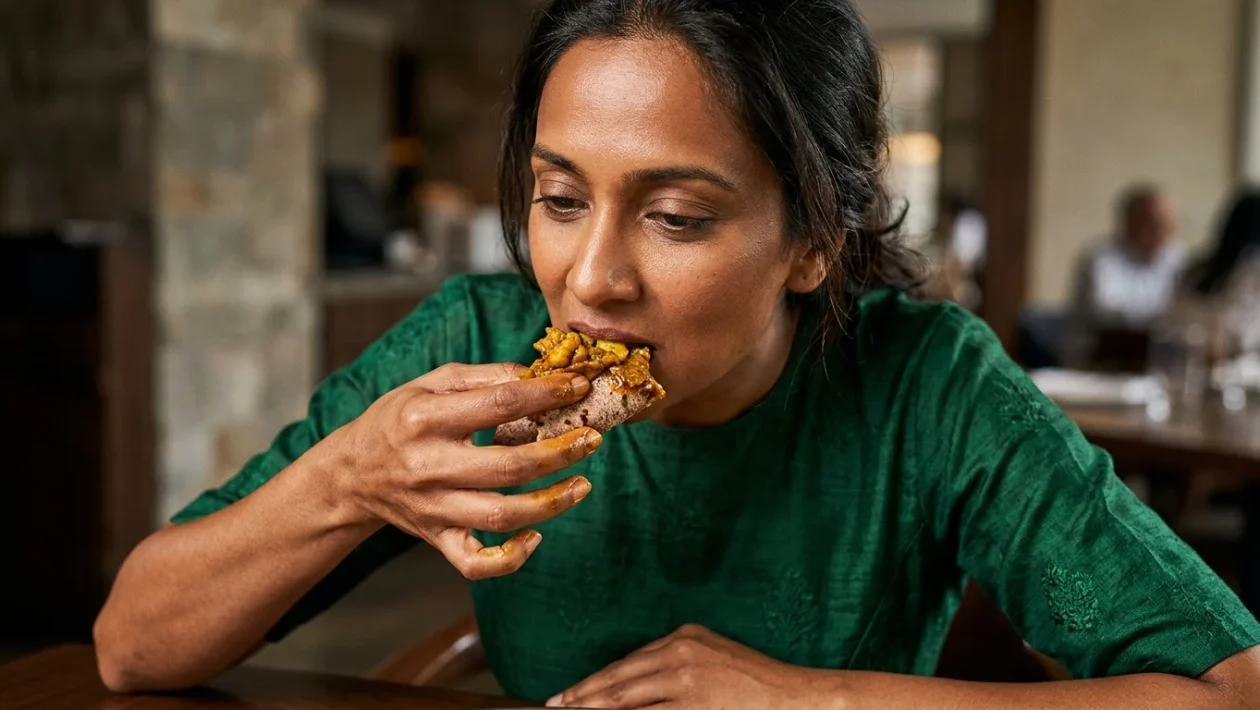
A person mindfully eating a traditional meal using their bare hands.
Eating with your hands is often dismissed in Western societies as careless or outdated.
However, psychology offers a fundamentally different perspective. Experts suggest this deeply rooted habit has nothing to do with a lack of manners.
Instead, it reveals a profound link to cultural identity, heightened sensory connection, and emotional attachment to our food.
The Science of Multisensory Integration
To the human brain, flavor is never just about taste. It is an intricate blend of texture, temperature, and touch.
Psychologists call this “multisensory integration.” When your hands make direct contact with your food, the brain receives vital tactile information long before the first bite reaches your mouth.
This physical connection primes your senses. It explains why many people describe meals eaten without utensils as more pleasurable and personal.
By bringing touch into the dining experience, the act of eating naturally slows down, becoming a highly intentional and mindful process.
What Psychology Says About Ditching Utensils:
- It is not poor etiquette: The practice reflects culture, not a lack of hygiene or education.
- It heightens the senses: Direct touch increases sensory engagement with the meal.
- It promotes mindfulness: Feeling your food encourages slower, more attentive eating habits.
- It is historically grounded: The tradition predates the invention of cutlery and thrives globally.
A Bridge to Cultural Identity
Eating with bare hands is a standard daily practice in countries like India, Ethiopia, and across the Middle East. For millions of families, it is a non-negotiable part of the culinary experience.
According to Social Identity Theory, human beings build their sense of belonging through shared cultural traditions.
For many descendants of immigrants, eating with their hands serves as a direct bridge to their familial roots and ancestors.
Psychologists also link the practice to emotional self-regulation. The physical, repeated ritual of eating by hand generates a deep sense of predictability.
That predictability, in turn, fosters psychological calm, turning an everyday meal into a grounding emotional anchor.