You just opened your latest utility bill and winced. You have already swapped out every incandescent bulb for LEDs, you rigorously program your smart thermostat, and you only run the dishwasher after midnight.
But there is a stealthy, high-tech beast sitting right in the middle of your kitchen that is quietly draining your budget. I am talking about your sleek, ultra-modern induction stovetop.
We need to talk about the absolute biggest energy thief in your home. By making a few surprisingly simple tweaks to how you cook, you can finally stop overpaying your power provider every single month.
Unmasking The Silent Power Vampire
When we think of heavy electricity users, we usually point the finger at the old, rumbling chest freezer in the garage or the HVAC system. We rarely suspect the flat glass surface we use to sear our steaks.
However, recent massive energy consumption studies have blown the lid off this myth. The data shows that induction cooktops pull an absolutely staggering 748.25 kWh of electricity every single year.
To put that in a North American perspective, as utility rates hit record highs this July 2026, running that cooktop is costing you a small fortune. A premium brand appliance might heat your soup in sixty seconds, but the sheer amperage required to create that magnetic field is astronomical.
Why It’s Tripling Your Fridge’s Energy Bill
Let’s look at the hard, undeniable math. We leave our refrigerators plugged in 24 hours a day, 7 days a week, 365 days a year.
Yet, a standard modern refrigerator only uses about 270 kWh annually. Your induction stove uses almost exactly three times that amount, despite only being turned on for an hour or two a day to prep meals.
In fact, the induction stove is using roughly five times more energy than your washing machine. Take a look at this quick breakdown based on average household appliance consumption data:
| Kitchen Appliance | Average Annual Energy Use |
|---|---|
| Induction Cooktop | ~ 748.25 kWh |
| Electric Oven | ~ 496.40 kWh |
| Standard Refrigerator | ~ 270.00 kWh |
When you stack up the numbers, it is painfully clear why this single appliance is aggressively padding the pockets of companies like BC Hydro or Hydro One.
How To Fix It Without Sacrificing Your Dinner
You do not need to rip out your expensive stove and start cooking over an open campfire in the backyard. You just need to cook smarter.
Lowering your stovetop’s energy footprint boils down to a few highly effective daily habits. Here is the ultimate blueprint to reigning in that rogue appliance:
- Dial back the power: Stop blasting every pot on the “Power Boost” setting. Cooking on lower, sustained heat settings drastically reduces your immediate energy draw.
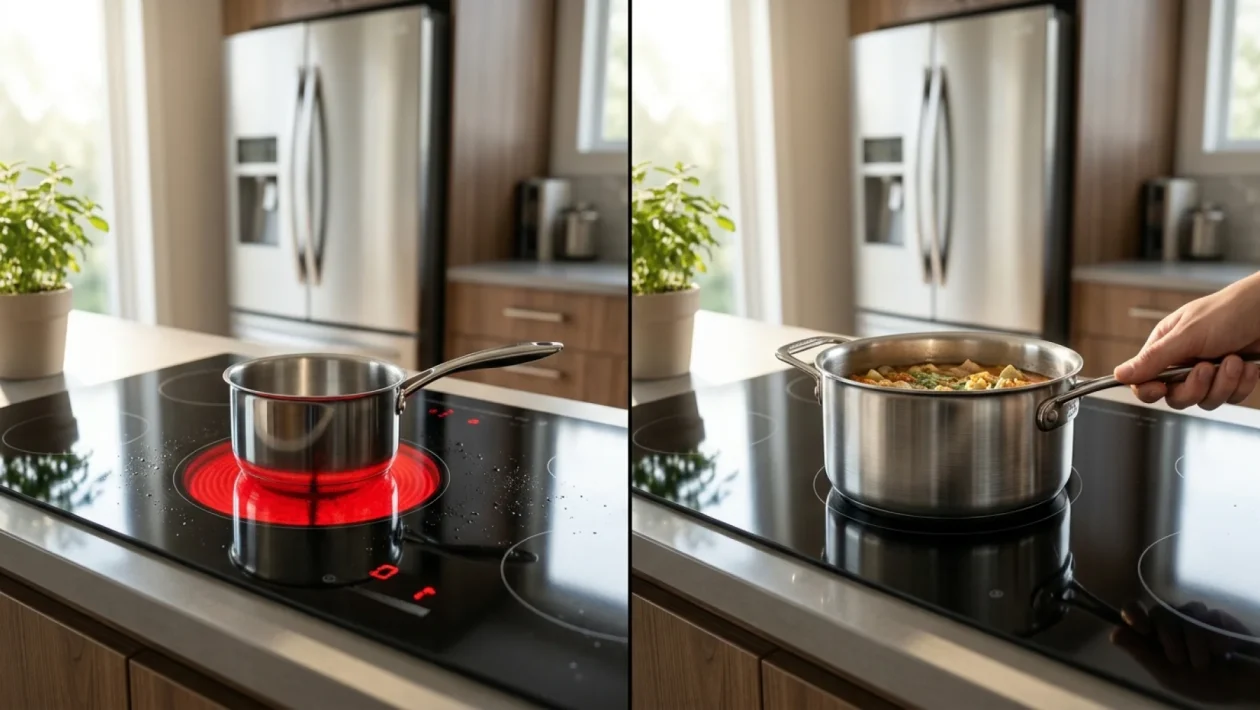
- Match the pot to the ring: Using a tiny saucepan on a massive heating zone forces the stove to work harder and waste ambient magnetic energy. Always size-match your cookware to the burner.
- Invest in high-class appliances: If you are renovating, look for premium energy-efficient models. Brands like Whirlpool offer higher energy-class cooktops that cost a bit more upfront but save you hundreds over their lifespan.
- Leverage residual heat: Turn off the burner two minutes before your pasta is fully done. The heavy bottom of a quality pot will hold enough heat to finish the cooking process entirely for free.
“Homeowners are consistently shocked when they monitor their smart-breaker data. The induction stove often spikes the home’s total energy draw higher than an electric water heater during dinner hour. Conscious cooking is your best defense.” – Dave Miller, Senior Appliance Technician
Frequently Asked Questions
Does replacing my induction top with a gas stove make financial sense?
Usually, no. While induction uses a lot of electricity, it transfers heat directly to the food much faster than gas. Factor in the steep costs of running a new gas line and the rising prices of natural gas, and keeping your current setup while practicing better habits is the smarter financial play.
Do I need to buy special energy-saving pots?
You don’t need magic pots, but you do need completely flat, highly magnetic cookware. If your pan is warped and doesn’t make perfect contact with the glass surface, the stove works overtime to maintain the magnetic field, wasting precious energy.
💡 The bottom line is that knowledge is absolute power when it comes to home maintenance.
🤝 Now that you know exactly what is driving up your summer utility bills, you can finally take back control of your kitchen.
📱 If this article saved you from a massive headache, share your thoughts below or forward it to a friend who loves to cook.
👇 Good luck out there, and happy (energy-efficient) cooking!