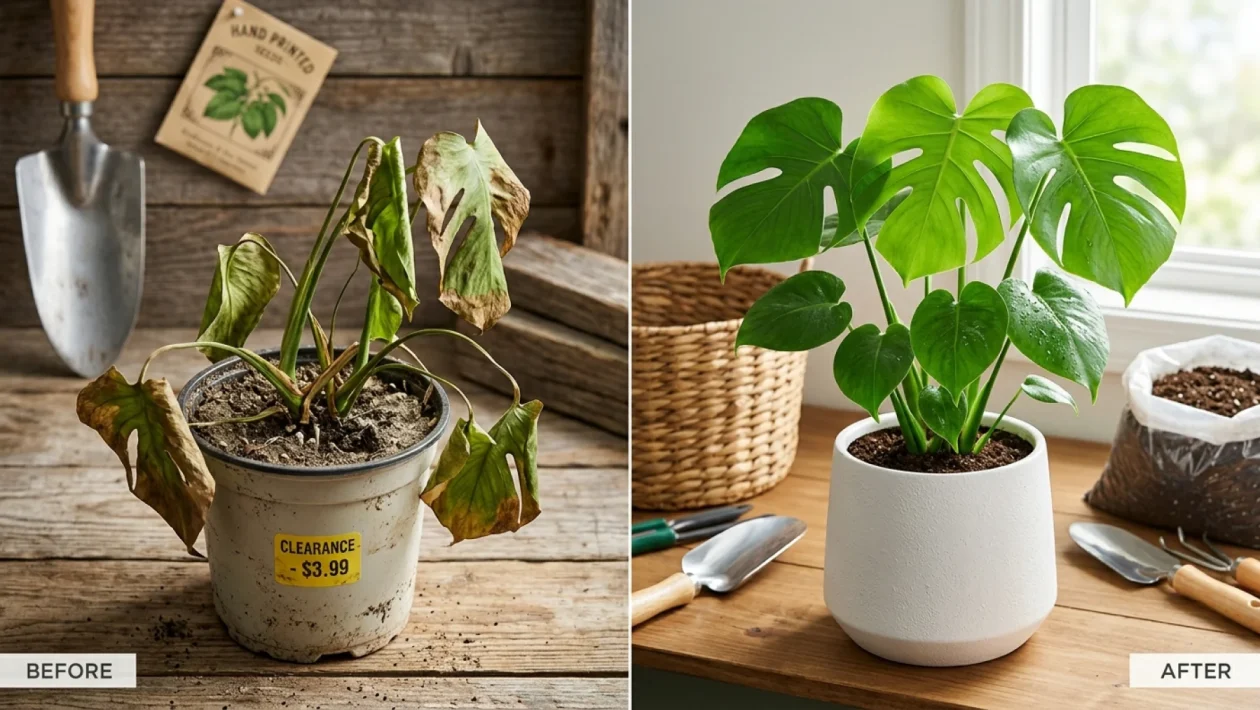
Have you ever walked past the discount rack at your local garden center and felt a sudden pang of guilt? Those wilted, crunchy-looking ferns and drooping monsteras are often just days away from a one-way trip to the dumpster. Clearance plant rescue isn’t just a fleeting social media trend—it is a highly practical, eco-friendly way to green up your living space for pennies on the dollar.
The movement recently hit the mainstream when a young TikTok creator set out to save dying greenery with a simple $20 bill. The staff at Tractor Supply actually recognized her from her viral videos and handed over a cart full of distressed plants completely free of charge. They knew exactly what she was doing: stopping perfectly good resources from ending up in a landfill. If a kid with a tight budget can spark a zero-waste gardening revolution, you absolutely can too.
The Art Of Clearance Plant Rescue
Right now, in the heat of July 2026, nurseries are desperate to clear out their summer inventory to make room for fall stock. When a massive retailer like Canadian Tire or a big-box hardware store over-orders, their staff simply doesn’t have the time to baby a struggling philodendron. The plants get pushed to a back rack, slapped with a yellow sticker, and forgotten.
This creates a massive environmental blind spot. It is estimated that up to 15% of all retail garden center inventory ends up in the trash annually. That includes all the water, fertilizer, transportation energy, and plastic packaging required to grow them.
By stepping in and buying these struggling specimens, you aren’t just scoring a cheap houseplant. You are actively reducing commercial waste. You become the final, crucial step in a sustainable supply chain.
Reviving Garden Center Rejects
Of course, not every discounted plant is a guaranteed survivor. You need a solid game plan before you drag a half-dead ficus home and expect miracles. Bringing a plant back from the brink requires a bit of triage.
- Inspect the foundation: Look closely at the base of the stem. If it is firm and green, there is life. If it is black and mushy, leave it behind.
- Check for stowaways: Carefully look under the leaves and along the stems for spider mites, mealybugs, or webbing. You want a rescue project, not an infestation.
- Hydrate strategically: Most clearance plants are desperately thirsty. Bottom-water your new plant by letting it sit in a bowl of water for 30 minutes so the soil can absorb moisture evenly.
- Prune the dead weight: Use sterilized shears to snip off any completely brown, crispy leaves so the plant can direct its energy to new growth.
“The secret to a successful plant rescue lies entirely below the soil. If the roots are firm and white or tan, the plant will absolutely bounce back. If they are slimy and smell like a swamp, walk away.” — Dr. Sarah Jenkins, Horticultural Specialist
On A Tight Budget
You do not need a massive wallet to build a stunning indoor jungle. As the recent viral video proved, a strict $20 budget is more than enough to completely transform a room if you know where to look. Garden centers practically give these plants away just to get them off the balance sheet.
By focusing your funds on the clearance rack, you free up cash for high-quality soil, stylish pots, and reliable fertilizers. It is all about shifting your investment from the plant itself to the environment you create for it.
| Buying Full Price | Clearance Plant Rescue |
|---|---|
| High initial cost ($20-$100+). | Extremely low cost ($1-$5) or even free. |
| Instant aesthetic gratification. | Requires weeks of patience and care. |
| Contributes to standard retail demand. | Directly prevents organic and plastic waste. |
Frequently Asked Questions
Should I repot a clearance plant immediately?
No. Your new plant is already highly stressed from neglect and transportation. Give it at least a week to acclimate to your home’s lighting and humidity before shocking its root system with a repotting.
How do I make sure I don’t bring bugs into my house?
Always quarantine your new arrivals. Keep your clearance plants in a separate room, away from your healthy plants, for at least 14 days. Wiping the leaves with a gentle neem oil solution is a great preventative measure.
When should I fertilize my rescued plant?
Wait until you see signs of active, new growth. Pushing fertilizer into a dormant, heavily stressed root system can actually burn the plant and finish it off.
🤝 Good luck out there in the garden center aisles.
💡 Remember, every thriving jungle starts with a little patience, a good eye, and a willingness to get your hands dirty.
📱 If you manage to bring a crispy discount rack find back from the brink, share your thoughts and photos with us online!
👇 Tag us in your success stories below and let’s keep this green revolution growing.