You are bleeding cash every single time you turn on the shower or wash a load of laundry. Gas prices are volatile, and grid electricity rates are creeping up faster than a framing lumber shortage.
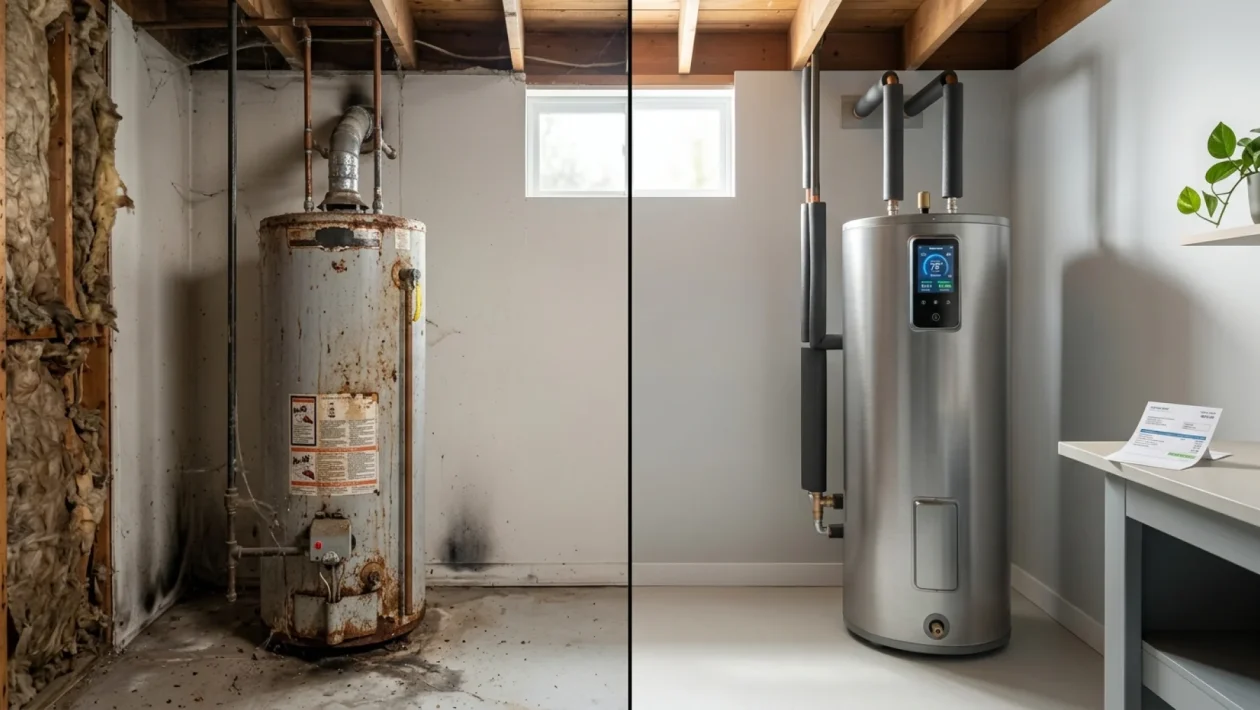
But the ultimate solution to sky-high utility bills isn’t dropping $15,000 on a shiny lithium wall battery. The real fix is already sitting quietly in your basement. We just need to make it smarter.
By upgrading that big, rusty cylinder to a modern, electrified heat pump system, you can effectively turn your plumbing into a massive energy storage device. It is the single most overlooked home upgrade of July 2026.
Smart Water Heaters Are The New Home Batteries
Think about what a home battery actually does. It scoops up cheap electricity, holds onto it, and lets you use it when power rates skyrocket in the evening.
Smart water heaters do the exact same thing, just using thermal energy instead of chemical cells. Hot water accounts for a staggering 25% of the average home’s energy use and emissions.
Every person in your house goes through roughly 50 litres of hot water a day. Instead of firing up an inefficient gas burner at 6:00 PM when demand is peaking, a smart electric tank does the heavy lifting in the middle of the day.
It acts like a giant thermos. It absorbs excess energy from the grid when rates are rock-bottom, storing that heat so it’s ready the moment you twist the tap.
How To Cut Energy Bills By 72%
If you are still burning natural gas to wash your dishes, you are throwing money out the window. New heat pump technology has absolutely revolutionized this space.
Instead of creating heat from scratch, modern hybrid units from North American brands like Rheem or A.O. Smith act like a refrigerator in reverse. They pull ambient heat out of the air in your basement and dump it into the water tank.
Here is exactly how this system slashes your bill:
- The Thermal Draw: The heat pump extracts free ambient heat from your utility room, making the unit incredibly efficient.
- The Smart Shift: A built-in timer or smart panel waits until midday when electricity rates are at their absolute lowest.
- The Storage: The tank heats the water to a high temperature and stores it for hours with almost zero heat loss.
- The Payoff: You take your evening showers using water heated by dirt-cheap electricity, entirely dodging peak billing hours.
“When you hook up a heat pump to a smart timer, you’re essentially buying power when it’s practically free and storing it as hot water. It is a financial no-brainer for any homeowner.” — David Roche, Strategic Energy Researcher.
And Ditch Gas Forever
Getting your home completely off the gas grid is the ultimate milestone for a modern, independent property.
Nearly 40% of homes still rely on natural gas to heat their water. That habit can easily cost a family of four upwards of $1,000 a year just in heating costs, not to mention the fixed delivery fees you pay just to have the gas meter attached to your house.
Take a look at the hard numbers:
| Standard Gas Heater | Smart Heat Pump Heater |
|---|---|
| High running costs ($1,000+/year) | Low running costs (Up to 72% cheaper) |
| Subject to volatile fossil fuel pricing | Capitalizes on cheap off-peak power |
| Vents exhaust fumes outside | Zero localized emissions |
| Provides zero grid storage value | Acts as a massive thermal battery |
By pairing a smart electric system with time-of-use billing from utilities like Hydro One or BC Hydro, you can essentially heat your water for pennies. If you have rooftop solar panels, you could be doing it for absolutely free.
Frequently Asked Questions
Will a heat pump water heater work in a freezing Canadian basement?
Yes. While an uninsulated garage in January might lower its efficiency slightly, modern heat pumps are designed to work effectively even in colder temperatures. Plus, they always have standard electric resistance coils as a backup for extreme cold snaps, ensuring you never run out of hot water.
Do I need to own solar panels to see the savings?
Not at all. While solar panels make the deal even sweeter by providing free midday power, anyone on a time-of-use electrical plan can benefit. The smart tank simply waits to heat the water until your local utility company offers its cheapest off-peak rates.
The Bottom Line
💡 The writing is on the wall for old-school gas heaters, and the transition to smart electric systems is happening faster than anyone predicted.
🤝 If you’re planning a major home maintenance upgrade this year, skip the flashy cosmetic stuff for a moment and take a hard look at your utility room.
📱 I want to know if you’ve made the switch yet, so please share your thoughts with me in the comments below!
👇 Good luck with your next DIY energy project, keep those bills low, and I’ll see you in the next one.