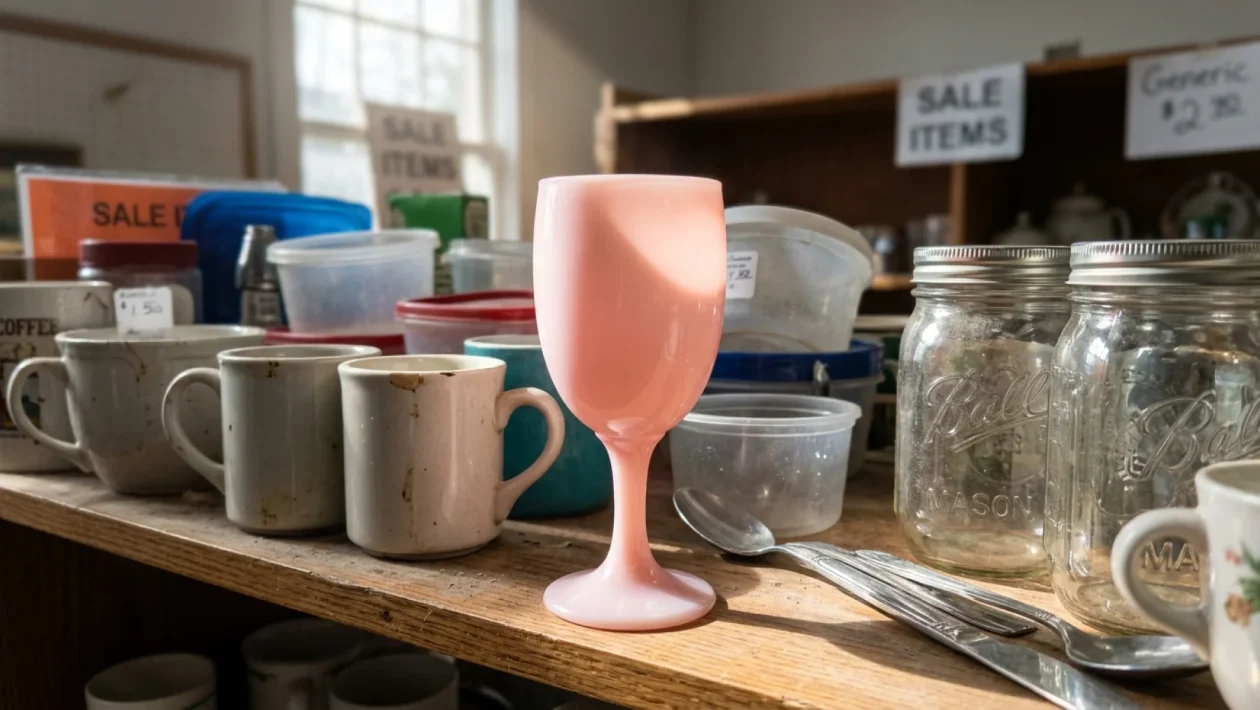
You are scanning the crowded aisles of your local thrift shop, shifting past chipped coffee mugs and dusty mason jars, completely unaware that a piece of 19th-century French history might be sitting right in front of you. Pink opaline glass looks deceptively simple, yet collectors are currently fighting over these glowing, milky-pink cups like they are buried treasure. If you know exactly what to look for, you can easily flip a three-dollar thrift store find into hundreds of dollars before you even leave the parking lot.
Pink Opaline Glass: What Makes This Vintage Tableware So Special
I have spent years hunting down rare antiques, and let me tell you, standard transparent glass has absolutely nothing on opaline. To achieve that signature milky glow, 19th-century glassmakers added specific minerals directly to the molten glass.
The result is a luminous, opaque finish that looks remarkably like fine porcelain but retains the weighty, satisfying feel of traditional glassware. The soft blush-pink version was never painted on after the fact; the color was infused entirely throughout the glass during production.
This intensive process gives every single piece a rich, even glow that simply cannot be replicated by modern mass-production. It is the ultimate statement piece for any home.
The 1800s French Connection: Portieux Vallerysthal Explained
The historical obsession with this delicate glassware traces back to two legendary French glasswork companies: Portieux, founded in 1705, and Vallerysthal, established in 1836. After the Franco-Prussian War shook up the geographical map in 1870, these two manufacturing powerhouses strategically merged.
Together, they perfected the blush-pink tableware that captured the unmatched elegance of the Victorian and Belle Époque eras. They set a standard for luxury that remains highly sought after today.
Here is a wild fact for you: surviving authentic pieces are becoming so incredibly scarce that antique appraisers estimate less than 5% of all original French opaline glass produced in the late 1800s remains fully intact on the market today.
Spotting This Thrift Store Treasure On The Shelves
So, how do you spot the real deal hidden between the plastic Tupperware and generic dinner plates at your local Value Village or Goodwill? Because many authentic pieces were never officially stamped, you have to do a little detective work.
- Check the opacity: Hold the glass up to the overhead lights. It should glow with a soft, milky density, completely blocking transparent visibility.
- Feel the finish: Run your thumb gently over the surface. Authentic pieces possess a distinct, smooth satin-like texture that feels incredibly refined.
- Inspect the seams: Unlike hand-blown glass, these items were pressed into iron molds. Finding faint mold seams is perfectly normal and actually a fantastic indicator of authenticity.
- Look for the etch: While quite rare, always flip the glass over and check the base for faint acid-etched marks like “Portieux Vallerysthal France”, “France PV”, or “PV France”.
Why These Rare Cups Are Literally Worth Hundreds
You might be wondering if digging through dusty shelves on your weekend off is actually worth your time. The short answer is an absolute, undeniable yes.
Homeowners and decorators are currently obsessed with styling on-trend vintage glassware to match modern French cottage, bohemian, or mid-century interior design styles. Because of this massive demand spike as we cruise through summer 2026, resale prices have absolutely skyrocketed.
“The secondary market for authentic pastel opaline glass has exploded in recent years. What used to be a niche collector’s item is now a centerpiece for high-end interior designers, easily driving the value of single vintage goblets into the hundreds.”
If you spot one of these glowing pink beauties, do not hesitate—put it in your cart immediately. To give you a clear idea of what you are dealing with, here is a quick breakdown of current collector valuations:
| Item Type | Estimated Collector Value |
|---|---|
| Single Goblet | $250+ |
| Set of Three Glasses | $375 – $500 |
| Decorative Compote Dish | $150 – $300 |
Frequently Asked Questions
Are modern reproductions common?
Yes, you will occasionally find modern knock-offs trying to mimic the style. However, newer pieces often feel much lighter in the hand and completely lack the deep, uniform color infusion that authentic 19th-century French glass is known for.
Is it safe to drink out of vintage opaline glass?
While they were originally designed as standard tableware, it is highly recommended to use them strictly for decorative purposes today. Older glass manufacturing processes occasionally utilized trace heavy metals to achieve those specific, vibrant colors.
Can I put these pieces in the dishwasher?
Absolutely not. The extreme heat and harsh modern detergents will instantly ruin the delicate satin finish and potentially crack the historic glass. Always hand wash them gently with mild dish soap and lukewarm water.
🤝 Good luck on your next weekend thrift store run, because armed with this knowledge, you are officially miles ahead of the competition.
💡 Remember to keep your eyes peeled for that unmistakable milky-pink glow the next time you are wandering through the crowded homeware section.
📱 Share your thoughts or post photos of your absolute best vintage scores in the comments below, as I always love seeing what hidden gems you manage to dig up!
👇 Until next time, keep hunting, stay curious, and never underestimate the serious potential of a dusty bottom shelf.