You want a rock-solid backyard patio, but the thought of mixing heavy, sloppy cement in a wheelbarrow makes your lower back scream just thinking about it. You aren’t alone, and it’s exactly why dry pour concrete has completely hijacked your social media feeds this summer. The promise is irresistible: a perfectly level, professional-looking slab without ever firing up a mixer or breaking a sweat.
Instead of racing against the clock with wet cement, this DIY method flips the script entirely. You lay the material out dry, get it perfectly smooth, and simply activate it with your garden hose. But does it actually hold up to a brutal North American freeze-thaw cycle, or is it just another fleeting internet illusion?
Dry Pour Concrete Explained
Let’s strip away the viral hype and look at the actual mechanics of what is happening here. Traditionally, you add water to your dry mix in a tub, stir until it looks like thick oatmeal, and shovel it into a wooden frame. It’s a messy, exhausting, and incredibly time-sensitive process.
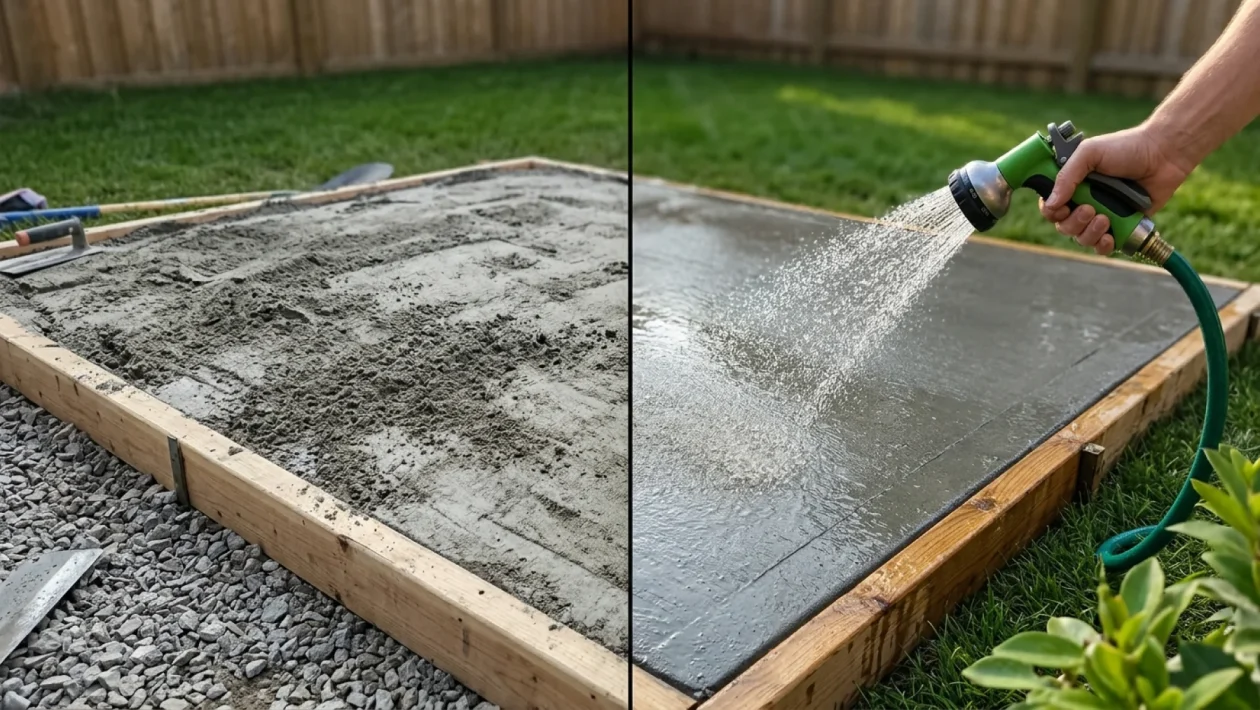
With the dry method, you are literally dumping dusty bags of standard mix straight onto the ground. You take your absolute time screeding it perfectly flat. Only when you are 100% happy with the layout do you trigger the chemical hardening reaction using a fine mist of water.
“The beauty of the dry pour is that it completely removes the panic from DIY masonry. You control the timeline, not the concrete.” – Mike Holmes Jr., Canadian Contractor & Builder
Why Everyone Is Suddenly Obsessed
The current obsession boils down to pure, unfiltered accessibility. Anyone who can lift a bag of Sakrete or Quikrete from Home Depot Canada can now tackle a weekend hardscaping project completely solo.
The numbers don’t lie. According to the North American DIY Builders Association, retail sales of bagged concrete spiked by a staggering 314% in the spring of 2026. People are building fire pit pads, walkways, and full-blown dining patios for pennies on the dollar compared to hiring a crew.
Plus, the social media algorithms absolutely love a good transformation. Watching a dusty, lifeless grey square magically turn into a solid, curing slab under a gentle shower spray is incredibly satisfying visual ASMR.
| The Dry Pour Method | The Traditional Method |
|---|---|
| Work at your own leisurely pace | Race against the curing clock |
| Zero mixing equipment or tubs needed | Requires wheelbarrows, hoes, or mixers |
| Perfect for small to medium backyard DIYs | Better for heavy structural foundations |
Putting This Viral TikTok Trend to the Test
So, how do you actually pull this off without ending up with a crumbly, cracked mess in your backyard? The secret sauce is entirely in the prep work and the hydration process.
Here is the exact blueprint to nail this viral trend on your very first try:
- Build your forms: Frame your patio area using sturdy 2×4 lumber, ensuring everything is completely square and level.
- Add your base: Tamp down a solid layer of crushed gravel, followed by a grid of steel rebar or wire mesh for internal structural strength.
- Pour and level: Dump in your dry mix. Use a straight piece of wood (a screed board) to drag across the forms, smoothing the dust until it is flawlessly flat.
- Mist it down: Using a hose with a fine mist nozzle, gently spray the area. You want to saturate the dust without causing puddles or washing away the smooth surface finish.
- Repeat hydration: Mist the slab every hour for the first few hours, ensuring the water eventually penetrates all the way to the bottom of the wooden form.
Frequently Asked Questions
Will a dry pour survive a Canadian winter?
Yes, provided you actually do it right. If you use a proper compacted gravel base, include steel rebar, and ensure the water penetrates entirely to the bottom of the slab during the misting phase, it will withstand our harsh freeze-thaw cycles without crumbling.
Can I use this method for a driveway?
Absolutely not. The dry-pour method is strictly for non-load-bearing projects like walking paths, shed bases, and patios. Keep heavy vehicles far away from it.
How long does it take to cure?
While the surface will harden within 24 hours, you should avoid walking on it for at least 48 hours. Just like traditional wet-mixed cement, full structural curing takes the standard 28 days.
🤝 Tackling a backyard upgrade doesn’t have to mean destroying your entire weekend and your spine in the process.
💡 The dry-pour method is one of those rare internet trends that actually delivers on its massive promises, giving you a pro-level finish with rookie-level effort.
📱 Share your thoughts or tag a buddy who needs to stop procrastinating on that backyard fire pit project you’ve been talking about.
👇 Good luck out there, and let me know in the comments if you plan on giving this viral patio hack a shot before the summer ends!