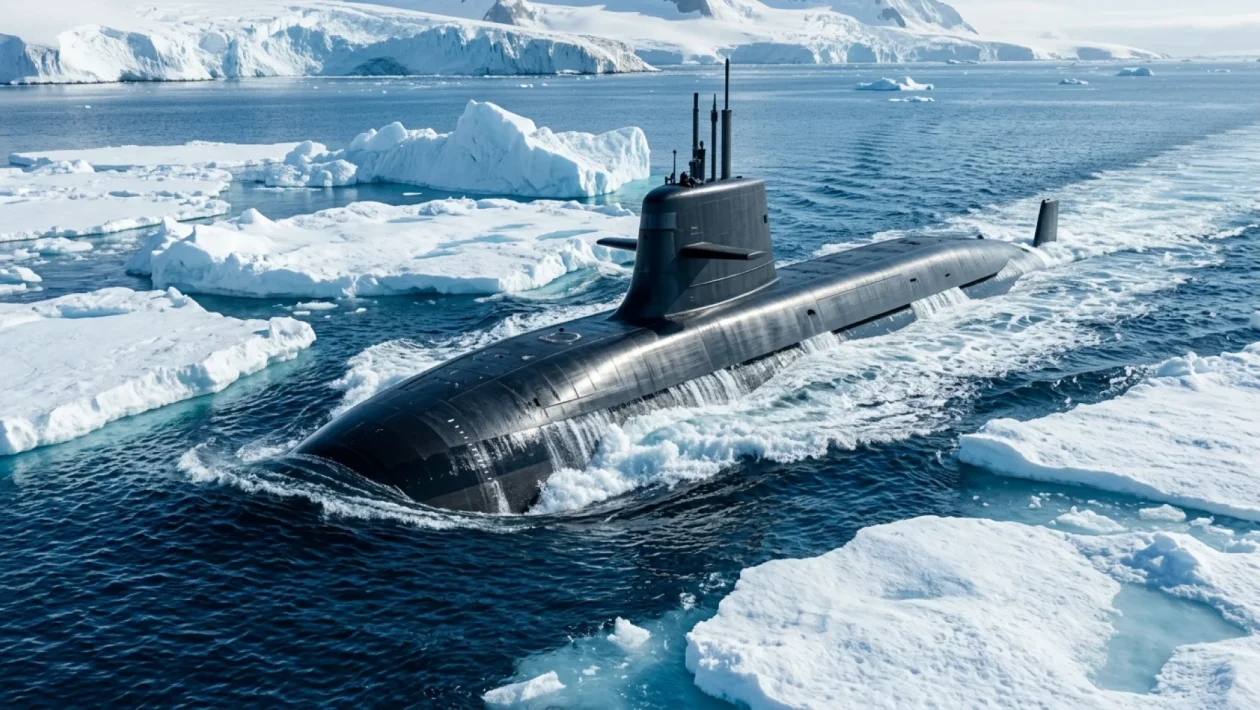
Our navy is running on fumes. Right now, Canada owns exactly four aging, 1990s-era Victoria-class submarines, and three of them are currently stuck in the repair shop. We are trying to guard the longest coastline in the world with a single working boat. But that’s about to change, and the stakes couldn’t be higher. The government is preparing to drop up to $90 billion on a brand-new fleet of 12 ultra-modern submarines. Two global superpowers are practically knocking our doors down to win your tax dollars, promising decades of jobs and an economic tidal wave in return.
The Canada Submarine Contract Breakdown
The Canada Submarine Contract is much more than a simple military upgrade. It is a massive generational investment that will reshape our domestic heavy industries. With Ottawa announcing its final decision in the coming months, the tension at this year’s CANSEC defense conference was palpable.
This procurement program is designed to completely replace our struggling maritime fleet. We need boats that can dive deep, stay submerged longer, and operate seamlessly under treacherous ice. But more importantly, the winning bidder must agree to build, repair, and maintain these massive machines using Canadian hands.
Inside the $90 Billion Economic Goldmine
When foreign defense contractors want our money, they have to pay the toll. Both the European and Asian bidding teams are throwing mind-blowing economic spin-offs at us to sweeten the deal. We are talking about guaranteed decades of work that could heavily benefit domestic heavyweights like Irving Shipbuilding on the East Coast or Chantier Davie in Quebec.
| Bidding Consortium | Economic Spin-off Promises |
|---|---|
| TKMS (Germany & Norway) | $86 Billion & over 650,000 lifetime jobs |
| Hanwha (South Korea) | $94 Billion & 22,000 annual jobs |
The German-Norwegian TKMS consortium recently shifted tactics, realizing they needed to show their financial cards. They are now projecting up to 50,000 jobs a year during peak production. Their plan focuses heavily on keeping the 35-year maintenance cycle strictly within Canadian borders.
The Global Clash: Germany vs. South Korea
This bidding war is turning into a fascinating heavyweight fight. Germany initially coasted on the assumption that Canada would naturally choose a traditional European ally. Meanwhile, South Korea came out swinging with an aggressive, highly visible charm offensive.
How exactly do foreign defense titans try to win over a G7 nation? They follow a very specific playbook:
- Deploy the hardware: South Korea literally sailed one of their advanced submarines straight into Victoria, British Columbia, just to prove they have the logistical chops to operate in our waters.
- Pitch the tech: Germany immediately countered by promising exclusive integrations. They are offering us unmatched spatial reconnaissance, top-tier sonar sensors, and advanced AI systems.
- Guarantee local jobs: Both factions are writing massive blank cheques promising that Canadian steelworkers, IT professionals, and software engineers will be the ones building out the tech infrastructure.
For South Korea, winning this contract would solidify them as a dominant quasi-member of NATO. For Germany, it’s about maintaining their historical grip on Western defense manufacturing.
Securing Our Arctic Waters
Beyond the money and the jobs, this comes down to pure national security. The Arctic is melting, shipping lanes are opening, and foreign adversaries are testing our northern borders more than ever before. We desperately need submarines capable of navigating under the thick northern ice.
Germany is sweetening their bid by offering full Arctic data sharing. Any intelligence gathered in the far north would be instantly beamed between Canada, Germany, and Norway, massively boosting our NATO deterrence capabilities.
“Selling state-of-the-art submarines to a G7 nation like Canada is the ultimate crown jewel. It proves to the world that you are a dominant force in modern high-tech naval manufacturing.”
Whether we side with our traditional European partners or embrace an aggressive new Asian ally, the ripple effects will be felt across the Pacific and the Atlantic for the next fifty years.
Frequently Asked Questions (FAQs)
Why do we need 12 submarines?
Canada has three distinct coastlines to defend: the Atlantic, the Pacific, and the Arctic. A fleet of 12 ensures we always have multiple active boats patrolling our waters while others are docked for routine, long-term maintenance.
When will the new submarines actually be ready?
Even after a winner is selected, building complex military submarines takes time. Expect the first new vessels to hit the water well into the 2030s, which is why the maintenance of our current aging fleet remains a critical short-term issue.
Will these submarines be built in Canada?
While the initial designs and some core manufacturing will come from the winning foreign country, the massive assembly, technological integration, and decades of maintenance will be heavily contracted out to Canadian shipyards and tech firms.
🤝 It is definitely an exciting time for the Canadian maritime and tech sectors. We are looking at a historic investment that will put thousands of highly skilled tradespeople to work for decades to come.
💡 No matter who wins the bid, upgrading our northern defense capabilities is no longer a luxury—it is an absolute necessity. The world is changing fast, and we need the hardware to keep up.
📱 I want to know what you think about this massive military upgrade. Do you trust the traditional European engineering, or should we embrace the South Korean tech powerhouse? Be sure to share your thoughts with me on social media!
👇 Good luck to both bidders, and here’s hoping the real winners of this contract are Canadian workers.