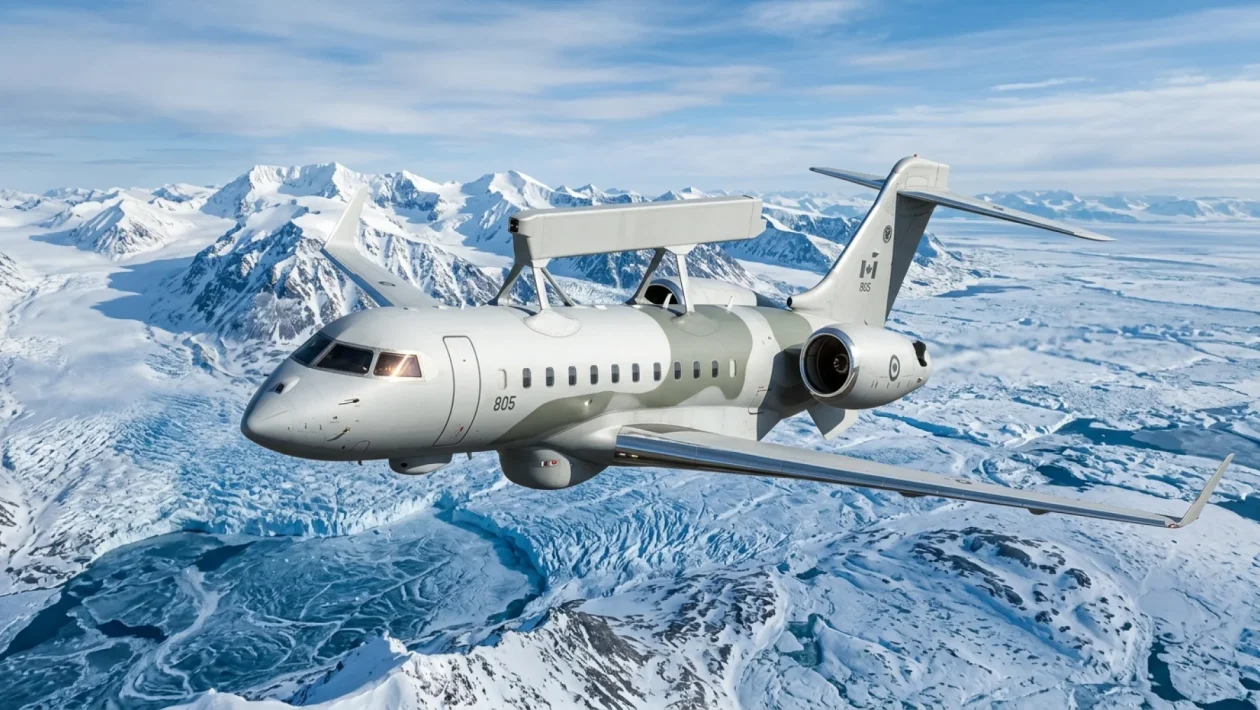
We have a massive, ice-cold backyard up North, and let’s be honest—it’s getting a little too crowded for comfort.
Prime Minister Mark Carney just dropped a heavy hammer at the CANSEC defence show in Ottawa this spring: Canada is officially negotiating to buy Saab GlobalEye jets.
If you’ve been wondering how we plan to monitor our massive borders without relying on outdated equipment, this is the ultimate solution.
We are finally upgrading our airborne early warning capabilities, and it turns out the answer is sitting right in our own industrial backyard.
Saab GlobalEye Jets: The Ultimate Command Center
When it comes to military tech, you need reliable, rugged gear that just works.
The GlobalEye isn’t just an airplane; it’s a flying command center packed with next-generation sensors.
It beat out heavyweights like the Boeing E-7 Wedgetail to win Canada’s attention, and for good reason.
This machine can simultaneously track targets across land, sea, and air from a staggering distance of up to 650 kilometres away.
That means our pilots can see threats coming before they even cross into Canadian territory.
Trusting A Bombardier-Powered Radar Beast
Here is the absolute best part for our local economy: the heart of this machine is fiercely Canadian.
Instead of outsourcing the entire build, Saab mounts its massive radar system onto a Bombardier 6500 executive jet.
These incredibly durable airframes are manufactured right at Bombardier’s plant in Toronto.
It’s about as reliable as hunkering down in a classic MEC four-season tent during a backcountry blizzard—built tough for extreme conditions.
Check out how this homegrown platform stacks up against the old way of doing things:
| Feature | The Saab GlobalEye Advantage |
|---|---|
| Airframe | Canadian-made Bombardier 6500 (creates local jobs) |
| Range of Detection | 650 km across land, sea, and air |
| Strategic Benefit | Builds domestic manufacturing autonomy |
Securing The Arctic From New Threats
The Arctic is our most vulnerable frontier, and the strategic ice is literally breaking up.
Foreign powers are testing our northern borders more frequently, making domestic surveillance an urgent priority.
“The North isn’t just a frozen wasteland anymore; it’s a bustling strategic corridor. Putting a highly mobile, long-range sensor platform up there is the only way we keep our sovereignty intact.”
Deploying these jets isn’t as simple as turning a key and taking off.
Here is exactly how the Canadian Armed Forces will implement these new airborne sentries:
- Procurement & Customization: Canada negotiates the final contract to build up to six jets, integrating specific Canadian military communications systems.
- Airframe Assembly: The Bombardier 6500 jets are assembled by skilled workers right in Toronto.
- Radar Integration: Saab’s advanced sensor suites are mounted to the spine of the jet, transforming it into an early warning powerhouse.
- Northern Deployment: The modernized fleet is deployed on rotational patrols over the Arctic, creating a continuous, overlapping radar net.
Frequently Asked Questions
Why did Canada choose Saab over Boeing?
While the final ink isn’t dry, Saab offered a unique bundle that utilizes a Canadian-made Bombardier airframe, promising significant local job creation and technology transfer.
How many jets is the military buying?
The Royal Canadian Air Force has outlined a plan to acquire up to six of these early warning aircraft to cover both domestic patrols and overseas NATO operations.
What does this mean for the F-35 fighter jets?
The GlobalEye radar planes act as the “eyes” for the fighter jets. However, the government is still reviewing whether to purchase American F-35s or Swedish Gripen-E fighters to work alongside them.
🤝 It is incredibly encouraging to see our military investing in technology that actually leverages Canadian manufacturing.
💡 Securing the North is no longer a theoretical debate; it is an absolute necessity for our national security.
📱 Share your thoughts on this massive procurement with your friends—are you glad we are keeping the airframe production in Toronto?
👇 Good luck to the folks at Bombardier as they gear up for what could be one of the most important defence contracts of the decade!