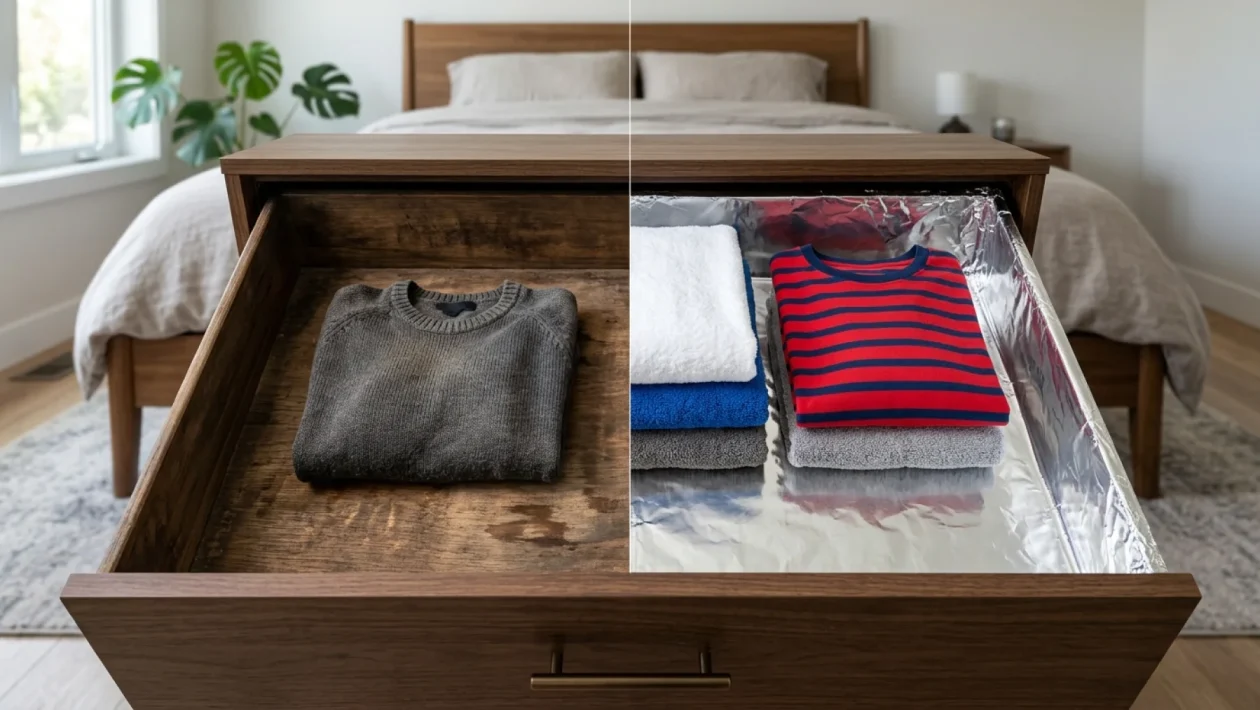
You open your wooden dresser, expecting the fresh scent of clean laundry, but instead, you are hit with that unmistakable stench of stale air and damp wood. It is a frustrating reality for anyone trying to preserve their wardrobe in fluctuating indoor climates. But before you throw out your favorite sweaters or spend hundreds replacing your bedroom furniture, head straight to your kitchen pantry.
Aluminum foil liners are the ultimate, science-backed defense to keep your fabrics smelling fresh. By creating an impenetrable barrier inside your furniture, you can completely block out the environmental factors that ruin textiles.
Aluminum foil liners: The ultimate invisible shield
Wood is highly porous, meaning it naturally absorbs and releases water vapor depending on the climate inside your home. Over time, that constant breathing turns your drawers into a breeding ground for microorganisms.
Whether you grab a heavy-duty roll of Alcan or whatever generic brand you have on hand, the material works miracles. The magic lies in the high-temperature manufacturing process.
“Aluminum foil is completely sterile thanks to its high-temperature annealing process, meaning it physically cannot harbor or promote the growth of odor-causing bacteria,” notes a technical report from the European Aluminium Foil Association.
Because it acts as a total physical barrier against light, gases, and dampness, the foil cuts off the life support for anything trying to grow in the dark corners of your furniture.
Banishing musty odors for good
That “old wood” smell isn’t just charmingly vintage; it is the scent of organic decay and trapped air. When clothes sit against untreated or aging drawer bottoms, the fabric acts like a giant sponge for those trapped gasses.
Foil stops this dead in its tracks. By lining the bottom of the space, you create a perfectly neutral surface.
Your textiles never actually touch the wood. This ensures they retain the scent of your laundry detergent rather than the smell of a damp basement.
Protecting clothes from moisture
Dampness is the absolute enemy of a well-kept wardrobe, especially as we navigate the unpredictable humidity of spring 2026. If you ignore it, the damage happens much faster than you think.
According to the U.S. Environmental Protection Agency (EPA), mold can begin growing on damp indoor surfaces in just 24 to 48 hours. Once those invisible spores take root in your fabrics, getting them out is an absolute nightmare.
The metallic barrier prevents that structural dampness from seeping upward into your stored items. It acts as a permanent, passive shield, keeping your expensive cottons, wools, and linens perfectly dry.
The simple installation process
You do not need adhesives, staples, or special tools for this job. Aluminum has a mechanical property called “dead fold,” meaning it retains whatever shape you press it into.
- Measure and cut: Tear off a sheet slightly larger than the footprint of your drawer.
- Position the foil: Place the sheet at the bottom of the drawer with the shiny side facing up.
- Mold the edges: Use your bare fingers to press the material firmly into the corners and along the edges so it grips the wood tightly.
Placing the shiny side up isn’t just for looks. It actively reflects the ambient light when you open the drawer, making it much easier to find exactly what you are looking for in the dark.
Comparing moisture-fighting methods
While foil is a phenomenal passive barrier, you might want to combine it with active moisture absorbers if your home is particularly humid. You can easily pick up a cheap hygrometer at Home Depot to monitor your room’s humidity—ideally keeping it between 30% and 50%.
Here is how the top domestic moisture-control methods stack up:
| Method | How It Works |
|---|---|
| Aluminum Foil | Acts as a permanent, passive barrier against moisture and wood odors. |
| Silica Gel Packets | Actively pulls water molecules out of the air (FDA approved for safety). |
| Standard Chalk | A highly porous mineral that naturally absorbs excess vapor on a budget. |
Frequently Asked Questions
Does the matte side vs. shiny side matter for blocking moisture?
Functionally, no. Both sides offer the exact same level of protection. The difference in finish is simply a byproduct of the manufacturing process where two layers are rolled together. However, facing the shiny side up helps reflect light!
How often do I need to replace the foil?
Because the material doesn’t degrade from standard indoor humidity, you only need to swap it out if it gets physically torn, punctured, or heavily crinkled over time.
Will this fix the humidity in my entire room?
No. Foil only protects the specific items resting directly on top of it. If your room consistently sits above 60% humidity, you need to open windows for ventilation or run a dedicated dehumidifier to solve the root problem.
🤝 Good luck tackling those vintage dressers and getting your bedroom storage completely organized this weekend.
💡 Remember, a roll of kitchen wrap costs mere pocket change, but saving your favorite clothes from permanent mold damage is absolutely priceless.
📱 Share your thoughts or snap a few photos of your upgraded storage spaces and tag me online.
👇 Drop a comment below if you have your own genius, old-school method for beating indoor humidity!