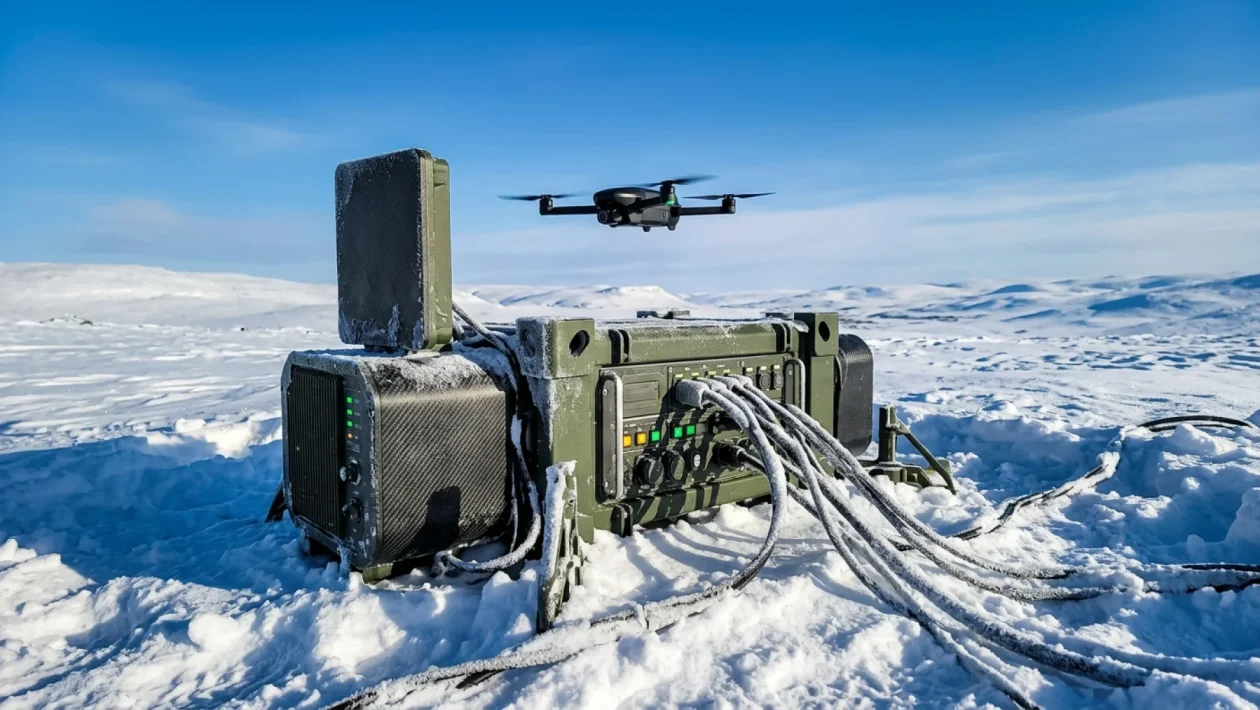
In modern warfare, data is just as critical as ammunition. Right now, in May 2026, the Canadian Armed Forces are staring down a massive logistical challenge: securing the second-largest landmass on Earth against increasingly sophisticated digital and physical threats. The solution isn’t just buying more ships or jets; it is fundamentally rewiring how our troops communicate. 5G national defence is no longer just a futuristic concept; it is the active, multi-billion-dollar backbone being deployed across the Great White North to keep this country secure.
Think of it like upgrading your home’s old, overloaded breaker panel to a state-of-the-art smart grid. For years, our military communications relied on aging infrastructure that was robust but undeniably slow. Today, we are going to break down exactly how this massive technological leap is happening, why the government is pouring funds into it, and how it directly impacts our national sovereignty.
5G National Defence: The Core Strategy
When you hear about 5G, you probably think about downloading a movie to your phone in three seconds. But on a tactical level, it is about absolute, unshakeable reliability. The core strategy behind a 5G national defence network is creating localized, private communication bubbles that cannot be easily jammed or intercepted by adversaries.
Our military relies on heavy data streams. We are talking about high-definition drone feeds, biometric data from soldiers in the field, and real-time radar mapping. Traditional networks simply choke under that kind of pressure. By utilizing private 5G bands, the military ensures that critical command data flows instantly, securely, and without relying on vulnerable public infrastructure.
Why Canada’s Military Needs An Upgrade Now
If you have ever tried to get a cell signal while camping in the deep Canadian wilderness, you know the struggle. Now imagine trying to coordinate a search-and-rescue mission or a defensive perimeter in the high Arctic. Arctic sovereignty is the primary driver pushing this massive tech upgrade.
Here is a hard fact that puts this into perspective: upgrading to 5G drops communication latency from around 50 milliseconds down to less than 5 milliseconds. That fraction of a second is the difference between a drone intercepting a threat or missing it entirely.
“We aren’t just buying faster cell service for the troops. We are building an invisible, impenetrable shield across the Arctic that allows our autonomous systems to react in real-time.”
Betting Billions: The Cost Of Ultimate Security
Building a ruggedized network across frozen tundra and dense forests isn’t cheap. The Department of National Defence is actively betting billions of dollars on this infrastructure. To pull this off, the government is partnering with domestic heavyweights like Rogers and Bell to adapt commercial hardware for strictly military applications.
This partnership is crucial. By leveraging the existing R&D of these massive Canadian telecom brands, the military saves time and resources. They take the strong bones of commercial 5G and wrap it in layers of military-grade encryption.
| Battlefield Network | Tactical Capability |
|---|---|
| Legacy 4G / Satcom | High latency, vulnerable to modern jamming, slow data transfer. |
| Private Tactical 5G | Near-zero latency, heavily encrypted, supports swarm drones. |
Rolling Out Next-Gen Networks
So, how does a tactical squad actually deploy a 5G network in the middle of nowhere? It is a highly choreographed process that acts a lot like setting up a mobile command post.
Here is how the military sets up these localized, high-speed networks in the field:
- Establish the Edge Node: Troops deploy a ruggedized, portable 5G base station, often mounted on a light armoured vehicle (LAV).
- Link to Low-Earth Orbit: The mobile node connects via encrypted satellite uplink (often utilizing low-earth orbit constellations) back to high command in Ottawa.
- Deploy Sensors and Drones: Once the 5G bubble is active, autonomous drones and perimeter sensors instantly sync to the network.
- Lock Down Encryption: AI-driven security protocols actively monitor the local network for jamming attempts or unauthorized pings.
This entire process takes minutes, not days. It turns an isolated squad in the wilderness into a fully connected, data-driven fighting force.
FAQs About Canada’s Military 5G Shift
Is the Canadian 5G military network safe from hacking?
Nothing is perfectly hack-proof, but military 5G operates on closed, private frequencies separate from public networks. Combined with advanced quantum-resistant encryption, it is incredibly difficult for adversaries to penetrate.
Will this military upgrade improve civilian 5G coverage?
Indirectly, yes. As the military pushes domestic telecoms to develop highly durable, cold-weather 5G nodes for the Arctic, that technology eventually trickles down to improve civilian infrastructure in rural and northern communities.
Are we relying on foreign hardware for this?
Canada has heavily restricted untrusted foreign vendors from its 5G infrastructure. The focus is strictly on allied and domestic technology to ensure there are no hidden backdoors in our national defence grid.
🤝 Good luck wrapping your head around just how fast this battlefield technology is moving, but rest assured, Canada is finally stepping up to the plate.
💡 Staying informed is half the battle when it comes to understanding our national security and where your tax dollars are going.
📱 Share your thoughts with us below, because I want to hear your take on the modernization of our armed forces.
👇 Drop a comment right now and let’s keep this conversation rolling!