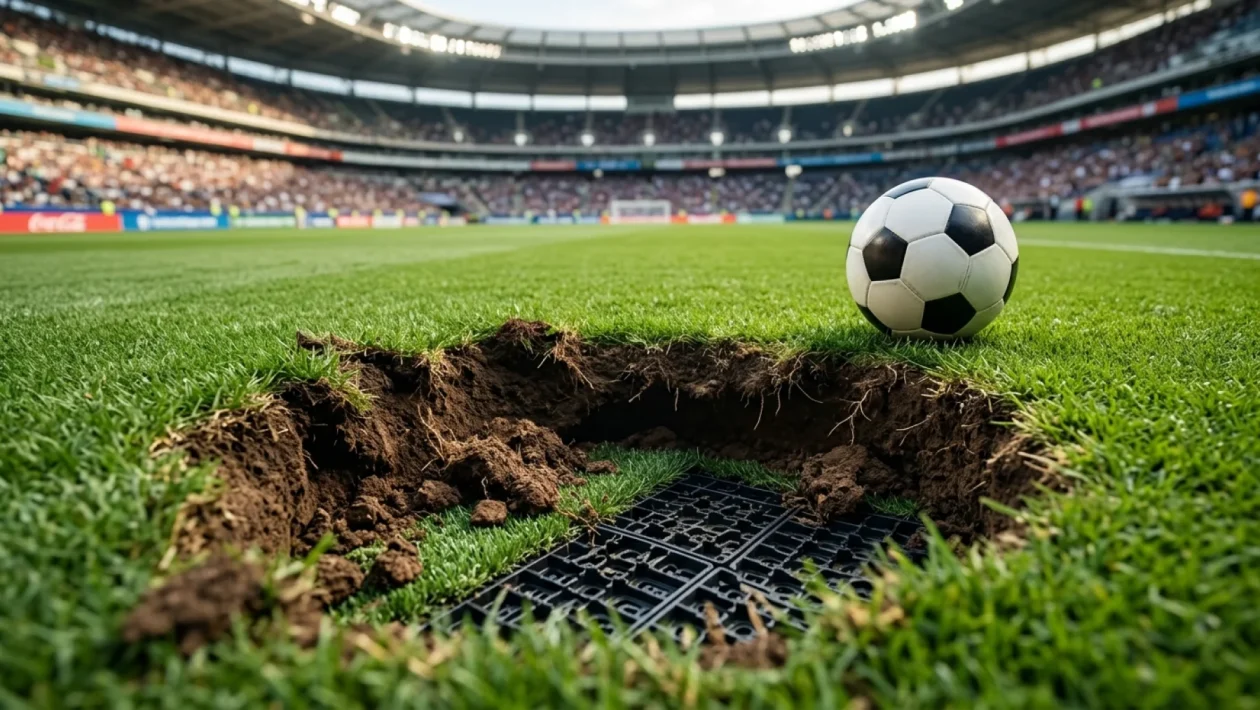
If you logged onto X or turned on TSN this morning, you already know the internet is absolutely losing its collective mind. Last night’s World Cup 2026 knockout match didn’t just end in a stunning upset; it ended with a gaping hole in the penalty box and a referee decision that seemingly defied the laws of physics. We are bypassing the fluff today to break down exactly what went wrong with the multi-million dollar stadium pitch, why that unbelievable VAR call was allowed to stand, and what this chaos means for the rest of the tournament.
World Cup 2026: Setting The Stage For A Knockout Meltdown
We all knew expanding this tournament to a massive 104 matches across North America was going to push our infrastructure to the absolute limit. Hosting the globe’s biggest sporting event in July means dealing with packed schedules, intense heat, and stadiums working overtime. But nobody predicted the pitch itself would become the main villain.
I was standing in line at Tim Hortons at 6 AM today, and literally everyone—from the guys in hardhats to the barista—was arguing about the exact same replay. When a billion people are watching a single game, a small technical failure isn’t just a glitch. It becomes an international incident.
The Temporary Turf Drama Explained
Here is the hard truth about North American stadiums: many of them were built for CFL and NFL football using artificial turf. FIFA strictly forbids artificial turf for the World Cup 2026, forcing host cities to spend an average of $3 million per stadium to install temporary natural grass systems.
The problem? Growing an elite soccer pitch over top of concrete and synthetic rubber is an engineering nightmare. When an elite striker plants his cleats into the ground at full sprint, that grass needs to hold. Last night, an entire two-foot section of the sod just gave way like a cheap area rug on a hardwood floor.
To understand why this happened, you have to look at how these temporary pitches are rushed into place:
- The Base Layer: A breathable synthetic barrier is laid directly over the existing artificial turf to protect it.
- The Drainage Grid: Hard plastic, interlocking trays are snapped together across the entire 100-yard field to allow water to escape.
- The Sod Rollout: Pre-grown natural grass, cultivated off-site, is rolled out in massive strips and stitched together at the seams.
- The Grow-In Period: Massive UV grow-lights are blasted on the grass 24/7 to force the shallow roots to bind the seams before match day.
That Outrageous VAR Decision
So, the turf failed. A defender hit a loose seam, his planting foot completely took out a chunk of the earth, and he went sliding directly into the opposing striker’s shins inside the penalty area. The referee instantly blew the whistle for a penalty.
But what happened next in the VAR (Video Assistant Referee) booth is what has European and South American pundits screaming at their monitors. The VAR officials reviewed the tape and confirmed the foul, entirely ignoring the fact that the pitch structurally collapsed. They ruled that intent doesn’t matter; the contact was made, penalty awarded. Game over.
“You simply cannot punish a defending player when the ground literally gives way beneath his cleats. We are playing a billion-dollar tournament on a glorified slip-and-slide, and the officials are treating it like a standard foul.” — Dr. Alan Hargreaves, Sports Turf Agrologist
Why This Is Breaking The Entire Internet Today
The outrage isn’t just about a single bad call. It’s about fairness and the integrity of the remaining matches. Fans are terrified that the World Cup Final could be decided by a loose patch of grass rather than actual athletic skill.
Let’s look at why fans are demanding a return to permanent grass fields for future tournaments:
| Permanent Natural Grass | Temporary Sod Pitch |
|---|---|
| Deep root systems (8-12 inches) that anchor the playing surface tightly. | Shallow roots (2-4 inches) relying heavily on synthetic stitching. |
| Consistent moisture retention and natural drainage. | Prone to drying out and shifting under heavy athletic shearing force. |
Frequently Asked Questions
Will FIFA change the pitch rules before the final match?
No. At this stage in July, the infrastructure is locked in. Groundskeepers are currently working 24-hour shifts using heavy sand-fill and industrial stitching machines to reinforce the seams in the penalty boxes, but no official rule changes will happen.
Can a national team protest a match result due to pitch conditions?
Technically, a team can file a formal grievance with FIFA’s disciplinary committee. However, because both teams played on the exact same surface under the same conditions, overturning a match result based on turf quality is practically impossible.
Final Thoughts On The Pitch
🤝 Share your thoughts with the guys at work today, because this debate isn’t cooling down anytime soon. Whether you blame the stadium engineers, the referee, or the VAR booth, it’s clear that temporary grass is the biggest liability of this tournament.
💡 Good luck to the grounds crews working overnight to fix these fields. They have the most stressful job in North America right now, and the eyes of the world are quite literally on the ground they walk on.
📱 Hit up the comments below and let me know: was it a clear penalty, or should the referee have called a drop-ball for a stadium malfunction?
👇 Stay tuned to our coverage as we track the remaining knockout rounds—let’s just hope the only thing tearing up the pitch next week is world-class footwork.