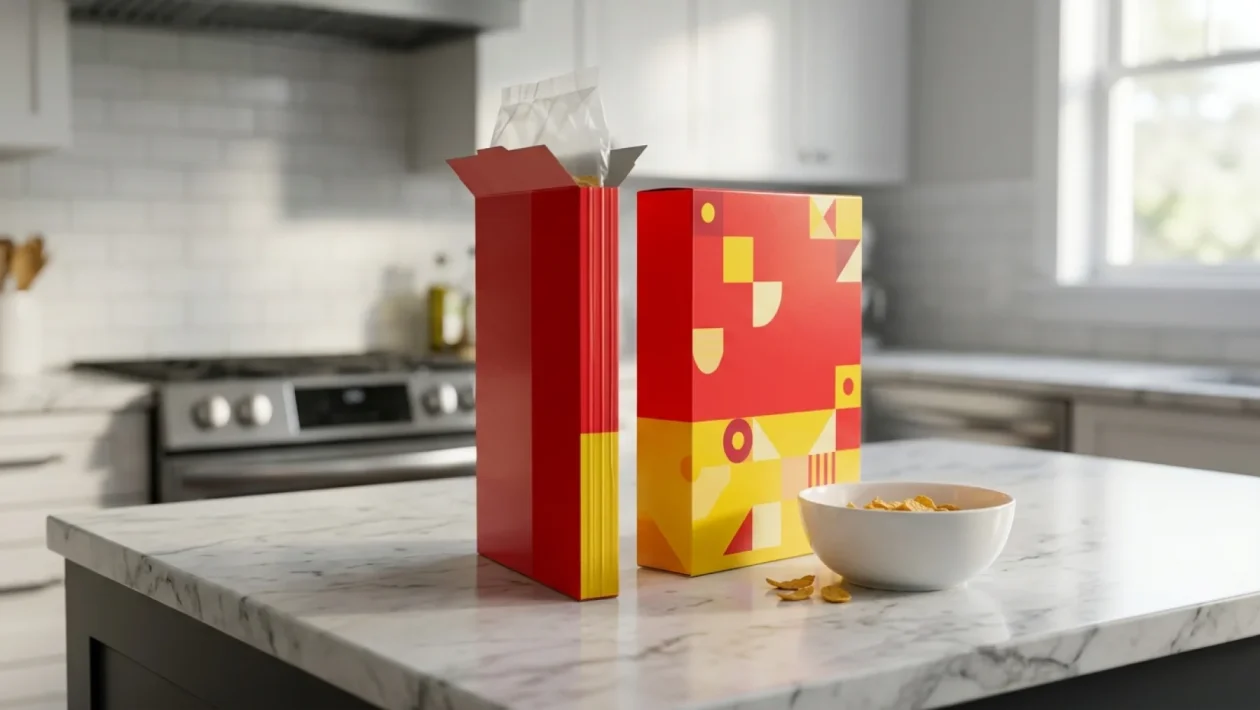
You stumble into the kitchen at 6 AM, pour a bowl of your favorite flakes, and suddenly realize the brand-new box is already empty after three days. You aren’t losing your mind, and your teenagers aren’t secretly eating more than usual.
Shrinkflation cereal boxes have quietly robbed North American families of their hard-earned grocery dollars. The box looks the same and the price tag hasn’t dropped a dime, but the actual amount of food inside has secretly vanished.
Instead of just taking it on the chin, consumers are finally getting smart, getting mad, and fighting back. Today, I am going to show you exactly how to spot this packaging deception and use a few simple strategies to stretch your grocery budget.
Shrinkflation cereal boxes: The great grocery store vanishing act
I spend a lot of time analyzing consumer trends, and nothing fires me up quite like paying more for air. When you grab a box of Cheerios or Frosted Flakes off the shelf this July 2026, you are holding a masterclass in corporate deception.
The cardboard footprint looks exactly as massive as it did a decade ago. However, the reality hidden inside that bag is incredibly frustrating.
Here is a hard, statistical fact to swallow with your morning coffee: The average “family size” cereal box has secretly shrunk by 11.4% in actual volume over the last four years, while retail prices surged by nearly 20%. You are literally paying a premium for a cardboard box filled with empty space.
Why your morning bowl is half empty: The cardboard illusion
So, how do they get away with it without us noticing immediately? It all comes down to packaging geometry. Food giants simply make the cardboard packaging slightly taller and noticeably thinner.
When you look at the box face-on in the grocery aisle, it registers in your brain as the exact same size. It’s only when you pull it off the shelf and turn it sideways that you realize the box is practically as thin as a hardcover book.
“Manufacturers know that consumers buy with their eyes. By shaving a quarter of an inch off the depth of a box, they save millions in product costs while the box face looks completely identical on the shelf,” says Dr. Allen Carter, a leading retail psychologist and supply chain expert.
They are banking on our muscle memory and busy schedules to slip these changes right past our wallets.
Comparing the damage: Spotting the red flags
Visual tricks only work until you actually check the fine print. Before we look at the raw numbers, watch out for these massive red flags in the grocery aisle:
- A flashy “New Look, Same Great Taste” banner printed on the front.
- A sudden change in box shape, texture, or design.
- A bright “Sale” tag that conveniently distracts from a recent size reduction.
Here is a quick breakdown of how much breakfast is vanishing from standard North American pantry staples:
| Cereal Category | Estimated Volume Lost (Since 2022) |
|---|---|
| Sugary Kids’ Cereals | Down 45g (Approx. 1.5 bowls) |
| Bran & Fiber Flakes | Down 55g (Approx. 2 full bowls) |
| Premium Granola Clusters | Down 60g (Over 2 portions) |
That missing cereal adds up incredibly fast when you are trying to feed a hungry family every single morning.
How angry shoppers are fighting back
The good news? Consumer anger is finally translating into organized, effective shopping habits. You don’t need to boycott the cereal aisle entirely, but you do need to shop like a pro.
Here is how you can stop getting ripped off today and keep your hard-earned cash in your own pocket:
- Always check the unit price: Ignore the big flashy retail price. Look at the tiny number on the shelf tag that shows the cost per 100 grams, as this is the only bulletproof way to compare true value.
- Switch to bagged cereal: Brands that sell cereal in massive, resealable plastic bags aren’t wasting money on deceptive cardboard engineering, meaning you almost always get a much better cost-per-ounce.
- Vote with your wallet: If your favorite brand suddenly shrinks their box from 400g to 355g, buy the generic store brand instead. President’s Choice or local bulk bins often match the flavor perfectly without the shrinkflation penalty.
It takes an extra five seconds of reading labels, but it completely ruins the manufacturers’ sneaky profit strategy.
Frequently Asked Questions
Is shrinkflation actually legal in Canada and the US?
Yes, unfortunately. As long as the manufacturer accurately prints the new, smaller net weight on the box, they are legally compliant. They have zero legal obligation to announce to the public that the box has gotten smaller.
Will cereal box sizes ever go back to normal?
Historically, once a product shrinks, it rarely grows back. Instead, companies eventually introduce a “New Mega Size!” box that matches the original volume, but they will charge you a brand-new premium price for the privilege.
🤝 Share your thoughts! Have you noticed your favorite breakfast cereal shrinking recently? You certainly aren’t alone in this fight.
💡 Take control of your grocery bill by checking those unit prices and refusing to pay top dollar for cleverly engineered cardboard.
📱 Snap a picture the next time you see an outrageous example of shrinkflation and share it online to help warn other everyday shoppers.
👇 Good luck out there in the aisles, and let’s keep holding these big food brands accountable for every single ounce!