The devastating Brussels construction fire isn’t just another international headline—it’s a massive wake-up call for every crew strapping on a hard hat this morning. When first responders pulled those bodies from a temporary site elevator, it exposed a fatal flaw in how we handle high-rise evacuations.
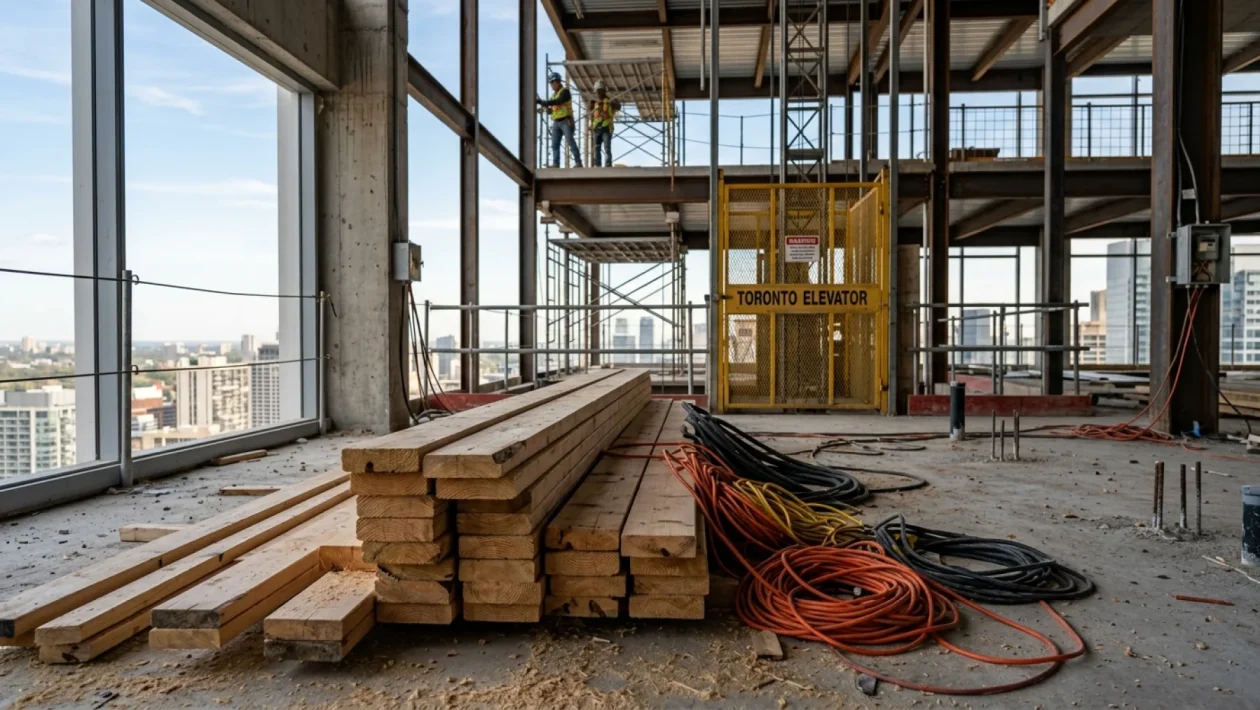
An unfinished building is practically a vertical lumberyard wrapped in scaffolding. We are going to break down exactly how this tragedy unfolded, why the elevator became a death trap, and the critical survival protocols every tradesperson needs to memorize today.
The hard truth? The National Fire Protection Association (NFPA) reports that fires in structures under construction cause over $300 million in direct property damage annually—and carry a disproportionately high fatality rate because standard safety systems simply aren’t online yet.
The Brussels Construction Fire: What Exactly Went Wrong?
When the alarm bells rang on that Brussels job site, chaos took the wheel. The building lacked functional sprinkler systems, fire doors, and pressurized stairwells.
In a completed high-rise, these built-in systems compartmentalize the blaze and buy you time. In an active build zone, a spark from a grinder or a stray cigarette can ignite exposed insulation in seconds.
Top-tier Canadian outfits like EllisDon constantly drill into their crews that an unfinished building is a giant tinderbox. Without drywall to slow the spread, flames chew through an open floor plan with terrifying speed.
Identifying the Site Hazards That Fuel High-Rise Blazes
Construction sites are breeding grounds for unique fire risks that you rarely see in finished commercial spaces. You have combustible materials stacked next to heavy machinery, tangled temporary wiring, and constant hot work.
Understanding these hazards is the first step in making sure you make it home at the end of your shift.
| Active Build Zone Fire Risk | Practical Preventative Measure |
|---|---|
| Unattended “Hot Work” (Welding/Cutting) | Mandatory 60-minute fire watch after tools are powered down. |
| Exposed Temporary Wiring | Daily inspections for frayed jackets and overloaded generator panels. |
| Accumulated Wood Scrap and Sawdust | End-of-shift housekeeping and secure, off-floor dumpster storage. |
| Flammable Solvents and Adhesives | Stored in grounded, ventilated, fire-rated steel cabinets. |
Why Trapped Workers Couldn’t Escape the Danger Zone
The most gut-wrenching detail of the Brussels tragedy is the location of the victims. Workers were found trapped inside the elevator, desperately trying to shave minutes off their descent.
When panic sets in, human instinct tells us to take the fastest route out. On a 30-story build, humping it down the concrete stairs feels like a marathon, making the temporary construction hoist incredibly tempting.
But relying on mechanical transport during a massive thermal event is a gamble you will almost always lose. Power grids trip, cables melt, and hoist motors seize up under extreme heat.
The Fatal Elevator Flaw in Active Build Zones
An elevator shaft in an unfinished building is not an escape route; it is a chimney. This is the exact mechanical flaw that doomed the workers in Brussels.
As the fire consumes oxygen, it creates a massive thermal updraft. The shaft pulls toxic smoke, superheated gases, and actual flames straight up through the core of the building.
“A hoist or unfinished elevator shaft acts exactly like a fireplace chimney during a blowout. The draft pulls the smoke straight up, instantly turning a mechanical box into an inescapable oven.” — John Davies, Fire Safety Inspector & Construction Veteran
Once those doors closed and the power failed, the elevator car essentially became a cage suspended in the hottest part of the building’s infrastructure.
How to Survive: Emergency Protocol for Site Crews
Surviving a catastrophic site fire requires muscle memory, not luck. You need a rock-solid exit strategy before you even pick up your tool belt.
If you smell smoke or hear the air horn blast three times, drop your tools and execute these steps immediately:
- Abandon the machinery: Turn off your torches, drop your gear, and leave the tools behind. Nothing in your belt is worth your life.
- Locate the primary stairwell: Head to the designated, structurally sound egress stairs. Never press the button for the construction hoist or elevator.
- Stay low and test doors: If you must pass through temporary fire doors, use the back of your hand to feel for heat before pushing them open.
- Muster and report: Proceed all the way down to the ground level and immediately report to your foreman at the designated muster point so you are accounted for.
Frequently Asked Questions
Why are construction site fires so much deadlier than regular building fires?
Active sites lack the passive fire protection found in finished buildings. There is no drywall, no active sprinkler grid, and no pressurized stairwells to keep smoke out. The fire spreads faster and burns hotter due to the abundance of raw building materials.
Should I ever use a temporary hoist during an emergency evacuation?
Absolutely not. Temporary power is highly unstable during a fire. If the generator trips or the main line burns, you will be trapped in the car. The shaft will also act as a chimney, funneling deadly smoke directly into your space.
What safety standards protect North American construction workers from this?
Organizations like the CSA Group set rigorous national standards for temporary fire suppression, safe hot-work zones, and mandatory evacuation routes. However, these standards only save lives when site supervisors rigorously enforce them every single day.
🤝 Share your thoughts on your site’s safety protocols with the crew tomorrow morning. A quick five-minute toolbox talk about what happened in Brussels could literally save a life.
💡 Always check your escape routes the second you step onto a new floor. Knowing where the concrete stairs are before the smoke rolls in is your best insurance policy.
📱 Stay safe, stay vigilant, and don’t be afraid to call out a fire hazard if you spot one near the scaffolding.
👇 Good luck out there, keep your head on a swivel, and let’s make sure everyone punches out and heads home to their families tonight.