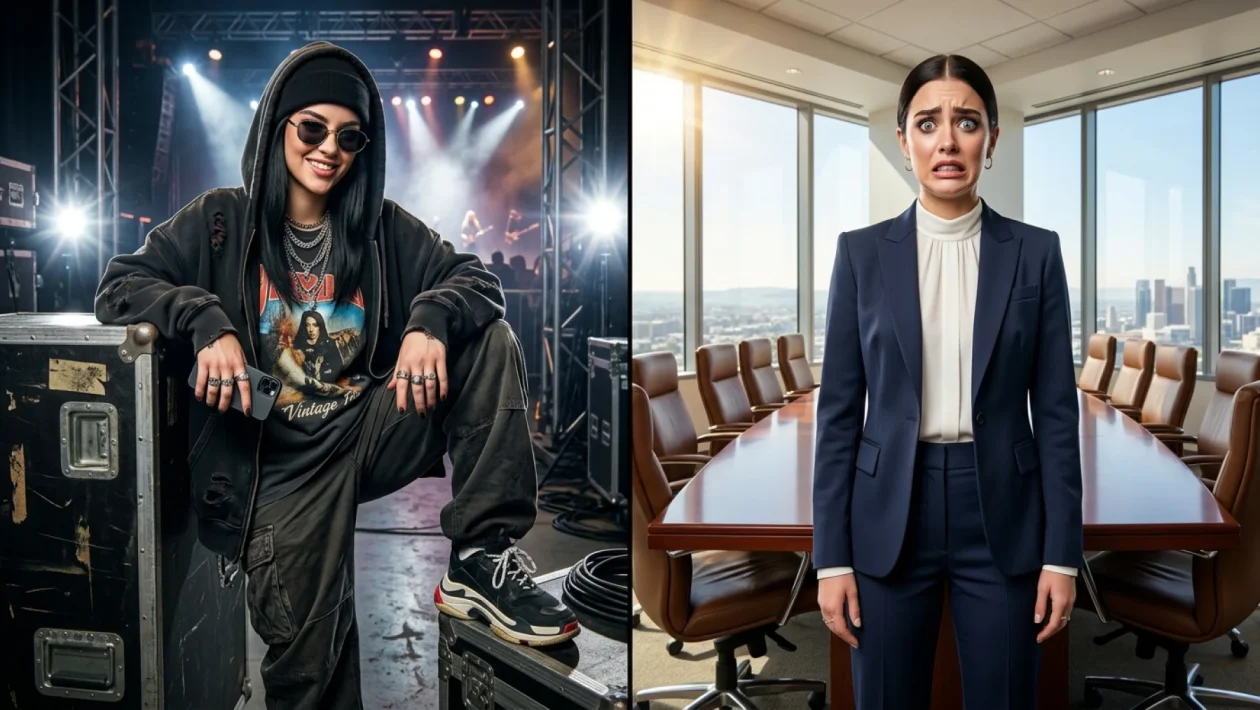
Let’s talk about the fine line between cashing in and selling out. For years, we thought we knew exactly who Billie Eilish was: the unapologetic anti-pop star who wore what she wanted, lived in baggy fits, and entirely refused to play the industry’s traditional beauty game. But she just dropped a bombshell this summer of 2026, admitting that some of her biggest brand collaborations forced her into a heavily curated, utterly fake version of her own aesthetic. If you’ve ever felt the pressure to dress a certain way just to keep the boss happy or get the job done, her revelation is going to hit incredibly close to home.
Billie Eilish Breaks Her Silence
She has never been one to mince words, but her latest interview peeled the curtain completely back on the corporate endorsement machine. The multi-Grammy winner confessed that executives were actively watering down her edgy, oversized style to make it “digestible” for a mainstream shopping mall crowd.
It is exactly like trying to force a die-hard Canadian Roots sweatpants loyalist into a stiff three-piece suit just to go out and grab a coffee. It just does not fit the person wearing it, and everyone can spot the discomfort from a mile away.
The Reality Of Being Forced To Fake Her Look
Behind the scenes, the signature clothing mantra that defined her early career was being hijacked by boardroom executives. Stylists hired by these mega-brands were not amplifying her true style; they were creating a sanitized, overly polished costume of it.
Here is exactly how the corporate styling machine strips away a star’s authenticity on set:
- The Mood Board Trap: Brand executives build an “inspiration board” based entirely on what tests well with focus groups, completely ignoring what the artist actually wears in real life.
- The Compromise Wardrobe: Corporate stylists bring in tailored, high-end designer pieces disguised as streetwear, completely missing the gritty, authentic mark.
- The Photoshop Finish: Any remaining rough edges or genuine wrinkles get smoothed out in post-production, leaving a plastic, uncanny-valley version of the original human.
Walking Away From Major Brand Deals
It takes serious guts to walk away from a multi-million dollar paycheck. But for Eilish, the breaking point came when the staggering amount of money no longer justified the stranger she saw in the mirror.
She realized that faking her look was actively damaging her core business: her raw connection with her fans. The hard numbers completely back up her decision. A recent 2025 North American consumer study revealed that a massive 78% of Gen Z shoppers will actively boycott a brand if a celebrity endorsement feels forced, staged, or inauthentic.
“When artists let corporate boardrooms dictate their hemlines and silhouettes, they don’t just lose their personal style—they lose their soul. Billie recognized early enough that her authenticity is her actual currency, not the quick endorsement check,” says Sarah Jenkins, a leading North American brand strategist.
The True Cost of Corporate Styling
Let’s break down exactly what happens when a massive conglomerate tries to bottle up an organic, grassroots aesthetic and sell it back to the masses.
| The Billie Authentic Reality | The Corporate Expectation |
|---|---|
| Thrifted, mismatched, and genuinely oversized daily fits. | Expensive designer “streetwear” meticulously tailored to look loose. |
| Zero focus on highlighting the traditional silhouette. | Subtle, focus-group-approved cinching and shaping for mass appeal. |
| Raw, unpredictable, and fiercely comfortable. | Sanitized, highly predictable, and heavily polished for billboards. |
Her decision to pull the plug on these restrictive, identity-stealing contracts is a massive wake-up call for the advertising industry. You simply cannot buy cool, and you definitely cannot manufacture it in a boardroom.
Frequently Asked Questions
Did Billie Eilish name the specific brands involved?
No, she took the high road and kept the specific company names out of the press. However, she heavily hinted that they were massive global fashion and beauty conglomerates that we all see every single day.
Is she still doing brand endorsements in 2026?
Absolutely, but with a massive, non-negotiable caveat. She now requires full creative control over her wardrobe, makeup, and styling written directly into the ironclad clauses of her contracts.
Why did she agree to fake her look in the first place?
Like anyone navigating a massive career explosion at a young age, she trusted the “experts” in the room early on. It took time, life experience, and significant industry leverage to realize she was the smartest person in that room all along.
💡 It takes real courage to look at a massive corporate paycheck, slide it back across the table, and say, “No thanks, I would rather just be myself.”
🤝 If you have ever had to wear a suffocating uniform—literally or metaphorically—just to appease a boss and collect a paycheck, Billie’s power move is a massive win for the everyday worker.
📱 Share your thoughts down below in the comments, because I really want to know if you have ever had to fake your own style or bite your tongue just to get ahead at your job.
👇 Good luck staying true to yourself out there this summer, and keep fighting the good fight against the mandatory corporate dress code!