The May 2026 micromoon is practically begging us to stop rushing, zoom in, and look closer. While supermoons scream for our attention with chaotic, heavy energy, a micromoon is deeply introverted.
If you want to capture this elusive, quiet lunar shift, your smartphone’s basic auto-mode is going to leave you with a blurry white dot. We are breaking down the exact best camera settings to freeze this moment in time.
But we aren’t just talking about f-stops and shutter speeds today. Setting up your tripod under the spring sky is the ultimate modern mindfulness practice.
Best Camera Settings For Crisp Lunar Details
Astrophotography can feel intimidating, but capturing a micromoon comes down to a simple, repeatable formula. Because the moon is naturally bright against a dark sky, you actually need to underexpose your shot.
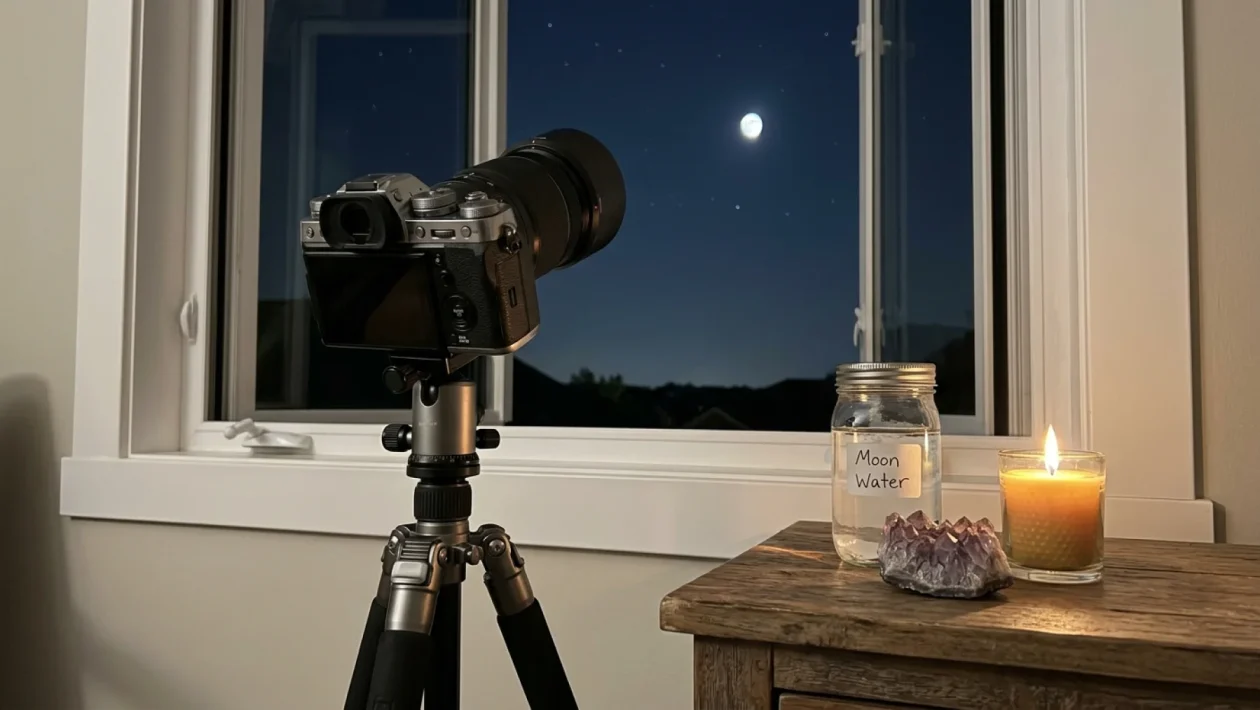
First, put your camera in full manual mode and lower your ISO to 100 or 200. This eliminates the grainy “noise” that ruins crisp lunar details.
Next, set your aperture to f/8 or f/11. This creates a deep depth of field, ensuring the moon’s craters are razor-sharp.
Finally, set a fast shutter speed, usually around 1/125 to 1/250 of a second. The moon moves surprisingly fast, and a slow shutter speed will result in motion blur.
Decoding The 2026 Micromoon Energy
Astrologically and astronomically, May’s micromoon is a masterclass in subtlety. According to NASA’s lunar tracking, a micromoon happens when a full moon coincides with apogee—the point in its orbit where it is farthest from Earth.
Here is a surprising astronomical fact: this makes the moon appear up to 14% smaller and 30% dimmer than a supermoon. Energetically, this distance is a cosmic invitation to pull back and detach from whatever drama is draining you.
If you check your daily horoscope on the Chani app this week, you will likely see a recurring theme of boundary-setting and quiet reflection. This isn’t the time for massive, loud manifestations.
Instead, this lunar phase is about appreciating what is already in front of you. It is the perfect cosmic weather for introverts and deep thinkers.
Mindful Photography As A Grounding Practice
Taking a photo of the micromoon is not just about getting a cool shot for your Instagram grid. The very act of setting up your camera forces you to slow down and anchor yourself in the present moment.
Adjusting your focus ring requires patience, a steady hand, and intentional breathing. It is literally a physical manifestation of grounding yourself.
“Astrophotography forces you to sync your nervous system with the rotation of the Earth. When you lock in your focus on a micromoon, you aren’t just adjusting your ISO—you are practicing the art of complete stillness.” – Sarah Jenkins, Canadian Astrophotographer
To help you nail both the shot and the vibe, keep these quick guidelines in mind when you head outside.
| Do This | Don’t Do This |
|---|---|
| Use a sturdy tripod and a 2-second shutter delay. | Rely on digital zoom (it destroys image quality). |
| Shoot away from city streetlights to reduce light pollution. | Overexpose the shot—protect the moon’s delicate textures. |
| Take deep breaths while the shutter clicks. | Rush the process or get frustrated by the cold. |
The “Lens & Intention” Micromoon Ritual
Ready to combine technical skill with lunar intention? Forget the complicated crystals and incense. This streamlined, practical ritual uses your camera as a tool for focus.
- Clear your physical and mental lens: Before heading out, physically wipe down your camera lens with a microfiber cloth. As you do this, visualize wiping away one specific distraction that has been bothering you this May.
- Anchor your tripod: Plant your tripod firmly on the earth. Take off your shoes if the spring weather allows, and spend one full minute just feeling the ground beneath your feet.
- Dial in the best camera settings: Switch to manual mode. As you intentionally adjust your ISO, aperture, and shutter speed, remind yourself that you are in control of your own focus.
- Capture and release: Press the shutter button. As the camera captures the light, take a deep exhale. Let the quiet energy of the micromoon absorb whatever stress you are carrying.
Micromoon Photography FAQ
Can I use my smartphone to photograph the micromoon?
Yes, but you have to ditch the default app. Download a third-party app that allows manual control over your shutter speed and ISO. Use a cheap smartphone tripod to keep the lens perfectly still.
Why does the May micromoon feel less intense than other full moons?
Because it is physically further away from Earth at apogee! Astrologically, this distance acts as an energetic buffer. It grants us a much-needed emotional breather, making it easier to process feelings without becoming overwhelmed.
🌕 Good luck under the May sky, and remember that sometimes the quietest moments hold the most power.
✨ If you try the Lens & Intention ritual, take a moment to journal about what small details you noticed while standing in the dark.
📝 We would love to see how you capture this introverted lunar energy.
👇 Share your thoughts and your best micromoon shots with us on social media, and stay grounded!