Just days ago, in late May 2026, a nine-storey building under construction in the Philippines pancaked into a chaotic mountain of twisted iron and shattered concrete. Twenty-four workers barely scrambled to safety, while rescue teams spent agonizing hours digging through the rubble to reach 21 missing people.
When thousands of tons of material give way, the luxury of time evaporates instantly. Whether you are swinging a hammer on a bustling North American job site or simply walking your dog past a high-rise development, understanding the mechanics of structural collapse survival is a life-saving necessity.
I have spent years around heavy construction, and I can tell you that buildings rarely fail without whispering a warning first. Today, we are breaking down exactly how structures fail, how to spot the danger before it happens, and what to do if you ever find yourself caught in the unthinkable.
Structural Collapse Survival
Surviving a sudden building failure requires a harsh understanding of physics and a mindset geared entirely toward rapid reaction. When the structural integrity of a multi-storey building is compromised, gravity takes over with terrifying speed.
Here is a chilling reality check: during a progressive structural failure, a massive building can achieve free-fall speeds, hitting the ground in less than 10 seconds. In the recent tragedy in Angeles City, a fierce spring thunderstorm acted as the catalyst, turning an already vulnerable construction site into a death trap.
Even if you are strapped in premium safety gear from trusted North American brands like Dewalt or wearing reinforced Caterpillar steel-toes, personal protective equipment cannot stop a collapsing concrete floor slab. Survival comes down to situational awareness and knowing exactly how to manipulate your environment when the walls literally close in.
Recognizing Site Red Flags
Buildings under construction are inherently unstable until all the load-bearing elements are fully cured, tied, and anchored. You need to know the difference between normal site settling and an imminent catastrophic failure.
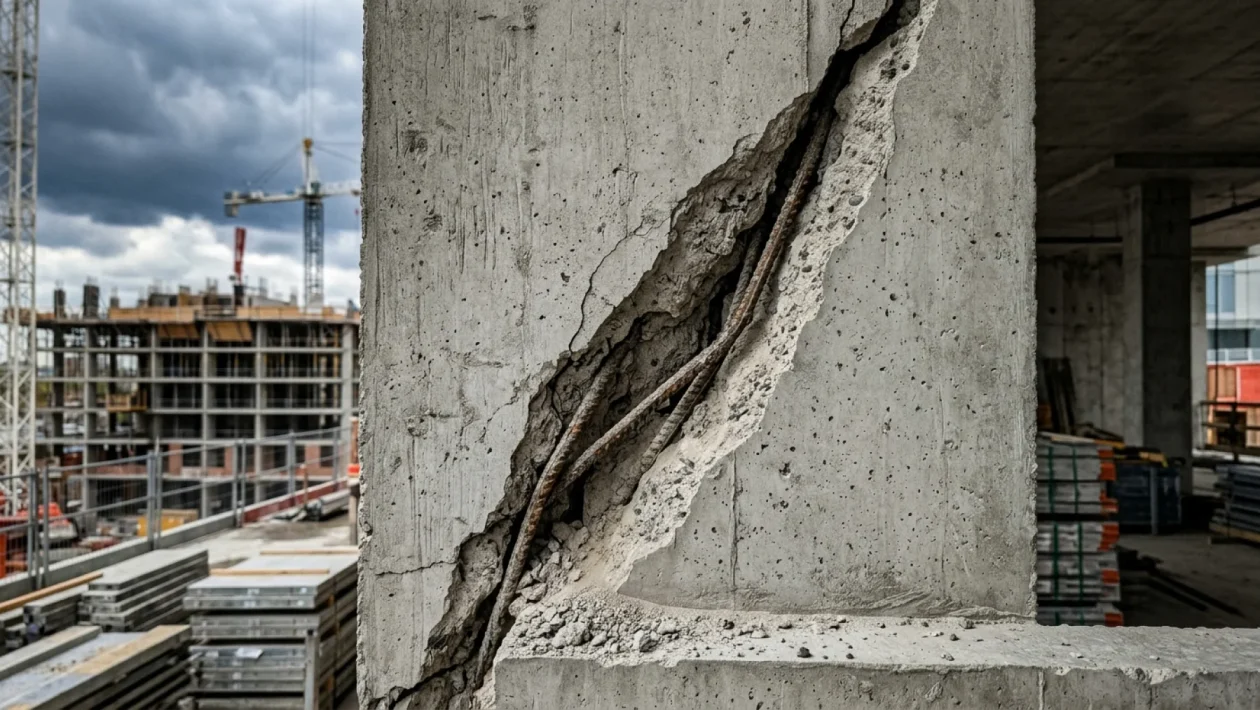
Pay close attention to your ears. Sharp, repetitive popping sounds or the metallic groan of stressed rebar are massive red flags. If doors or window frames suddenly jam, or if you spot deep diagonal cracking across masonry, the building’s load path is shifting dangerously.
| Normal Construction Behavior | Imminent Collapse Warning Signs |
|---|---|
| Minor hairline cracks in drying concrete | Deep, widening diagonal shear cracks in load-bearing columns |
| Slight vibrations from heavy machinery | Loud, echoing snaps, pops, or grinding metal noises |
| Standard water runoff during a storm | Water pooling heavily on unsupported, uncured upper floor slabs |
Water weight is a notorious silent killer on job sites. The intense thunderstorms we see every spring add immense, unplanned weight to unfinished structures, washing away temporary shoring and triggering deadly chain reactions.
Escaping Disaster
If the worst happens and the floor beneath you drops, your survival depends on taking immediate, calculated action. You cannot outrun a falling building, but you can position yourself to survive the aftermath.
- Seek a structural void: Instantly drop next to a large, solid object like a heavy steel beam, a massive generator, or a dense piece of machinery. When the ceiling falls, it will rest on this object, creating a triangular pocket of air known as a “void space.”
- Protect your airway: The moment the structure falls, a dense cloud of toxic concrete dust will fill the air. Pull your shirt over your nose and mouth immediately to prevent suffocating on the particulate matter.
- Conserve your energy: Do not thrash around or scream continuously, as this wastes oxygen and energy. Wait until you hear the heavy machinery or voices of rescuers above, then tap rhythmically on metal or concrete in groups of three to signal human intelligence.
The Reality of Rescue Operations
Once the dust settles, the real nightmare begins for the disaster response teams. Pulling survivors from a pancaked building is one of the most dangerous and complex operations in emergency services.
In the Angeles City collapse, first responders had to rely on sniffer dogs and their bare hands to navigate the twisted iron bars. Heavy machinery is often useless in the early hours because the vibrations can cause the fragile rubble to settle further, crushing the people trapped inside.
“When we hear voices in the rubble, the adrenaline spikes, but we are forced to slow down. One wrong shift in the debris can trigger a secondary collapse, turning a rescue mission into a recovery operation in the blink of an eye.”
Rescuers move with agonizing caution because the environment is incredibly unstable. Their primary goal is to shore up the debris as they tunnel down, creating a safe pathway to extract survivors without bringing the rest of the wreckage down on their own heads.
Frequently Asked Questions
Can a thunderstorm really cause a building to collapse?
Absolutely. If a building is still under construction, temporary supports can wash away in heavy rain. Furthermore, sudden torrential downpours add thousands of pounds of water weight to unfinished roof slabs that have not fully cured, leading to immediate structural failure.
What exactly is a “void space” in a collapse?
A void space, often called a “triangle of life,” is a pocket of survivable space created when falling debris rests against a sturdy, non-compressible object. Hiding under a flimsy desk will get you crushed, but crouching next to a massive steel safe might save your life.
How long can someone survive trapped under rubble?
While the first 72 hours are considered the critical “golden window” for rescue, people have been pulled alive from rubble weeks later. Survival largely depends on access to breathable air, the absence of crushing injuries, and finding a small source of hydration.
🤝 Thank you for reading, and stay safe out there. Whether you are working on a high-rise or just walking past a scaffolding setup, keep your head on a swivel and trust your gut if something looks or sounds wrong.
💡 Preparedness is the best tool in your box. Take a mental note of those structural red flags and share them with the guys on your crew—it might just be the knowledge that saves a life this season.
📱 I want to hear from you! Have you ever experienced a close call on a job site, or noticed some sketchy shoring on a local build? Drop a comment below and share your thoughts.
👇 Good luck, stay sharp, and make sure you are always looking out for the people working right beside you!