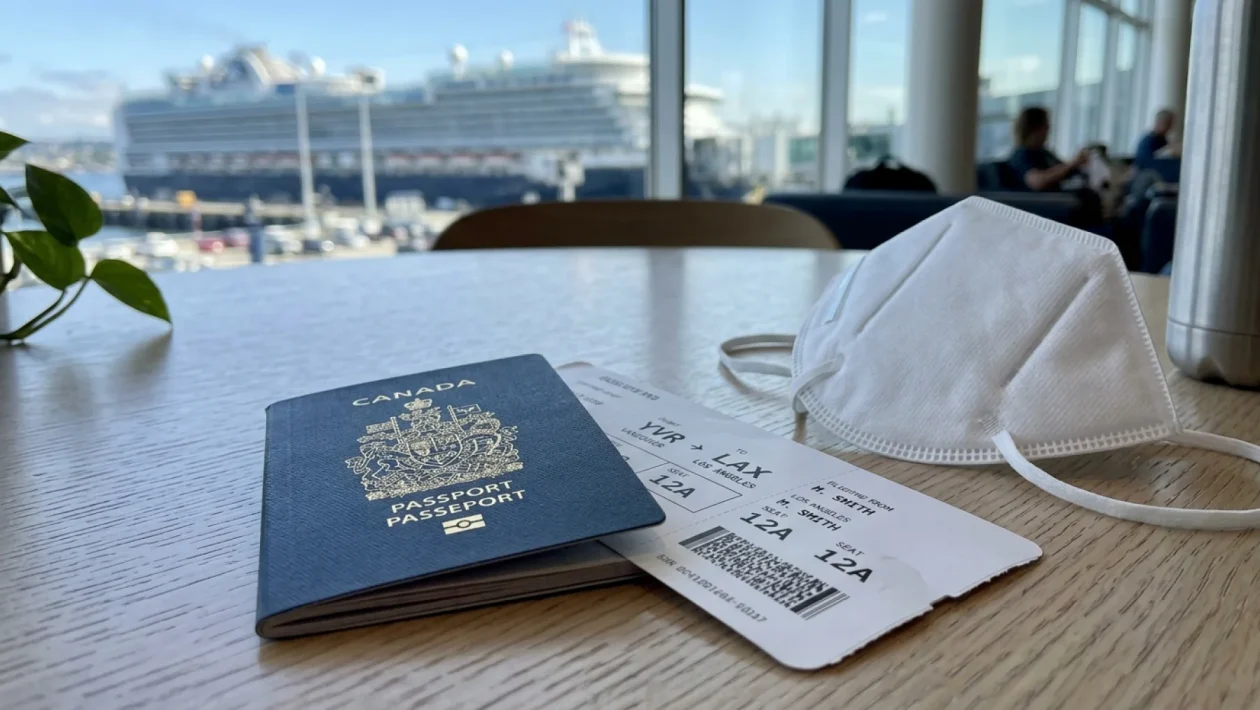
Right now, border security and public health agencies are scrambling to assess two completely different but equally terrifying headline grabbers: a cruise ship hantavirus outbreak and escalating Ebola cases in Central Africa. If you have international travel booked for the summer of 2026, you need facts, not panic. The reality is that the threat level for the average Canadian depends entirely on your postal code and your boarding pass. I am going to break down exactly what Health Canada is doing about this, how these viruses actually spread in real-world environments, and what you need to double-check before leaving for the airport.
Unpacking Health Canada’s Strategy
Canada’s Chief Public Health Officer, Dr. Joss Reimer, is directly coordinating with the Canada Border Services Agency (CBSA) and Global Affairs Canada to monitor inbound flights and sea vessels. The government is strictly targeting point-of-entry screening rather than implementing blanket travel bans. This precision approach stops isolated viral events from turning into domestic nightmares.
They are tracking the exact movement of pathogens without shutting down the economy. By matching passenger manifests with recent outbreak hotspots, customs agents can intercept high-risk travelers before they even leave the arrivals terminal. It is a calculated, heavily monitored system designed to keep the border fluid but secure.
The 2026 Hantavirus Cruise Ship Scare
Hantavirus is usually something we worry about when sweeping out a dusty shed in rural Alberta, not while hitting the buffet on the Lido deck. The virus is airborne but specifically transmitted through aerosolized rodent urine and droppings. A confined cruise ship environment with shared HVAC systems and hidden storage bulkheads creates a uniquely problematic transmission vector.
It absolutely lacks human-to-human pandemic potential, but if an infested vessel is poorly ventilated, the localized risk spikes immediately. Every spring, thousands of Canadians hit Canadian Tire for bleach and N95 masks to clean out their cottages, knowing the native deer mouse carries the pathogen. That exact same protocol of wet-wiping down dusty, enclosed spaces is essentially what marine health inspectors are currently enforcing on docked vessels to eliminate the airborne threat.
Evaluating Actual Ebola Travel Risks
Meanwhile, the Ebola outbreak in Congo and Uganda triggered a “very high” risk alert from the World Health Organization at the national African level. However, the transmission mechanics of Ebola require direct contact with infectious bodily fluids. It is incredibly difficult to catch in a casual travel setting.
If you aren’t providing medical care or engaging in local burial practices in the affected regions, your exposure risk sits essentially at zero. Ebola does not float through the air like a common cold. You simply are not going to contract it by sitting next to someone on a direct Air Canada flight into Toronto unless there is a catastrophic breakdown of multiple, highly visible bio-safety protocols.
Your Step-By-Step Pre-Travel Safety Protocol
- Check Global Affairs Canada advisories: Search your specific destination on the official government portal exactly 48 hours before departure to catch any sudden regional health warnings.
- Pack N95 particulate respirators: Keep at least two high-quality masks in your carry-on to protect against potential airborne hantavirus particles if you are assigned a dusty, poorly ventilated cabin.
- Inspect your accommodations immediately: Upon entering a ship cabin or rural rental, look closely for small, dark rodent droppings in corners, closets, or under beds before unpacking your luggage.
- Request a room transfer if necessary: Never dry-sweep suspicious droppings yourself; alert the hospitality staff immediately so they can deploy proper wet-cleaning biohazard protocols.
Threat Matrix Breakdown
| Virus Type | Transmission Method & Threat Level |
|---|---|
| Hantavirus | Inhaling aerosolized rodent droppings (Zero human-to-human transmission). High local risk only in infested, unventilated spaces. |
| Ebola | Direct contact with infected bodily fluids. Extremely high regional risk in Central Africa; statistically negligible risk in North America. |
“People hear ‘virus’ and immediately picture global lockdowns all over again, but we are dealing with very specific, highly localized transmission routes here. You cannot catch Hantavirus from a cough in a cruise ship dining room, and Ebola is not sneaking through Canadian customs undetected in a tourist’s suitcase.”
Frequently Asked Questions
Can Hantavirus spread from person to person?
No. North American and cruise-linked strains of hantavirus are only contracted by breathing in air contaminated by infected rodent waste. You cannot catch it from your spouse or a stranger walking past you on the deck.
Should I cancel my African safari or European cruise?
Unless your specific cruise ship is named in an active public health warning, or your African itinerary brings you directly into the rural outbreak zones of Congo or Uganda, there is no medical justification for cancelling your trip. Standard travel insurance, situational awareness, and basic hygiene are your best and most effective defences.
🤝 Share this guide with anyone in your family who is currently panicking over the evening news before their summer vacation.
💡 Send this to a friend who always books cheap cruise tickets and needs a quick reality check on cabin hygiene.
📱 Staying informed with hard facts instead of social media rumours is the only way we travel smart in 2026. Bookmark this page for your pre-flight checklist.
👇 Drop a comment below if you have ever had to demand a room change because of a sketchy, uncleaned rental cabin!