Right now, East Coast aquaculture workers are staring down the barrel of a terrifying reality. A devastating dual-disease outbreak is currently sweeping through local waters, threatening to wipe out a cornerstone of our coastal economy. But before you panic about the future of your weekend seafood feasts, know this: a cutting-edge lab is already rolling out a game-changing biological solution to stop the die-offs in their tracks.
Let’s strip away the complex marine biology jargon for a second. We are looking at a full-blown P.E.I. Oyster Crisis. Yet, human ingenuity is stepping up to the plate. If you appreciate hard work and practical science, you’re going to love how locals are engineering their way out of this disaster.
The Truth Behind The P.E.I. Oyster Crisis
If you’ve ever stood on a back deck with an oyster knife in one hand and a cold beer in the other, you know that Prince Edward Island produces some of the finest seafood on the planet. But as we navigate through Spring 2026, the water is telling a grim story.
Two distinct marine diseases have converged on the island’s oyster beds. The result? In some heavily impacted bays, farmers are hauling up empty shells where a thriving cash crop used to sit—a staggering 100% mortality rate.
If you’re used to picking up premium Malpeques for the barbecue at your local Sobeys or Atlantic Superstore, this shortage hits close to home. The economic ripple effect is massive, prompting desperate calls for federal and provincial intervention. Simply throwing money at the problem won’t fix the water, which is exactly why the focus has shifted to the laboratory.
How Souris Scientists Are Fighting Back
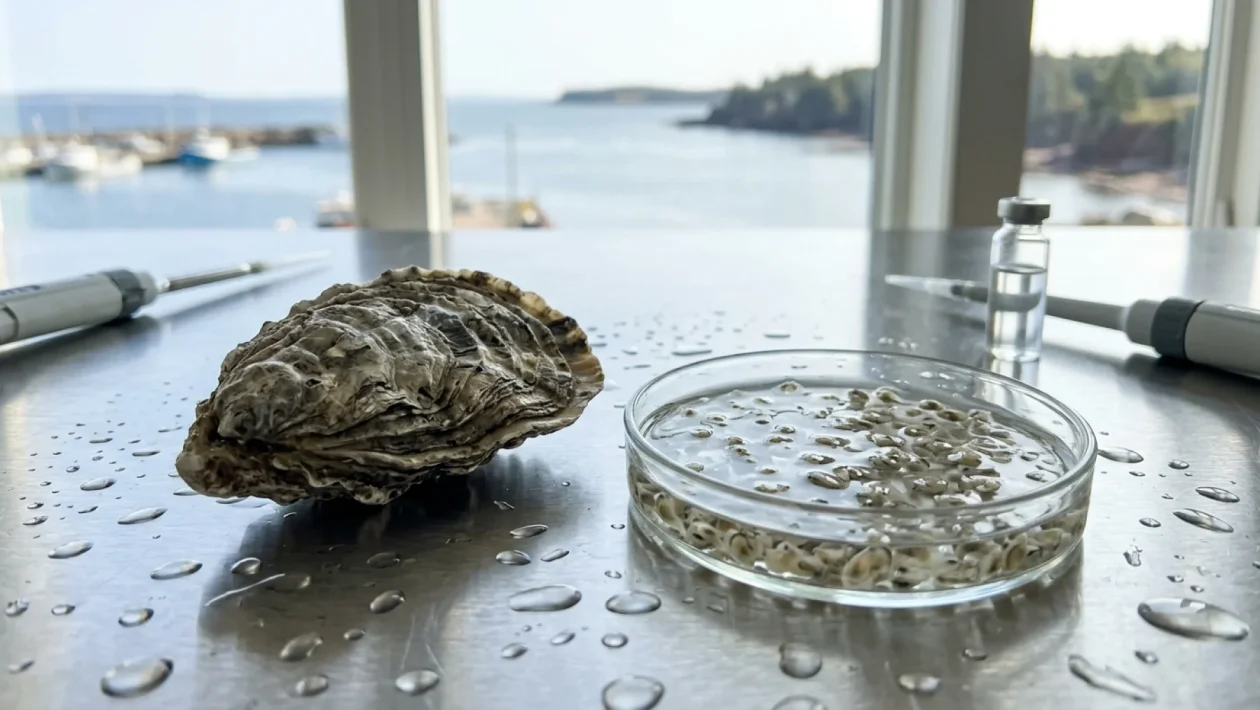
Enter the real heroes of this story. While politicians debate funding, marine experts at the Onda aquaculture facility in Souris, P.E.I., have quietly rolled up their sleeves. They aren’t trying to cure the ocean; they are building a tougher oyster.
By shifting focus from damage control to proactive aquaculture, these researchers are fundamentally changing how we farm the sea. It takes serious grit to look at a 100% crop failure and decide to redesign the crop itself.
“We aren’t just trying to patch a sinking ship; we’re building a better boat entirely by focusing on resilient genetics that can weather these outbreaks without breaking a sweat.”
This is practical, boots-on-the-ground science. They are identifying the rare, rugged oysters that naturally survived the disease sweep and using them as the foundation for an entirely new, battle-tested lineage.
Breeding Disease-Resistant Super Seed
So, how exactly do you build a better bivalve? It’s a meticulous process that combines traditional farming patience with high-tech lab precision. Here is how they are doing it:
- Scouting the Survivors: Scientists comb through devastated beds to harvest the “one-in-a-million” oysters that successfully fought off the dual diseases naturally.
- Controlled Spawning: These tough survivors are brought into biosecure tanks at the Onda facility, where temperature and lighting are manipulated to trigger breeding.
- Nutrient Loading: The microscopic larvae are pumped full of premium micro-algae, acting like high-octane fuel to ensure rapid, healthy shell development.
- Deployment: Once hardened, this resilient “super seed” is transferred back to local farmers, injecting strong genetics directly into the struggling wild beds.
It’s an incredible turnaround strategy. To put the impact into perspective, let’s look at the baseline differences between what we used to plant and what is going into the water today.
| Traditional Oyster Seed | Resistant “Super Seed” |
|---|---|
| Highly vulnerable to current diseases | Genetically robust and battle-tested |
| Lower upfront purchasing cost | Higher initial laboratory investment |
| Near 100% mortality in hot zones | Significantly higher harvest survival rate |
Frequently Asked Questions
Are these diseases harmful to humans?
Not at all. The pathogens currently decimating the P.E.I. Oyster Crisis are strictly marine diseases that only affect bivalves. Even if you were to accidentally eat an affected oyster, it poses absolutely zero risk to human health.
Will the new “super seed” oysters taste different?
Nope. The distinct, salty, world-class flavour of an East Coast oyster comes from its “merroir”—the specific local water, temperature, and algae it filters. Because these new seeds are grown in the exact same bays, they will taste just as incredible as the ones you grew up eating.
When will the industry fully recover?
Oysters take a few years to grow to market size. While the resilient seed is going into the water now, it will likely take two to three years before farmers see a complete stabilization of their harvest yields. It’s a waiting game, but the foundation is rock solid.
The Bottom Line on the Bay
🤝 We are witnessing a masterclass in Canadian resilience. When the ocean threw our farmers a curveball that threatened to wipe out generations of hard work, they didn’t fold—they innovated.
💡 Science and elbow grease are going to save one of our most iconic coastal industries. By investing in this disease-resistant seed, we’re ensuring that the East Coast oyster tradition stays alive and well for our kids and grandkids.
📱 Share your thoughts on this incredible turnaround! If you’ve got an oyster-loving friend who has been sweating the recent seafood prices, send this article their way to give them some peace of mind.
👇 Good luck to the folks in Souris doing the heavy lifting, and here’s to many more backyard shucks in our future. Support your local farmers whenever you can!