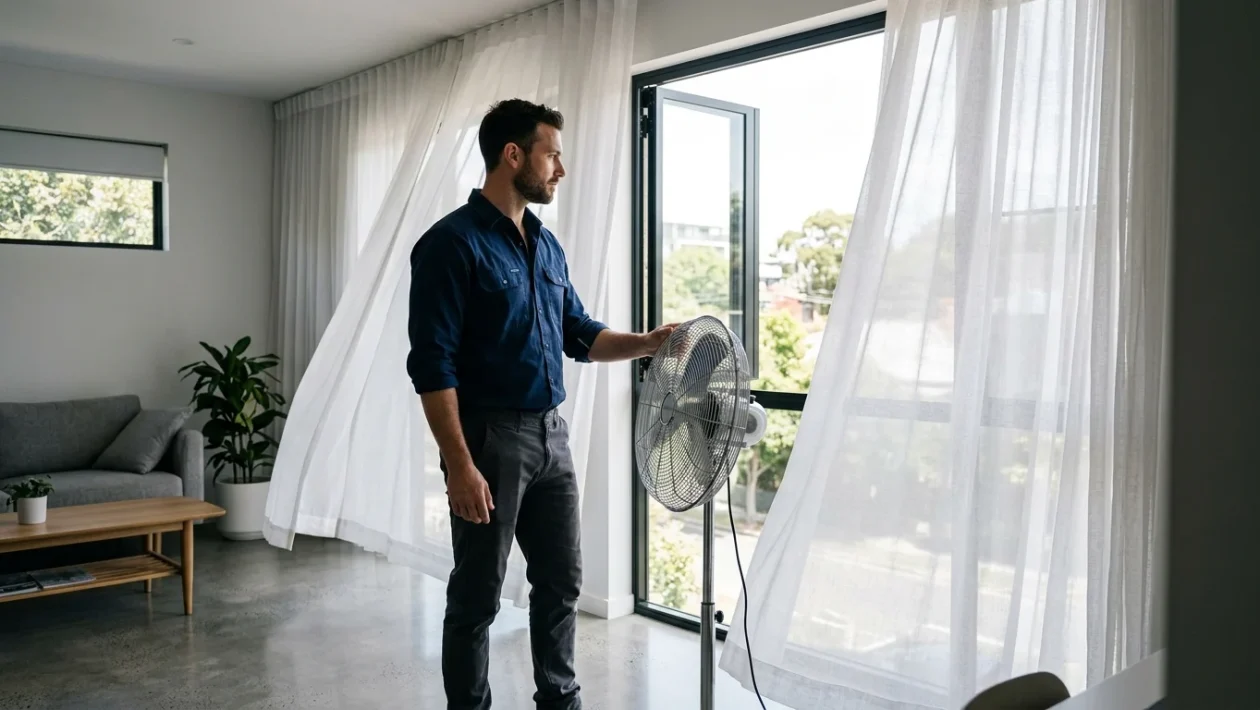
An HVAC technician working on a climate control system
When the summer heat hits, most people make the same predictable mistake: placing the fan directly in front of the sofa or pointing it straight at the bed.
Architects and climate control specialists agree this is highly inefficient. The reason is simple—fans do not lower the air temperature; they merely move it around.
Jon Gilbertsen, an HVAC technician based in the United States, explains that strategic placement drastically changes a fan’s effectiveness.
“Place the fan near an open window or door where it can pull in fresh air or push out the hot air,” Gilbertsen says. This physically replaces the air in the room, creating genuine cooling.
An HVAC expert inspecting climate control equipment.
Gilbertsen notes that the fan’s orientation must match the outdoor conditions. If it is cooler outside, point the fan inward to draw the breeze into the house.
If the outdoors is hotter than your room, face the fan outward to expel the trapped heat.
Many believe that blasting air directly at their body improves the situation. Gilbertsen warns that this only provides a temporary illusion of relief. “All you are doing is moving the same hot air around your body,” he notes.
The Cross-Ventilation Principle
This window strategy aligns perfectly with a core principle of bioclimatic architecture: cross-ventilation.
The goal is to create a natural draft between two openings located on opposite sides of the home. This allows air to sweep completely through the space, continuously renewing the environment without relying on expensive air conditioning.
For maximum cooling, specialists recommend a dual-fan setup if you have the equipment. Place an intake fan on the cooler side of the house to draw air in, and an exhaust fan on the warmer side to push hot air out.
Timing dictates success. This method works best at night, at dawn, or whenever outdoor temperatures drop below indoor levels.
During the hottest hours of the day, the rules reverse. Keep windows tightly shut to block the heat, and only turn the fans back to the windows once the outdoor environment has cooled down.