You spent the first half of the month scrubbing baseboards and reorganizing the garage, feeling like an absolute champion. But right now, microscopic dust mites and hidden grime are throwing a massive party in the exact spots you completely ignored. I see it every single year—folks burn out before hitting the high-impact areas that actually dictate how their house smells and feels. We are going to fix that today with a tactical, high-efficiency approach that targets the exact dirt traps you missed.
Exposing your spring cleaning forgotten zones
Most of us operate on autopilot when armed with a mop and bucket. We clean the surfaces we can see and completely ignore the mechanics keeping our homes running. Have you looked under your fridge lately? What about the rubber gasket inside your front-loading washing machine?
These aren’t just cosmetic issues; they are air quality assassins. A surprising but very real fact: the average North American home accumulates up to 40 pounds of dust a year. A massive chunk of that debris is hiding in these exact blind spots, recirculating every time your furnace kicks in.
If you thought your chores were done because the living room rug is vacuumed, you’re leaving the dirtiest jobs unfinished. Now that we’re staring down the barrel of summer 2026, it’s time to tackle the grime you walked right past earlier this month.
The late May reset guide: Step-by-step
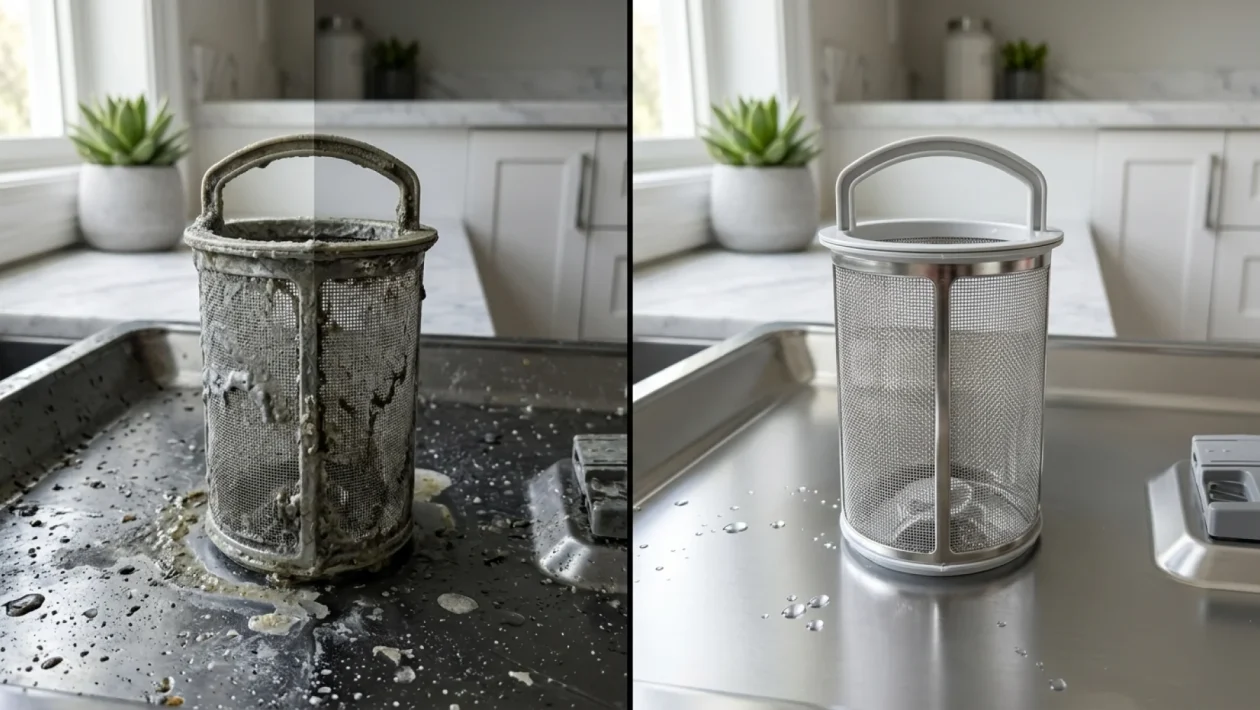
The single most ignored zone in any modern kitchen is the dishwasher filter. It washes your plates, but nothing washes the dishwasher. Over months of heavy winter meals, it becomes a swamp of calcium buildup and grease.
Grab a pair of gloves, some classic blue Dawn dish soap, and let’s get your machine actually cleaning your dishes again. Here is the foolproof extraction method:
- Pull the lower rack completely out: Set it aside to give yourself full access to the floor of the dishwasher tub.
- Locate and unlock the filter: Look for a cylindrical mesh screen sitting in the center of the tub floor. Give it a quarter-turn counterclockwise to unlock it.
- Extract the cylinder and flat mesh: Lift the cylinder straight up, then carefully slide out the flat metal or plastic mesh plate sitting beneath it.
- Scrub under hot water: Take both pieces to the sink. Use a soft nylon brush and a drop of grease-cutting soap to scrub away the gray, slimy buildup.
- Reinstall and lock: Place the flat mesh back down, drop the cylinder into the hole, and twist clockwise until it clicks firmly into place.
Time-saving solutions for busy homeowners
I get it. You work full-time, the kids have soccer practice, and the last thing you want to do on a Saturday afternoon is dismantle home appliances. But ignoring maintenance just leads to expensive replacement bills.
You don’t need a massive block of free time to make a dent. You just need a targeted strategy. Next time you make a hardware run to Canadian Tire, pick up a few specialty brushes and microfiber cloths. Having the right tool cuts your labor time in half.
| Hidden Dirt Zone | The 5-Minute Quick Fix |
|---|---|
| Range Hood Vent Filters | Soak in boiling water and baking soda. |
| Dryer Lint Trap Cavity | Use a flexible vacuum crevice attachment. |
| HVAC Return Vents | Wipe slats with a damp microfiber cloth. |
| Garbage Disposal Baffles | Scrub the underside with an old toothbrush. |
Professionals know that preventative maintenance is always cheaper than reactive repairs. The trick is to stop thinking of cleaning as a chore, and start treating it as asset management.
“Most homeowners think a funky, sour smell in the kitchen means they need a costly plumbing overhaul. Ninety percent of the time, it’s just six months of organic buildup festering in a hidden filter,” explains Marcus Thorne, a master plumber and home maintenance author.
Frequently Asked Questions
Is it too late to deep clean in late May?
Absolutely not. The transition from spring to summer is actually the perfect time to clear out indoor allergens before the humidity spikes. Trapped dust becomes a breeding ground for mold when summer moisture hits.
How often should I really check my appliance filters?
For high-use appliances like dishwashers and washing machines, you should be checking the traps once a month. It takes less than five minutes and extends the lifespan of a thousand-dollar machine by years.
Can I just run a self-clean cycle instead?
Self-clean cycles sanitize the drum, but they cannot physically dissolve large food chunks, pet hair, or trapped lint. You must manually remove the physical debris first, then run the cycle to kill the remaining bacteria.
🤝 Good luck hunting down those hidden dirt traps this weekend! It might not be the most glamorous way to spend an hour, but the peace of mind knowing your home is actually functioning at peak performance is unbeatable.
💡 If you found this breakdown helpful, don’t let your friends breathe in last year’s dust. Send this over to them before the summer heat really sets in.
📱 I want to hear how bad your dishwasher filter was—don’t be shy, we’ve all been there! Drop a comment below and share your thoughts on the grossest thing you uncovered.
👇 Keep your hands dirty and your homes clean. Until next time, stay sharp out there!