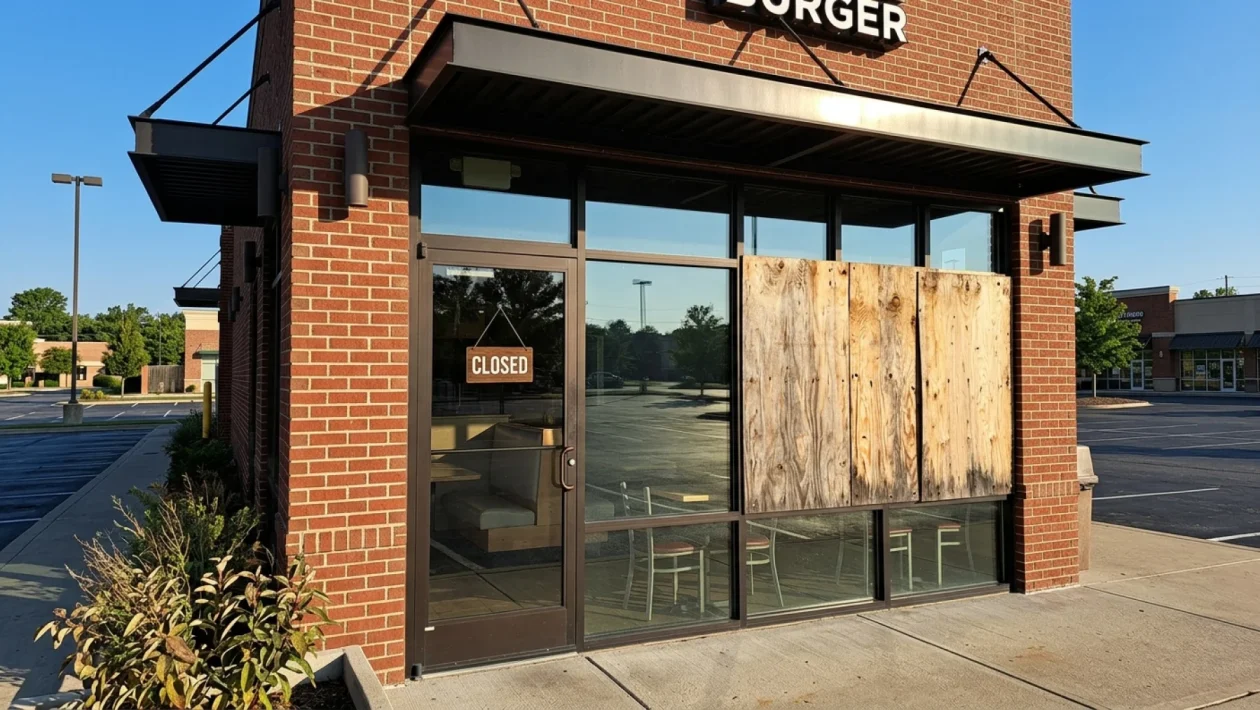
Let’s get one thing straight about the recent wave of Red Robin closures sweeping across our neighborhoods. It is incredibly easy to point fingers at corporate management when a beloved local joint locks its doors for good. But if you think this is a simple case of a massive restaurant chain losing its touch, you are missing the real story behind the boarded-up windows.
People are panicking, seeing their go-to spot for Bottomless Steak Fries suddenly vanish. The truth is that the casual dining landscape has fundamentally shifted right under our feet. We are going to dig into the brutal math behind these shutdowns and prove why your favorite burger joint was actually just playing a rigged game.
Red Robin closures: The hard truth behind the headlines
We are sitting here in the summer of 2026, and the shockwaves of the past few years are still knocking over dominoes. Red Robin closures aren’t an isolated incident of bad menus or poor customer service. They are a glaring symptom of a much larger, industry-wide fracture.
When a headline screams that dozens of restaurants are going under, our gut reaction is to assume the food got worse or the prices got too greedy. The reality is far more mechanical. Operating a massive, sit-down restaurant requires a delicate balance of high volume and manageable fixed costs.
When that balance gets violently disrupted, even the most popular local spots cannot survive. It is a harsh wake-up call for anyone who loves the classic North American dining experience.
Why 70 locations shut down across North America
Hearing that 70 locations shut down sounds like a massive failure of leadership. It sounds like someone was completely asleep at the wheel while the ship sank. However, looking at the mechanics of running a large footprint of brick-and-mortar restaurants tells a different tale.
When labor costs spike, supply chain invoices double, and foot traffic drops, the financial math simply stops working. Let’s break down exactly how a seemingly busy, well-loved restaurant actually bleeds out behind the scenes.
- The margin squeeze: Food costs rise drastically, but you can only charge so much for a gourmet burger before a customer refuses to pay.
- Lease renewals: Five-year commercial leases signed before the world changed are now up for renewal at drastically inflated 2026 rates.
- Staffing wars: Full-service restaurants are forced to compete with fast-casual spots that require half the staff but offer the exact same hourly wage.
- The final audit: Corporate identifies the bottom tier of underperforming stores and surgically cuts the cord to ensure the survival of the healthy locations.
The lingering COVID-19 effect on casual dining
You might be completely exhausted by hearing about the pandemic, but the restaurant industry sure isn’t. The lingering COVID-19 effect is the invisible ghost still haunting every commercial kitchen. During those lockdown years, consumer habits changed permanently.
Take a look at massive North American staples like Boston Pizza or Swiss Chalet. They have all had to radically rethink their massive dining rooms because people simply got used to the convenience of ordering in. That massive, reliable Friday night dine-in rush never fully recovered to its peak glory days.
In fact, industry statistics show that nearly 15% of all North American casual dining establishments permanently vanished after the initial economic shock. What we are seeing right now is just the delayed aftermath of that same earthquake.
| Restaurant Operating Expense | The 2026 Reality vs Pre-Pandemic |
|---|---|
| Commercial Rent | Landlords are demanding massive increases upon lease renewal to cover their own inflated property taxes. |
| Food & Supply Chain | The cost of premium beef, cooking oil, and even basic packaging has permanently skyrocketed. |
| Labor & Retention | Attracting reliable front-of-house staff requires significantly higher base wages and better perks than ever before. |
Why the burger chain did nothing wrong
Radio hosts and industry veterans are stepping up to defend the brand, and frankly, they are absolutely right. The burger chain did nothing wrong. They didn’t suddenly start serving terrible food, and they didn’t intentionally alienate their core, loyal audience.
They were playing by a set of traditional hospitality rules that completely evaporated practically overnight. You simply cannot out-manage a scenario where your fixed overhead doubles while the average consumer’s discretionary income shrinks.
“You can have the best service, the most loyal regulars, and a great menu. But if your operating costs outpace what a family can reasonably pay for a weeknight dinner out, you are doing math, not hospitality.”
Closing underperforming stores is actually a sign of smart, responsible management. It stops the financial bleeding and protects the rest of the herd so the brand can survive long-term.
Frequently Asked Questions
Are more Red Robin locations going to close this year?
Corporate is currently finishing up their process of trimming the fat. While the bulk of the 70 closures are already done, a few more lease expirations in struggling markets might lead to isolated, quiet shutdowns.
Will they ever bring back the closed locations?
It is highly unlikely they will return in their original, massive dining-room formats. If the brand does return to those abandoned neighborhoods, expect a much smaller, highly efficient, takeout-focused footprint.
Are my Red Robin gift cards still valid?
Absolutely. The parent company is still very much alive, profitable, and kicking. You can confidently use your gift cards at any of the hundreds of remaining open locations across the continent.
🤝 Let’s be real, seeing your favorite weekend burger spot close its doors permanently stings. It feels like losing a small, comforting piece of your neighborhood’s routine.
💡 But understanding the brutal economics of the 2026 restaurant industry definitely helps soften the blow. The brand didn’t fail us; the rules of the game just changed completely.
📱 Share your thoughts with me down below in the comments. Did your local spot survive the latest round of corporate cuts, or are you currently hunting for a new place to grab a cold pint and a burger?
👇 Good luck out there, remember to generously support your local servers, and never take your favorite neighborhood dining spots for granted!