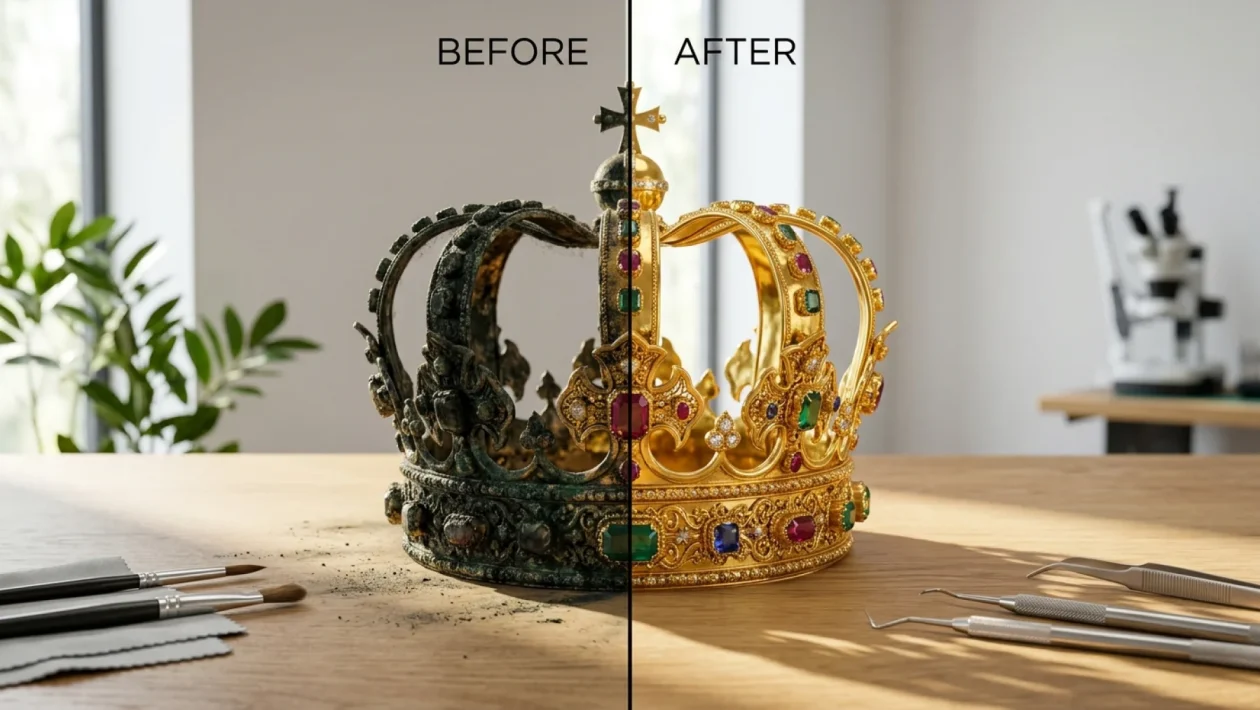
Imagine discovering that some of the most priceless gold artifacts in European history were sitting in a damp basement for nearly a century. That is exactly what happened with a massive haul of 16th-century Royal Burial Treasures belonging to the legendary rulers of Lithuania and Poland. For decades, historians assumed these artifacts were lost forever to the chaos of World War II. But in late 2024, an unbelievable discovery turned the archaeological world upside down, and as of this summer of 2026, these stunning pieces are finally seeing the light of day.
Uncovering Europe’s Lost Crowns
Let’s set the scene. Back in 1931, fierce spring floodwaters ripped through Vilnius, Lithuania, eroding the foundations and exposing forgotten crypts beneath the grand Vilnius Cathedral.
Inside, stunned archaeologists stumbled upon the remains of King Alexander Jagiellon, Queen Elizabeth of Austria, and Queen Barbara Radziwill. But it wasn’t just bones they found—the royals were surrounded by unbelievable funeral crowns, gold scepters, and jewel-encrusted orbs.
Here is a crazy hard fact for you: Less than 5% of early modern personal royal regalia actually survives today. Historically, most of it was ruthlessly melted down by subsequent rulers to fund wars or mint new currency.
Seeing original 16th-century pieces completely untouched by greedy successors is the historical equivalent of finding a mint-condition 1969 Mustang abandoned in an old barn.
How They Were Hidden From World War II Looters
Finding the gold was one thing, but keeping it safe in a rapidly destabilizing Europe was an entirely different beast.
As the dark clouds of World War II started rolling in, church officials knew they had to act fast. Heavy looting by invading forces was inevitable. So, they quietly packed up the crowns, scepters, and jewels and shoved them into a secret hiding spot deep within the cathedral walls.
They did their job a little too well. While a few basic pieces of the cathedral treasury resurfaced in 1985, the true royal burial insignia vanished like a ghost for decades.
Found After Decades In A Damp Crypt
Fast forward to late 2024. During routine structural assessments, the secret stash was finally cracked open again. But eighty years in a damp, unventilated stone hole will do a serious number on even the finest metals.
When the experts finally got their hands on the boxes, the items were in incredibly rough shape. We aren’t just talking about a little surface dust. We are talking severe structural degradation and heavy tarnishing.
“Personal royal regalia made for one ruler rarely survive because only a small number were ever produced. Finding these intact and restoring them is an incredible shared victory for the history of both Poland and Lithuania.”
That is what makes the new “Hidden Within” exhibition at the Vilnius Church Heritage Museum so spectacular. It is an absolute miracle these pieces even exist today.
Finally Restored: The Art Of Saving Ancient Gold
Look, as a guy who spends half his weekends trying to revive rusted-out snowmobile parts in the garage, I can appreciate a good restoration project. But reviving priceless 16th-century gold takes patience to an entirely different level.
The Renaissance goldsmiths who made these pieces were absolute masters of illusion. For instance, they frequently hollowed out cheaper garnets to make them look like ultra-expensive rubies. You can’t just toss something that delicate into an ultrasonic cleaner.
Here is exactly how museum conservators carefully brought these artifacts back to life:
- Initial Assessment: Experts cataloged every micro-crack, missing stone, and patch of corrosion using high-resolution 3D laser scanning.
- Gentle Decontamination: Using specialized chemical solvents and soft-bristle micro-brushes, they painstakingly scrubbed away 80 years of grime, mold, and mineral deposits.
- Structural Stabilization: Fragile gold links and weakened gemstone settings were reinforced using reversible, museum-grade adhesives.
- Micro-Polishing: Unlike the heavy, high-heat buffing you would see at the Royal Canadian Mint, conservators used microscopic hand tools to restore the gold’s original luster without stripping away its hard-earned historical patina.
Curious about the actual loot they pulled out of the crypt? Here is a quick breakdown of the heaviest hitters in the collection.
| Artifact Name | What Makes It So Special |
|---|---|
| Queen Elizabeth’s Medallion | Crafted from a one-of-a-kind 10-ducat gold coin minted in 1533. |
| Barbara Radziwill’s Rings | Four solid gold bands embedded with genuine diamonds, rubies, and emeralds. |
| The Funeral Crowns | Three distinct burial crowns tailored specifically for the rulers’ final resting place. |
Frequently Asked Questions About The Royal Treasures
Where can I actually see these artifacts in person?
The “Hidden Within” exhibition is currently open to the public at the Vilnius Church Heritage Museum in Lithuania.
Why were the jewels “faked” by Renaissance goldsmiths?
It wasn’t a scam! Craftsmen hollowed out garnets or backed clear crystals with red foil to create the illusion of massive rubies simply because massive rubies were nearly impossible to source in Eastern Europe at the time.
The Final Verdict
🤝 Good luck trying not to feel a massive rush of excitement when you see history pulled right out of the dirt like this.
💡 It is a solid reminder that we haven’t found everything yet. There is still real magic left in the world, waiting under some old floorboards or behind a crumbling brick wall.
📱 If you enjoyed this deep dive, do me a favor and send this article to that one friend who is completely obsessed with history or treasure hunting.
👇 Drop a comment below and share your thoughts—if you had to hide a priceless treasure today to keep it safe for a century, where would you stash it?