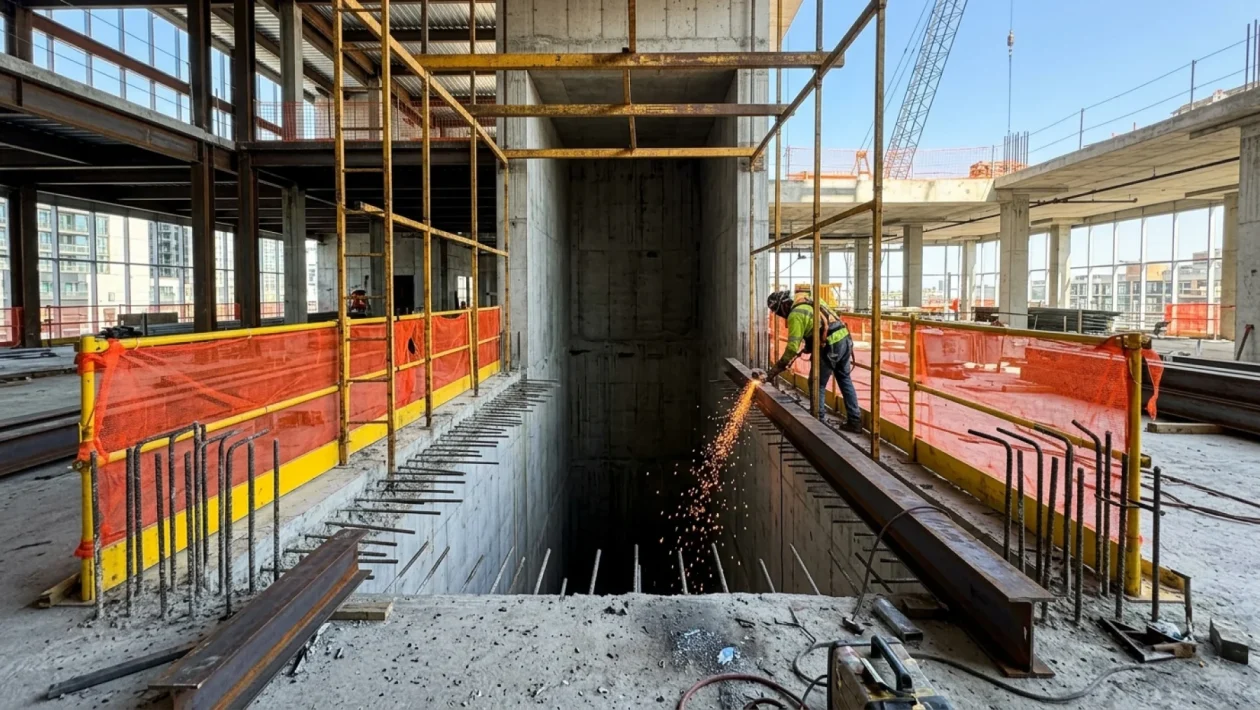
The Brussels Oxy building fire is a stark, terrifying reminder that a high-rise construction site can turn into a lethal trap in a matter of seconds. When flames tore through the core of the former Philips Tower during major renovations, the global construction industry collectively held its breath. We are breaking down exactly what sparked inside that structure, the sobering reality behind the victims list, and how we must overhaul site safety right now.
If you swing a hammer, weld steel, or manage a crew on a North American job site, you need to understand the anatomy of this disaster. I have walked enough skeletal high-rises to know that a localized spark can escalate before you even smell smoke. We are going to deconstruct this incident so you can implement bulletproof safety measures before your next shift.
The Brussels Oxy Building Fire: How a Retrofit Ignited
As we push through a sweltering July in 2026, dry and heavily ventilated job sites are at peak risk for rapid fire spread. The Oxy building in Brussels was undergoing a massive, complex retrofit meant to modernize the aging commercial monolith. But retrofits are inherently dangerous, often mixing old, highly flammable legacy materials with modern hot work like welding and grinding.
What started as a localized incident quickly proved how vulnerable a building is when its fire suppression systems are offline for construction. Canadian industry leaders like EllisDon have entirely revamped their hot work protocols for this exact reason. Relying on fire watches and temporary extinguishers is simply not enough when working in the hollowed-out shell of a high-rise.
Inside the Lift Shaft: Fighting the “Chimney Effect”
The true nightmare of the Brussels incident centered around the vertical void of the lift shaft. Elevator shafts are necessary arteries for any tall building, but during construction, they act as massive, inescapable vacuums. This phenomenon is known on job sites as the “chimney effect.”
A staggering 60% of devastating high-rise construction fires originate in or spread rapidly through vertical shafts. The physics are brutally simple: hot air rises, pulling oxygen from the lower floors and feeding the flames at an exponential rate. Anyone working above the ignition point is immediately in the path of toxic smoke and superheated gases.
“When a fire hits an open vertical shaft, you aren’t just fighting flames—you’re fighting physics. The draft pulls the fire upward faster than any crew can climb down the scaffolding,” says Mark Higgins, a veteran North American Chief Safety Officer.
| Fire Environment | Spread Characteristic |
|---|---|
| Standard Floor Fire | Moves horizontally, visible smoke buildup, slower structural spread. |
| Lift Shaft Fire | Moves vertically in seconds, acts as an oxygen vacuum, rapidly traps upper floors. |
Analyzing the Victims List: The Nightmare of Accountability
Whenever a site disaster occurs, the immediate panic turns to the head count. The victims list from the Brussels Oxy building fire highlighted a chronic issue in global construction: tracking transient subcontractors. On any given day, a major site has hundreds of tradespeople cycling through different floors and secure zones.
When the evacuation horn blows, site managers often struggle to verify who was working in the high-risk zones like the lift shafts or roof. The individuals most affected in these scenarios are often the specialized trades—welders, elevator mechanics, and HVAC technicians—who operate in isolated areas. Transparency in releasing and managing a victims list is crucial, not just for the families, but for investigating which safety nets failed.
A Site Safety Wake-Up Call: Securing the Shaft
We cannot look at a European disaster and assume it won’t happen in Toronto, Chicago, or Vancouver. Upgrading our on-site fire prevention isn’t just about passing a municipal inspection; it is about making sure every person goes home with all ten fingers and toes. If your crew is doing hot work near a vertical drop, you need a rigid system in place.
Here is how modern crews are locking down lift shaft safety during active renovations:
- Isolate the Hot Zone: Install heavy-duty fire-retardant blankets and temporary hard barriers around the lift shaft opening on the floor where hot work is occurring.
- Control the Airflow: Use temporary capping or draft stops inside the shaft to break up the continuous vertical vacuum and mitigate the chimney effect.
- Implement Digital Tracking: Use RFID hardhat tags to instantly know exactly which workers are inside or adjacent to vertical shafts in the event of an emergency.
- Continuous Fire Watch: Assign a dedicated worker whose sole job is to monitor the hot work area for a full 60 minutes after the last spark has flown.
Frequently Asked Questions
What caused the fire at the Brussels Oxy building?
While investigations into complex site fires take time, incidents like the Oxy building fire typically trace back to hot work—such as welding, cutting, or grinding—igniting nearby combustible debris or exposed insulation in an unprotected area.
Why are lift shaft fires so dangerous for construction workers?
Lift shafts act like massive chimneys. They draw in oxygen from lower levels and funnel smoke, toxic gases, and extreme heat upward at terrifying speeds, often trapping workers who are stationed on higher floors.
How can North American sites prevent similar tragedies?
Prevention comes down to strict hot work permits, aggressive debris management, covering vertical voids, and utilizing modern digital head-count systems so site managers know exactly where every subcontractor is at all times.
🤝 It is time we stop treating site safety as a nuisance and start treating it as the foundation of every successful build. A tragedy in a high-rise lift shaft halfway across the world is a direct lesson for those of us lacing up our steel-toes here at home.
💡 Implementing these changes doesn’t cost a fortune, but ignoring them could cost you everything. Take a hard look at your current hot work permits and ask yourself if your crew is truly protected from the chimney effect.
📱 Share your thoughts on how your local sites handle fire safety during major retrofits. Let’s keep this conversation going and ensure our tradespeople are coming home safe every single night.
👇 Good luck out there on the scaffolding this season, stay hydrated, and always keep one eye on the exit routes!