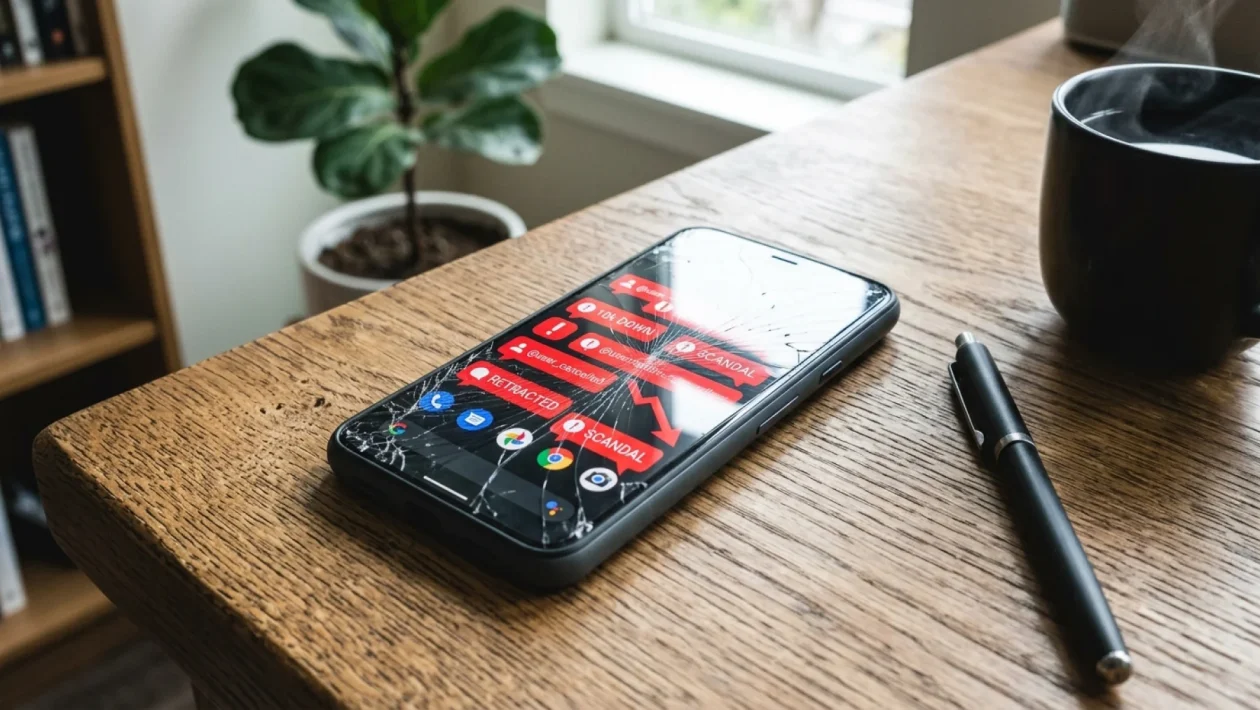
One minute a star is selling out Scotiabank Arena, and the next, they are a trending hashtag for all the wrong reasons. The modern digital takedown is brutal, fast, and entirely unforgiving. If you have been paying attention to the news feeds this summer of 2026, you know that no amount of wealth or fame acts as a shield anymore.
We are looking at a culture that treats public figures like disposable commodities. When a famous personality slips up, the collective mob does not just want an apology; they want an absolute dismantling of that person’s livelihood. But understanding the mechanics of this outrage is the key to navigating it. We are going to rip the lid off this machine, look at the gears, and show exactly how PR experts pull their clients from the fire.
Celebrity Cancellations: The Anatomy of a Digital Takedown
Let us get one thing straight about celebrity cancellations. They are rarely random.
Think of a cancellation like a structural failure in a house. It usually starts with a tiny, ignored leak—a questionable podcast interview, an unearthed tweet, or a bad interaction with a fan. Eventually, the pressure builds up, and the entire ceiling caves in.
The machinery behind this is incredibly efficient. Social media algorithms are literally designed to reward high-emotion content. Anger gets clicks, and clicks get ad revenue. When a famous person makes a mistake, the internet essentially monetizes our collective outrage.
Why Society Suddenly Turns On Megastars
People love a hero, but they absolutely adore a spectacular fall from grace. It is human nature to want to level the playing field when someone seems untouchable.
A recent 2025 Pew Research study revealed a shocking statistic. A massive 72% of North Americans admitted to participating in an online boycott or public call-out within the last twelve months. We are addicted to the power of holding the elite accountable.
When society turns on a megastar, it is usually because the celebrity violated an unspoken social contract. We give them our money and our attention, and in return, we demand they reflect our current moral standards. When they fail, the backlash is swift. Here is a quick breakdown of what usually triggers the mob versus what people will forgive.
| The Offense | The Public Verdict |
|---|---|
| Poorly worded joke from a decade ago | Public apology required, brief suspension of support |
| Abuse of power or systemic mistreatment of staff | Immediate termination of contracts, long-term exile |
| Hypocrisy (e.g., preaching climate change while flying private) | Heavy mocking, loss of brand sponsorships |
And How To Survive The Backlash
Fixing a shattered reputation is like trying to rebuild an engine while the car is speeding down the highway. It takes absolute precision and zero ego. Top-tier crisis management firms, like Canada’s own Navigator Ltd., know that surviving the mob requires a very specific toolkit.
You cannot just throw up a black square on Instagram and expect the world to move on. You have to follow a strict protocol to stop the bleeding. Here is the exact step-by-step process professionals use to pull a career back from the brink.
- Shut up and listen: The absolute worst thing a celebrity can do is instantly fire back defensively. You have to drop the shovel and stop digging the hole.
- Diagnose the damage: Figure out exactly who is mad and why. Is it a vocal minority on social media, or have major corporate sponsors started pulling out?
- Deliver the unreserved apology: No “I’m sorry if you were offended” nonsense. Own the mistake completely, look straight into the camera, and take the hit.
- Do the invisible work: Disappear from the spotlight for a while. Go to therapy, make private amends, and put your money where your mouth is without bragging about it.
“Public outrage is a fire that needs oxygen to burn. If a public figure stops talking, gets to work fixing the real issue, and waits out the news cycle, the mob eventually moves on to the next target.”
Frequently Asked Questions
Is cancel culture actually permanent?
Rarely. Unless the offense involves severe criminal behavior, most celebrities eventually mount a comeback. The public has a notoriously short memory, and a solid redemption arc is highly profitable for media networks.
Do publicists create fake scandals for attention?
While some reality TV stars might manufacture minor drama, no legitimate A-lister intentionally gets themselves cancelled. The financial risk is simply too high. Losing a massive brand endorsement deals genuine financial damage that no amount of free publicity can fix.
How can everyday people avoid getting cancelled?
Clean up your digital footprint. What was considered a harmless joke in 2014 might be career suicide today. Keep your professional life and your private opinions separated by a massive firewall.
🤝 Share your thoughts in the comments below because I want to hear your take on this. Do you think we are too quick to judge, or is this new era of accountability exactly what Hollywood needs?
💡 Remember this rule the next time you see a massive internet pile-on. It is always easier to burn down a house than it is to build one.
📱 Hit that share button if you found this breakdown useful. Send it to that friend who loves dissecting pop culture scandals.
👇 Good luck out there on the internet, folks. Keep your tools sharp, your head on a swivel, and I will catch you in the next column.